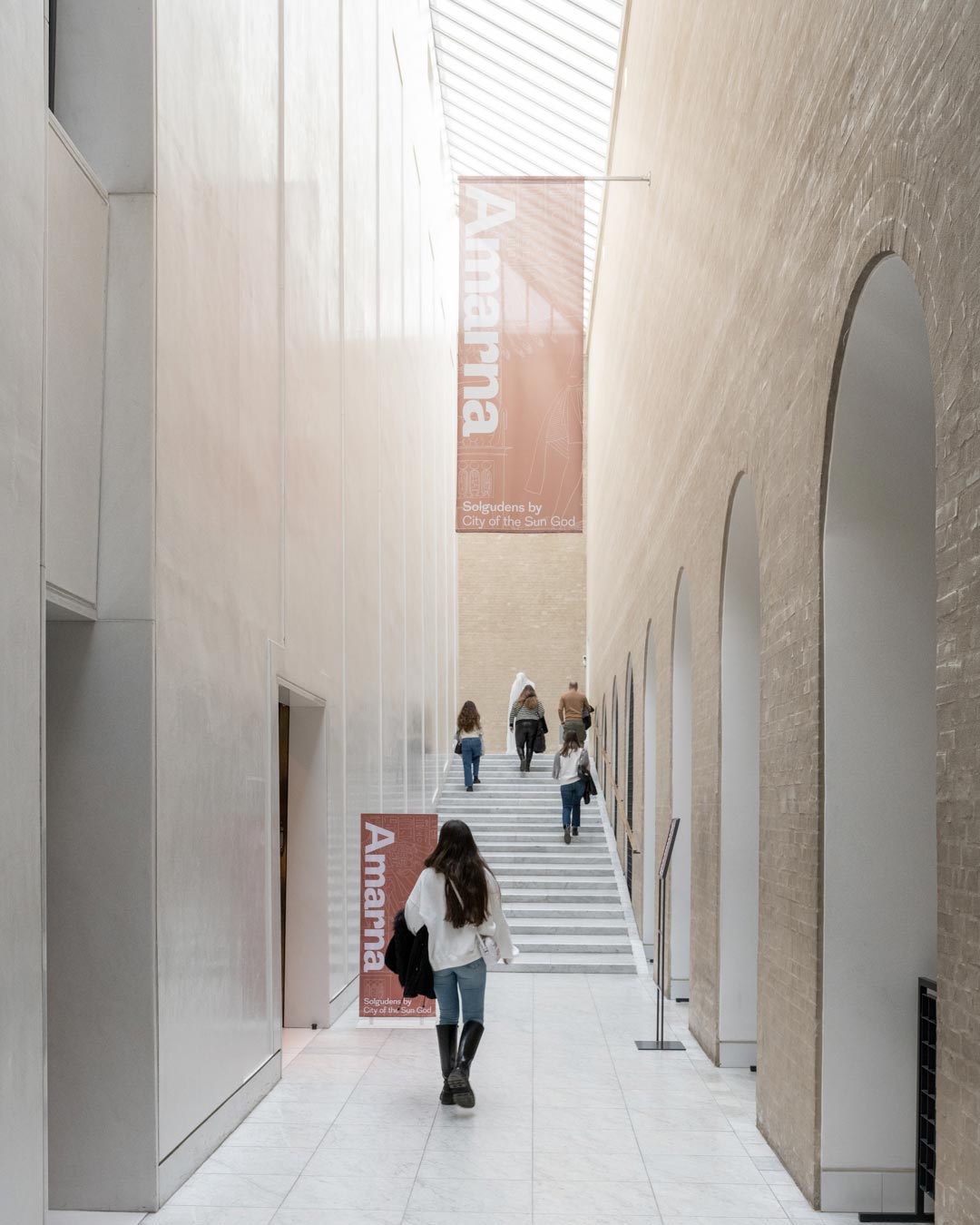
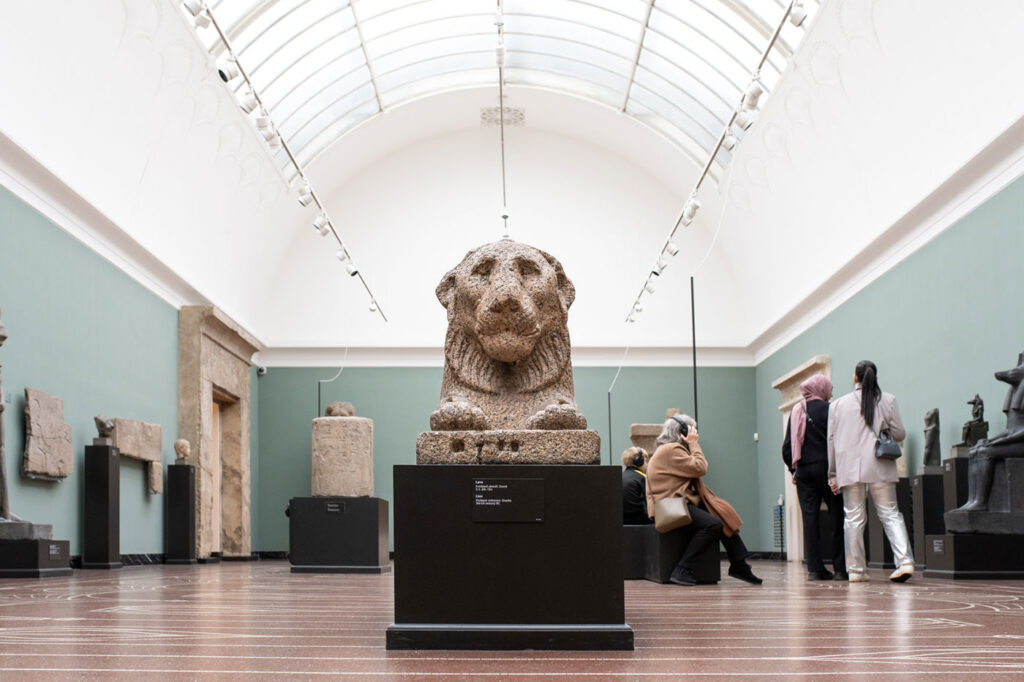
I recently revisited the Glyptotek in Copenhagen to experience their newly opened ‘Amarna – City of the Sun God’ exhibition. I have read extensively on this specific period of ancient Egypt and always welcome the opportunity to see the ancient artefacts from this lost city.
Poster for the Glyptotek's Amarna exhibit
I brought my trusty Nikon Z7II camera and using the FTZ adapter to attach a Sigma 35mm Art 1.4 lens. In this post you can read more about the Amarna period, the Glyptotek and see my photos from the various exhibitions.
The Amarna period
The Amarna period in ancient Egypt, lasting from 1353 to 1336 BC, was a time of significant religious and political change. Pharaoh Akhenaten, who ruled during this time, abolished the traditional polytheistic religion and introduced a new monotheistic religion centered around the worship of the sun disk, the Aten. A new capital city, Akhetaten (now known as Amarna), was built where Akhenaten and his queen Nefertiti were buried. This period is also known for its distinctive art style, which featured a new realism and a focus on the human form.
Entrance to the exhibition
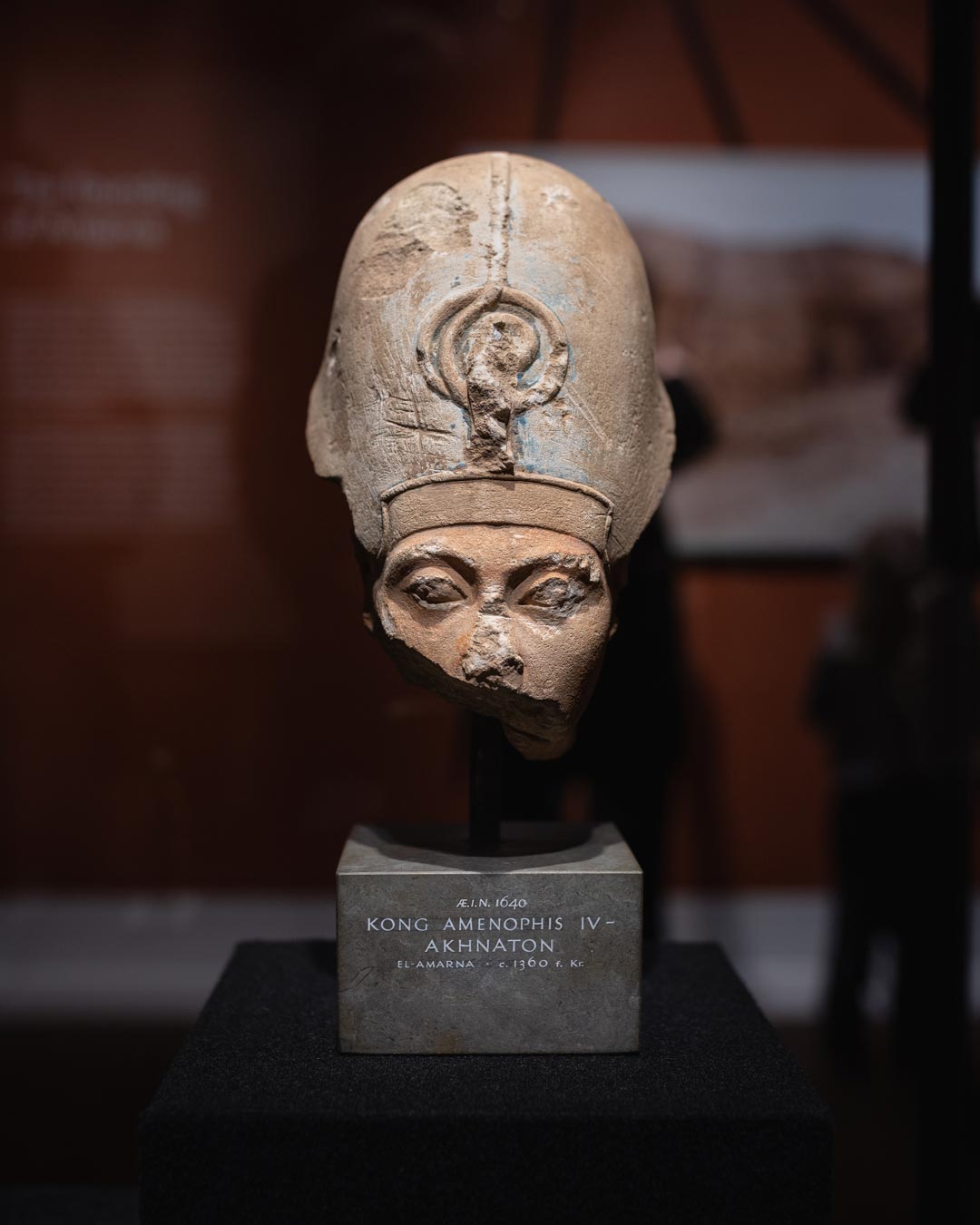
Broken bust of Akhenaten
In Glyptotek’s exhibition, parts of the lost city are brought to life with recreations of a temple wall, a column in a chapel and a palace floor. Photos, drawings, and a 3d animated video provide an insight into life in the magnificent city.
Statue of Akhenaten - Taken with a Nikon Z7II + Sigma 35mm Art 1.4
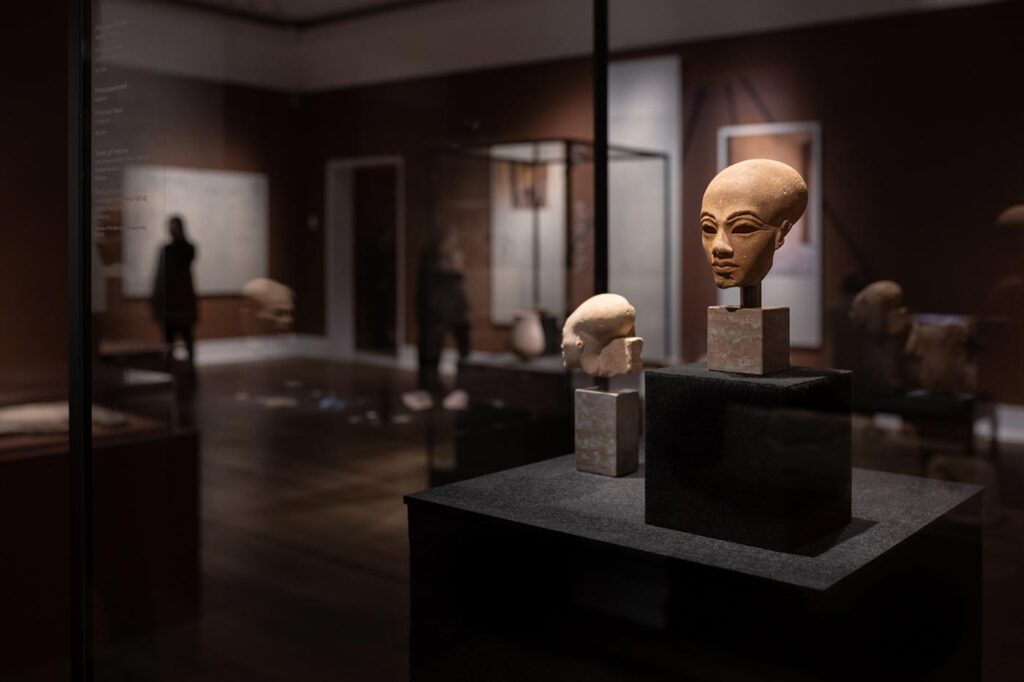
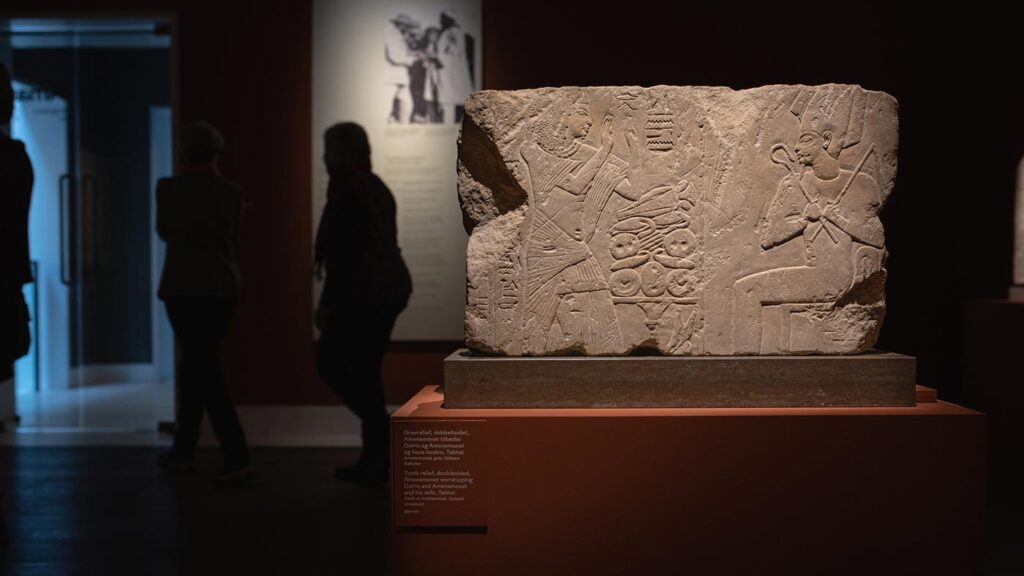
Taken with a Nikon Z7II + Sigma 35mm Art 1.4
Taken with a Nikon Z7II + Sigma 35mm Art 1.4
You can read more about the exhibition ‘Amarna – City of the Sun God’ on The Glyptotek’s website here.
The Glyptotek
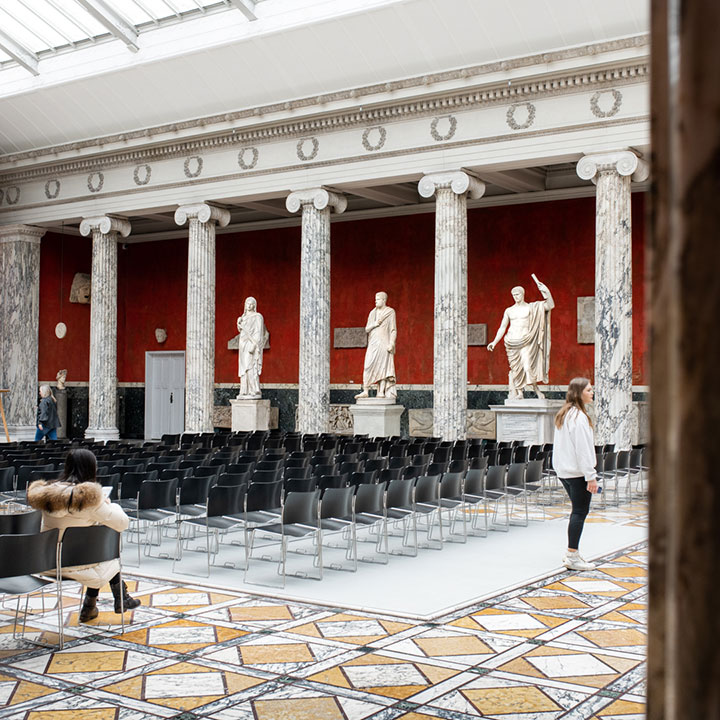
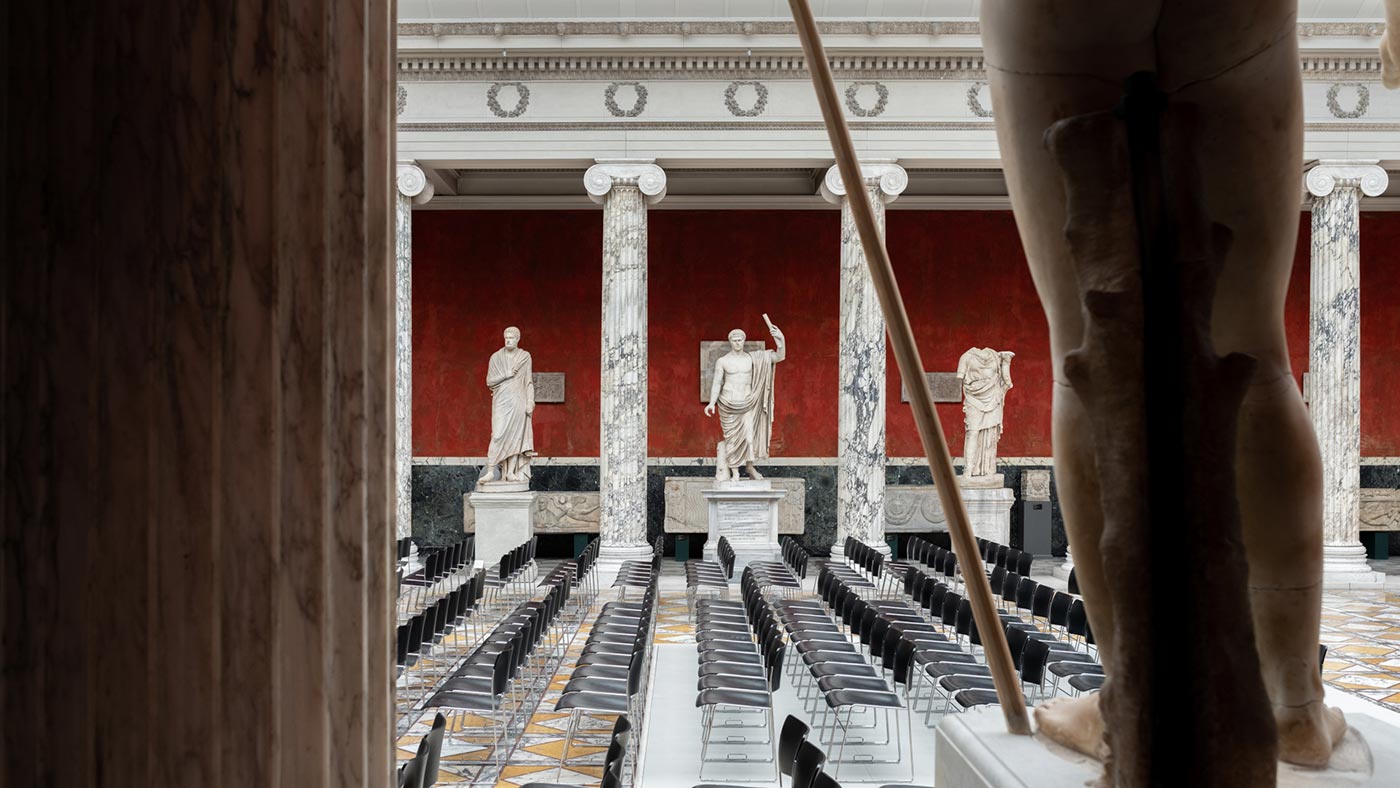
The Ny Carlsberg Glyptotek is an art museum in Copenhagen, Denmark. It is located near the city center and is known for its collection of ancient Egyptian, Greek, and Roman art, as well as a large collection of French Impressionist and Post-Impressionist art. The museum also features a beautiful winter garden. It was founded by the brewer Carl Jacobsen in 1888.
Taken with a Nikon Z7II + Sigma 35mm Art 1.4 (ISO800, F5.6, 1/60)
There are plenty of opportunities to take great photos in the Glyptotek’s various exhibitions. I only had a few hours, so I focused on the period of ancient Egypt, Greece and Rome.
Read more about the Glyptotek and their exhibitions on the website www.glyptoteket.com
We usually wouldn’t travel in July since we live on a holiday island that offers plenty of attractions and experiences during the summer months. However, during the COVID-19 pandemic, we had very few chances to travel anywhere, so when some friends invited us to visit their holiday cottage in Northern Jutland, we jumped at the opportunity.
We took a domestic flight with DAT (Danish Air Transport) from Bornholm, with a stop-over in Copenhagen and on to Aalborg Airport on the Northern part of the Jutland peninsular. Our friends picked us up in their car, and from there, we drove into the countryside and explored the surrounding area for the next three days.
Day 1 – Into the lime mines
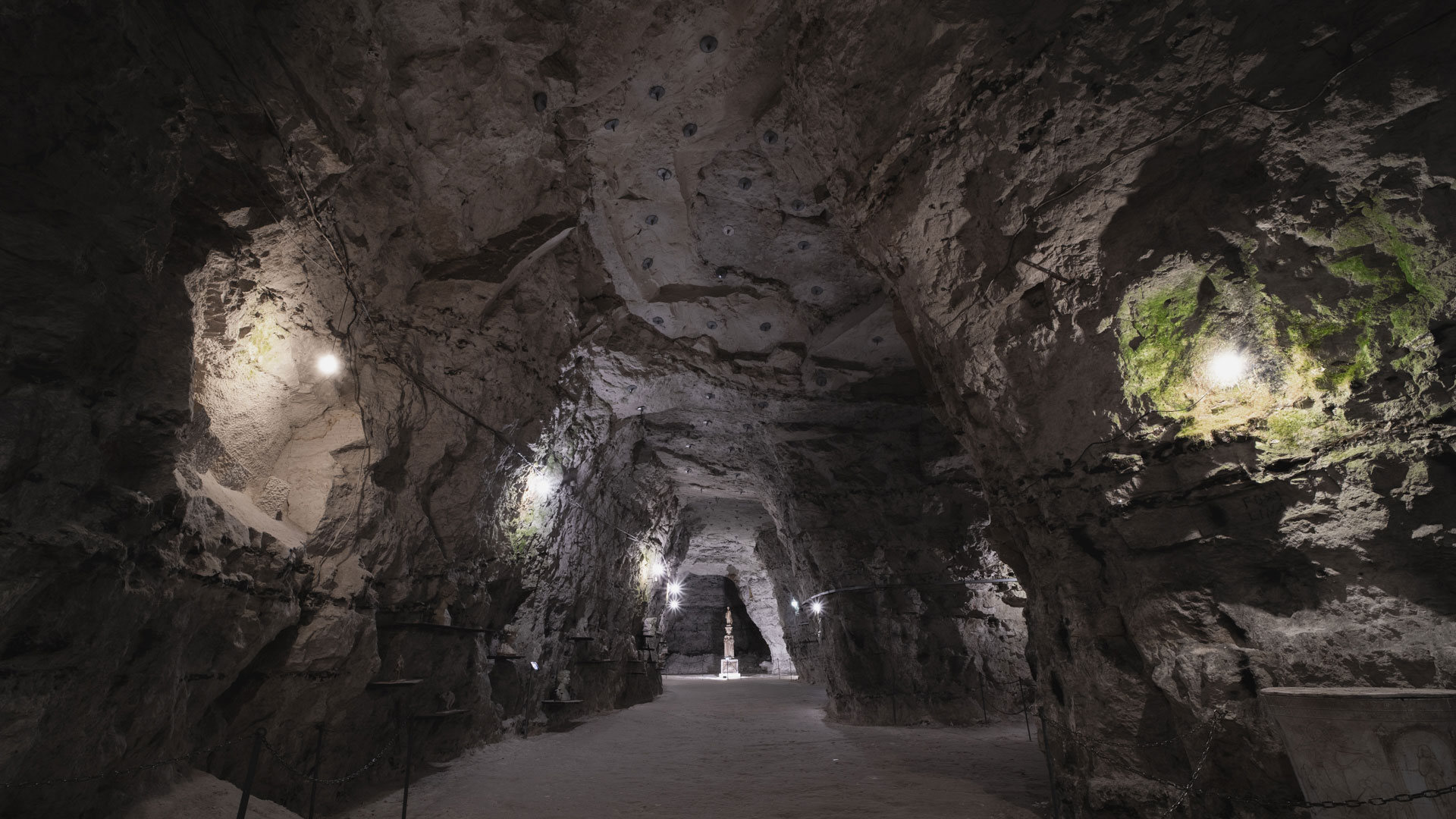
Thinkbæk Limestone Mines
Our first destination was Thingbæk Limestone Mines (Danish: Thingbæk Kalkmine) and the Rebildcenter museum. The mines have been a public attraction since 1935, when a Danish artist used them as an exhibition hall for his sculptures.
Even though a new visitor centre opened just outside the mine’s entrance in 2015, the many tunnels are still used to exhibit sculptures.
On the day of our visit, the Danish summer was at full effect, and the temperatures kept rising. However, after just walking a few meters into the mine’s entrance, you suddenly experienced a much more hospitable temperature. I managed fine with some shorts and a blouse, but it can get a bit chilly if you wander the tunnels for more than an hour.
A new Cold War attraction is scheduled to open sometime during 2022. Reagan Vest is a colossal bunker designed as a command central for the Danish government and royal family in case of nuclear war between NATO and the Soviet Union. The facility was top secret until just a few years ago and is now being turned into a museum.
A perfect combination of historical attractions and abandoned places. That is the experience you get when visiting the bunkers along Jutland’s Western coastline. Around 2.000 bunkers have been build in Denmark during the war as part of Nazigermany’s Westwall. This massive Atlantic fortification line stretches from the Spanish border to the arctic in Northern Norway. Today they lie abandoned and reclaimed by nature along the coastline.
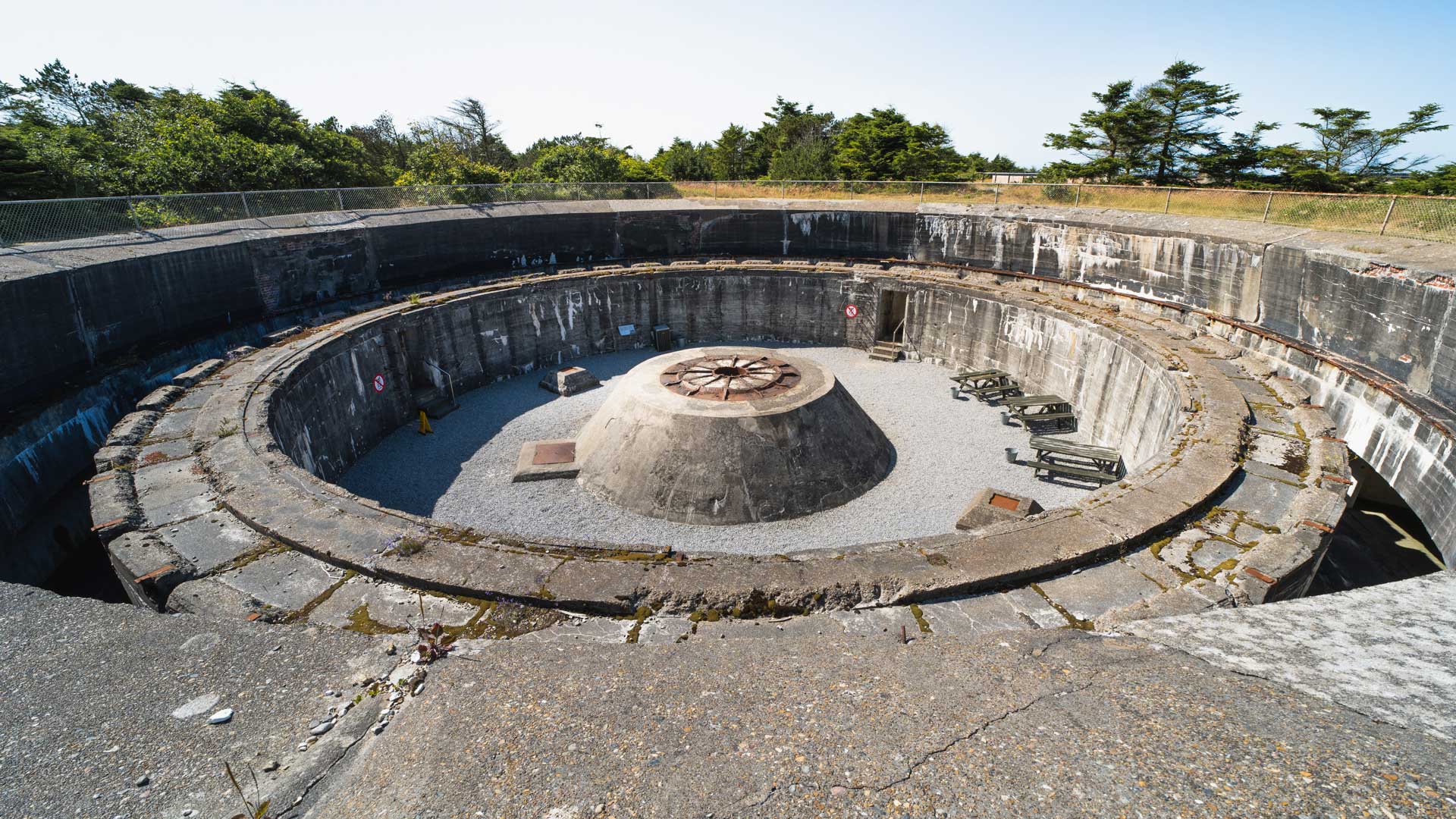
Some bunkers housed massive naval guns usually used on Germany’s biggest battleships during the 2nd World War. Four of these enormous coastal batteries are situated in Hanstholm and have been turned into a modern museum.
Hanstholm Bunkermuseum is build as part of the old fortification and displays a number of interesting objects from the 2nd World War – including uniforms, weapons, litterature and the story of the Westwall building program.
From the museum’s main exhibition room, you follow a long tunnel into a well-preserved German bunker. Here can visit the personnel quarters, the ammunition rooms and various other facilities. This serves as a great contrast if you visit the abandoned bunkers along the coastline later.
After spending several hours in the bunker, we took lunch at Hanstholm Madbar, a few kilometres west of the museum. I can highly recommend the restaurant since the food was excellent and the staff was amiable. The restaurant is situated at the top of a hill and offers a great view of the harbour and surrounding countryside.
After lunch, we headed to the beach and the bunkers of abandoned bunkers of Stützpunkt Vigsö just east of Hanstholm. Around 20 bunkers lie scattered close to one another along the coast. Some are almost lost in the ocean, but quite a few are still accessible on the beach. We managed to climb/crawl into several to get a bird’s eye view from the roofs of the bunkers.
I know there are several places along the coast where you can see bunkers, but the cluster of bunkers a Vigsø offers plenty of opportunities to explore and snap some photos for Instagram.
After a long day exploring bunkers, we headed home, but there was time for one more attraction before nightfall. We headed to one of Denmark’s most instagrammable spots – the limestone cliffs at Bulbjerg.
Bulbjerg is Jutland’s only cliff and rises 47 meters above the sea. The area is nicknamed The Shoulder of Jutland because it looks like the peninsular’s shoulder on a map.
At the top of the cliff, you’ll find another abandoned German bunker, but also one of the most incredible landscape vistas in Denmark.
From the top of the cliff, you can follow a narrow path down to the beach, where you can get a true feeling of the cliff’s size and the many seagulls nesting along its side.
Day 3 – Danish Design – It belongs in a museum in Aalborg
Kunsten
On our last day, we drove into Aalborg to visit the modern art museum Kunsten (Danish for “The Art”). I’m not exactly a connoisseur of contemporary art, but it has a fascinating temporary exhibit about American culture.
In the museum’s basement, we found an interesting exhibition about Danish furniture design. The collection was a true who’s who of great Danish furniture designers. As you moved through the displays, you also time-travelled from the 1960s through to the 1990s.
All of the attractions I have mentioned in this article are situated around Limfjorden (an inlet in Northern Jutland) within an hour’s drive from one another. I’m sure you can get around with public transport, but having a car just made it so much easier and allowed us to follow our own schedule. After three days packed with activities, we headed home, but there are plenty of attractions to visit for a second trip at some later date.
During the COVID-19 pandemic, with borders closed and international travel off the table, I seized the opportunity to revisit one of my favorite museums in Denmark: Moesgaard Museum in Aarhus.
Since its stunning new building opened in 2014, Moesgaard has set a high standard in both architecture and exhibitions, rivaling any museum I have visited worldwide. As you enter, a grand staircase leads you down to the permanent exhibition, where lifelike models of our ancient ancestors await, immersing you in a journey through history.
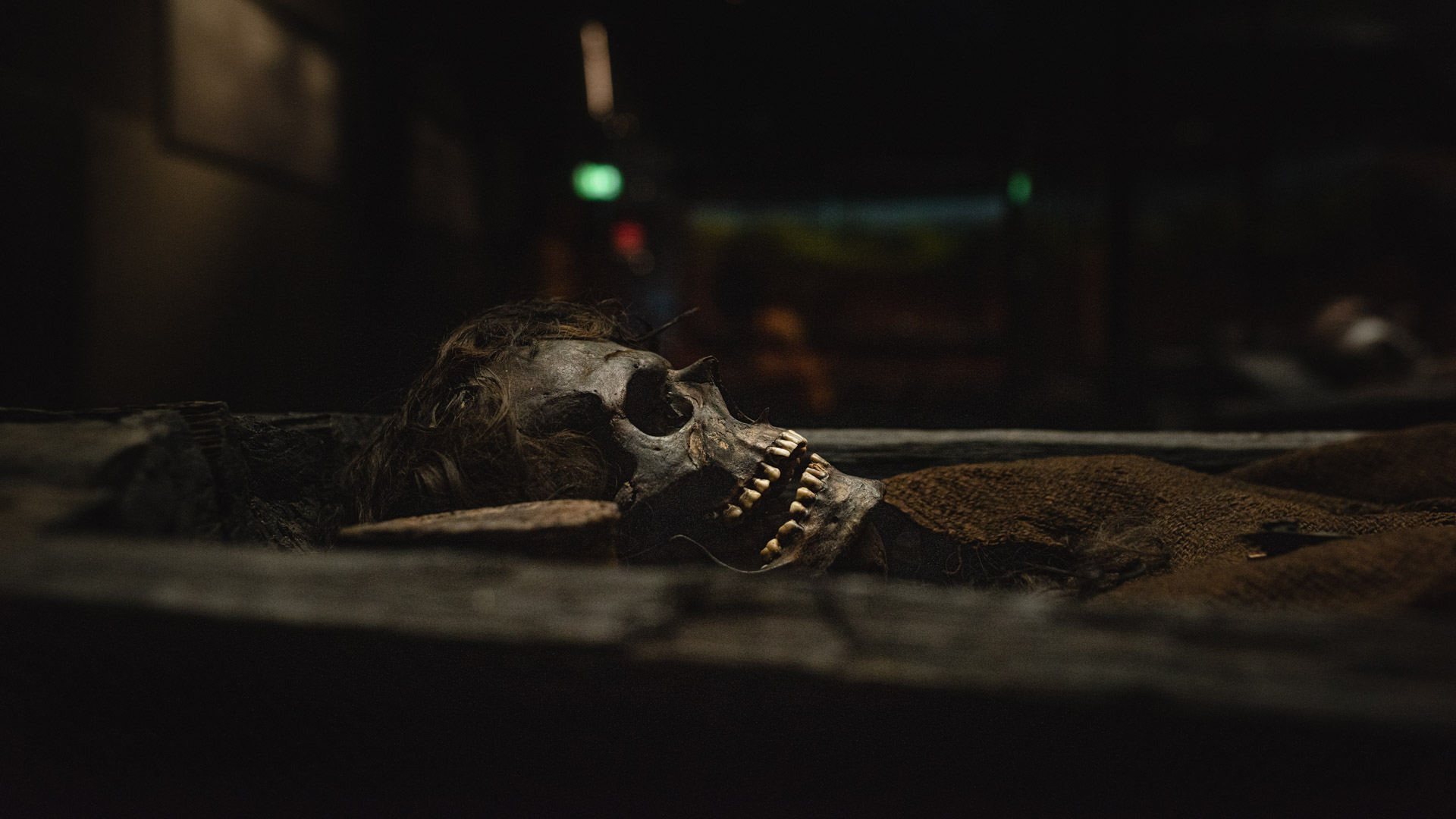
The permanent exhibit focuses on Denmark’s Bronze and Iron Ages, utilizing a blend of text and audio-visual narration. The dim lighting creates a haunting atmosphere that enhances the experience without becoming uncomfortable, perfectly complementing the artifacts on display.
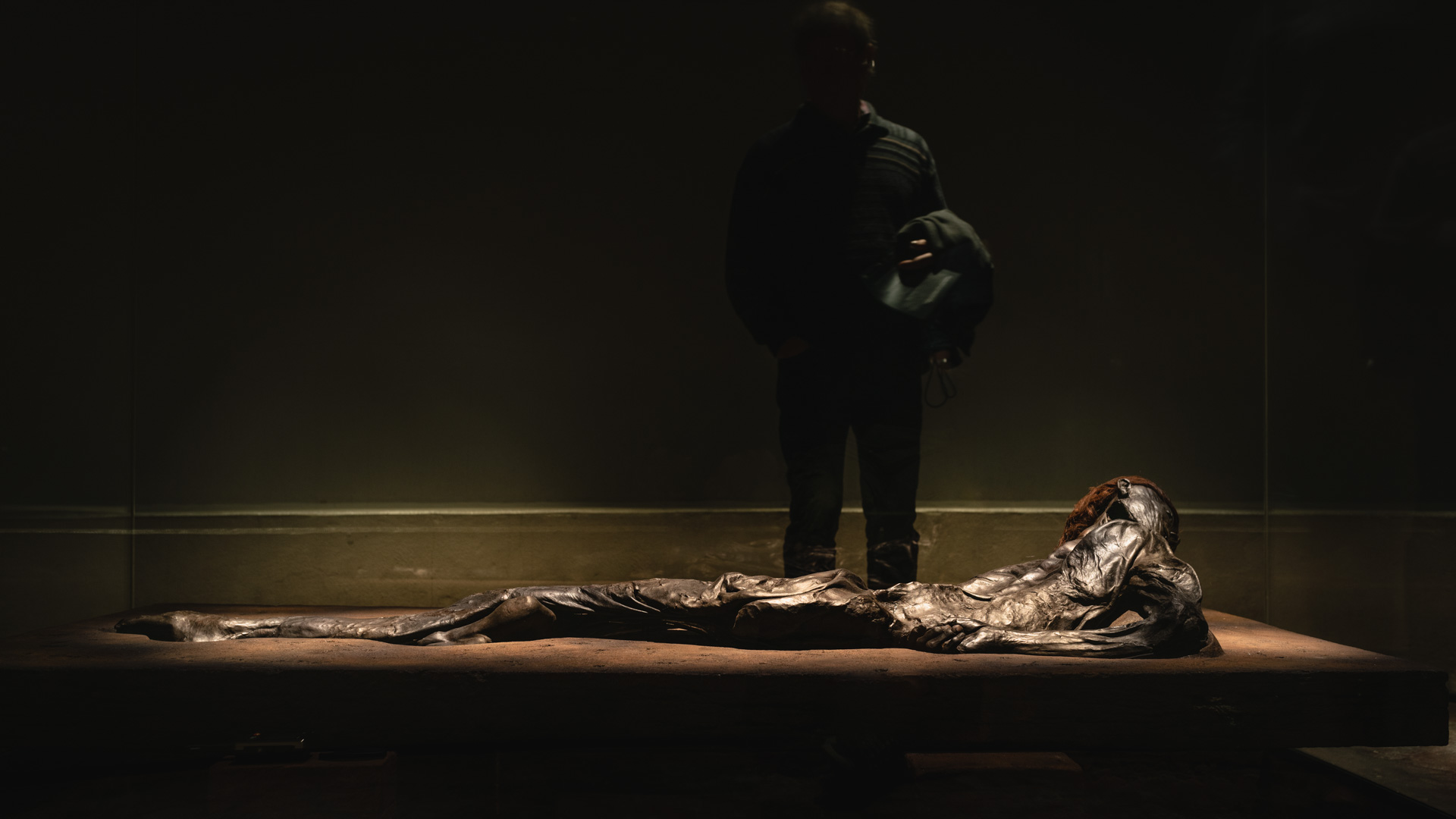
Grauballemanden
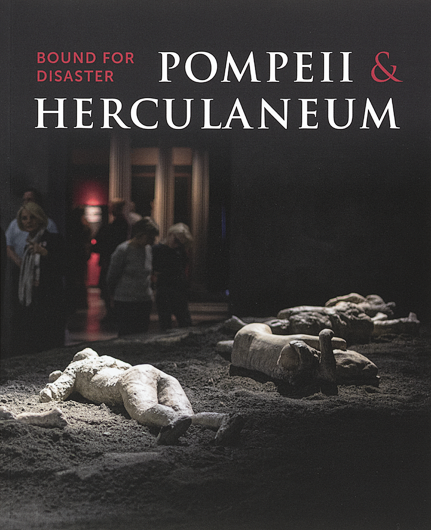
Bound for disaster - Pompeii and Herculaneum
A temporary exhibition at Moesgaard
During my visit, I was fortunate to explore the temporary exhibition, ‘Bound for Disaster,’ which features artifacts from the ancient Roman towns of Pompeii and Herculaneum. Both cities were tragically buried under volcanic ash during the eruption of Mount Vesuvius in AD 79.
The subdued lighting in the exhibition can pose challenges for photography, but it also deepens the somber mood, echoing the tragic events it recounts. Visitors are welcomed by a ship’s ram at the entrance, belonging to a Roman galley that sank in the disaster. Remarkably, a piece of wood still clings to it, a poignant reminder of the past.
As I moved through the exhibit, I learned about the daily lives of the ancient Romans— their homes, workshops, and society. The journey culminates in a dark room, where a starry ceiling contrasts starkly with the somber topic. Here, you find the molds of the victims entombed in ash, their bodies decayed over time, leaving voids that archaeologists have filled with plaster, creating haunting casts of their final moments.
Moesgaard Museum not only offers an engaging introduction to ancient Denmark through its compelling audio-visual experiences but also showcases world-class temporary exhibitions. If you find yourself near Aarhus in Jutland, a visit to Moesgaard is an absolute must!
A Visit to Frigatten Jylland – Denmark’s Historic Naval Gem
July 2020
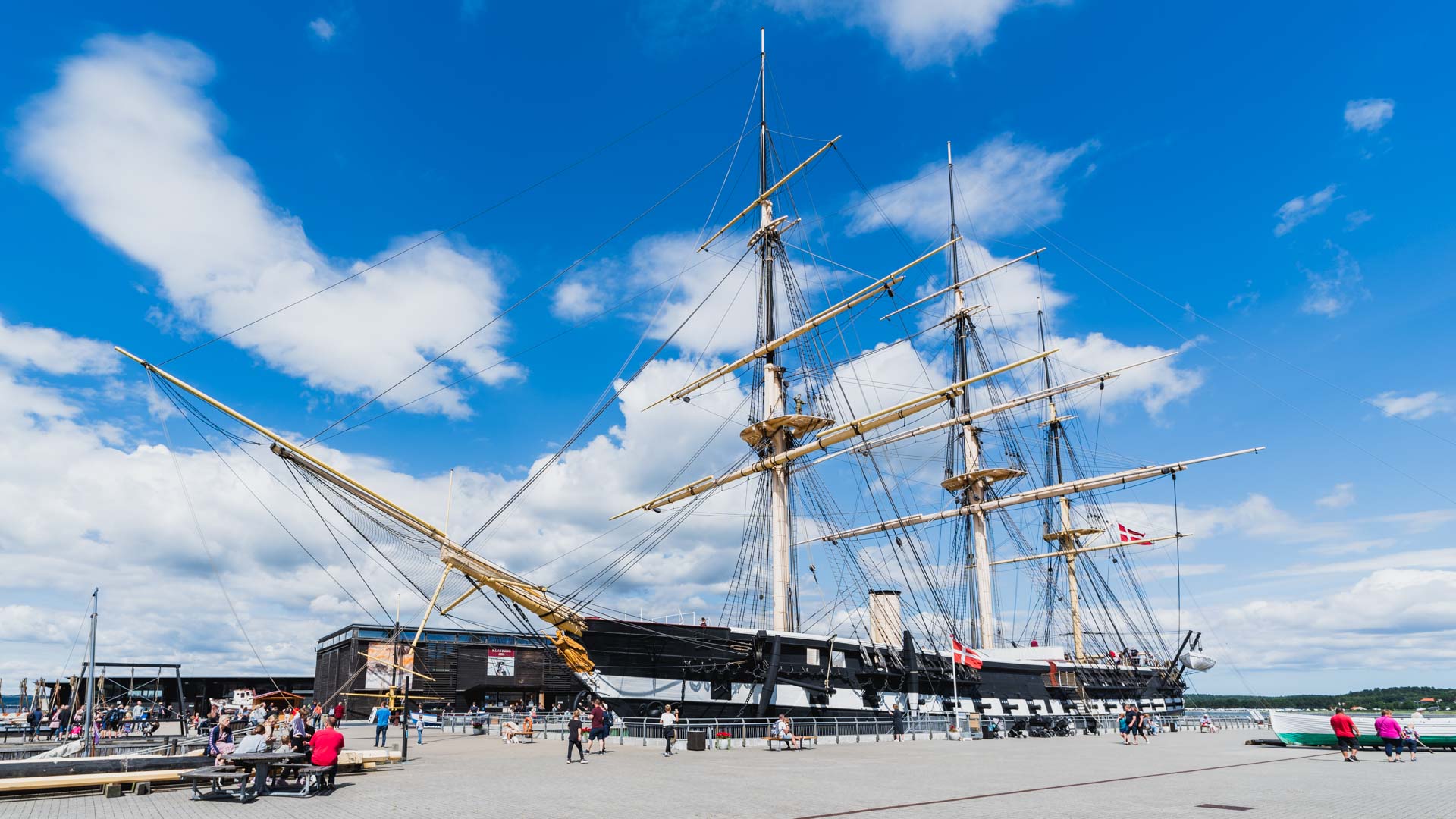
With international travel still limited by restrictions in July 2020, we decided to explore closer to home and headed to Aarhus, Denmark’s second-largest city, on the Jutland peninsula. While Aarhus offers plenty to see, my real destination was a short drive away – a historic ship I’d long wanted to visit: the legendary frigate Jylland.
As someone who’s always been fascinated by old ships, I’ve visited several famous naval vessels over the years, including HMS Victory in Portsmouth, HMS Belfast in London, and USS Constitution in Boston. But the Danish frigate Jylland, renowned for its role in the Battle of Helgoland in 1864, had been on my bucket list for years.
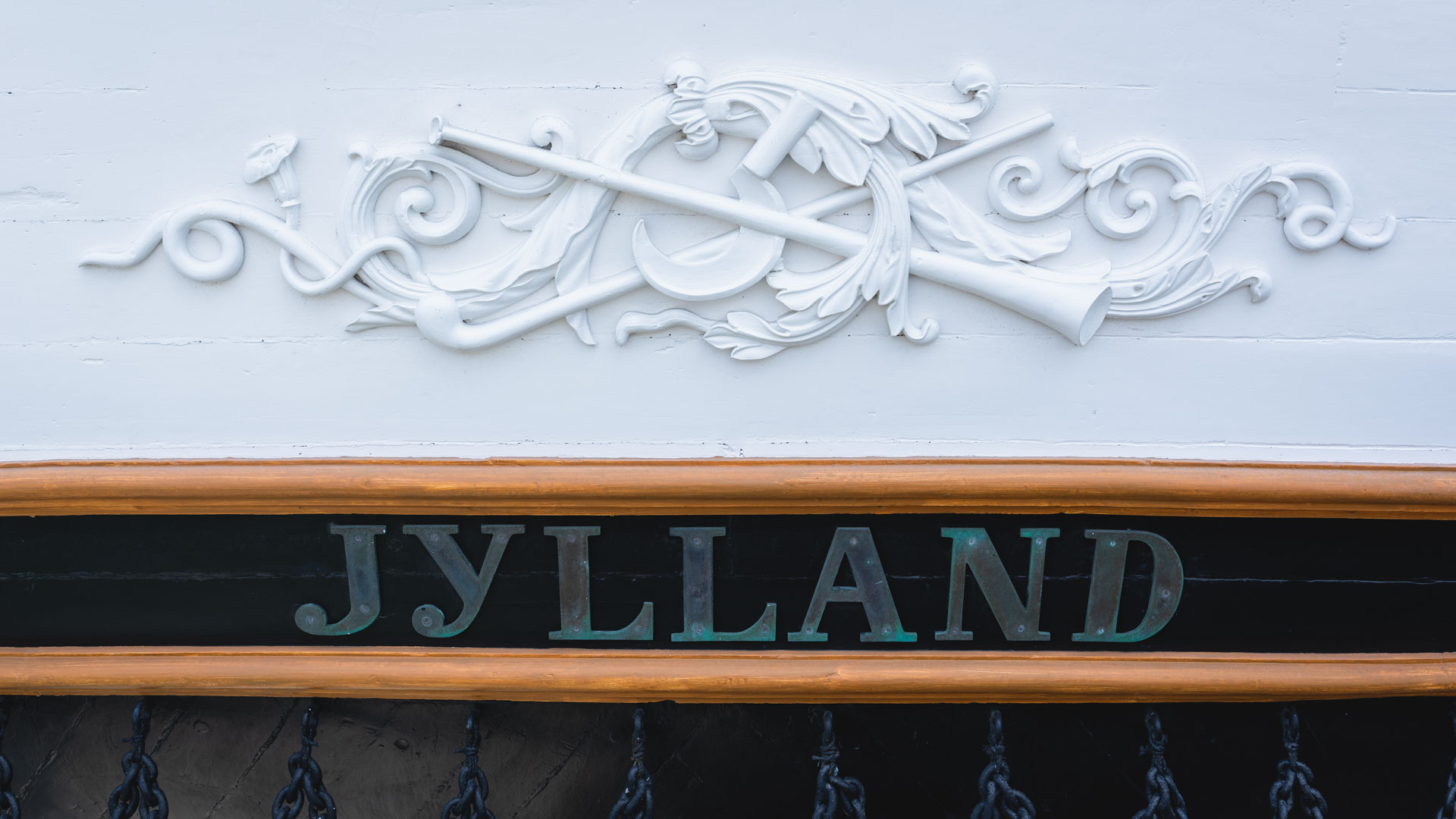
Launched in 1860, Jylland is a remarkable ship with a storied history that showcases both the challenges of war and the resilience of maritime heritage. Built for the Royal Danish Navy, it played a significant role in the Second Schleswig War, particularly during the Battle of Helgoland, where it achieved notable naval victories despite Denmark’s overall defeat.
However, the frigate faced a perilous future, coming close to destruction in the late 19th century when it was deemed obsolete and nearly scrapped. Thanks to the dedication of preservationists, Jylland was saved from this fate and is now transformed into an open-air museum. Here visitors are invited to explore the ship’s rich legacy and 19th-century naval architecture. It is an important piece of Danish naval history and deserves a visit.
Exploring the Museum at Frigatten Jylland
Our visit began with a stop at the gift shop to purchase tickets. Before stepping aboard, we passed through a small exhibit that told the story of Jylland’s dramatic past – from its construction to its near-dismantling. The exhibit also highlighted the extensive conservation efforts that have preserved this maritime treasure. There’s even a treasure chest where visitors can contribute to its ongoing preservation.
Once outside, you’re greeted by the sight of Jylland resting in a vast drydock. The ship’s grandeur is immediately striking, much like the preserved vessels HMS Victory and the clipper Cutty Sark in England. Walking around the drydock gives you a full appreciation of the ship’s scale and craftsmanship, especially as you descend to view the immense screw propeller and copper-clad hull. Standing beneath the ship, looking up at its vast curved belly, really puts its size into perspective.
The tour starts in the ship’s lowest levels, accessed via a small hatch leading directly into the cargo hold. Natural light filters in from the deck above as you climb through the ship, navigating narrow stairways that take you upwards through different levels.
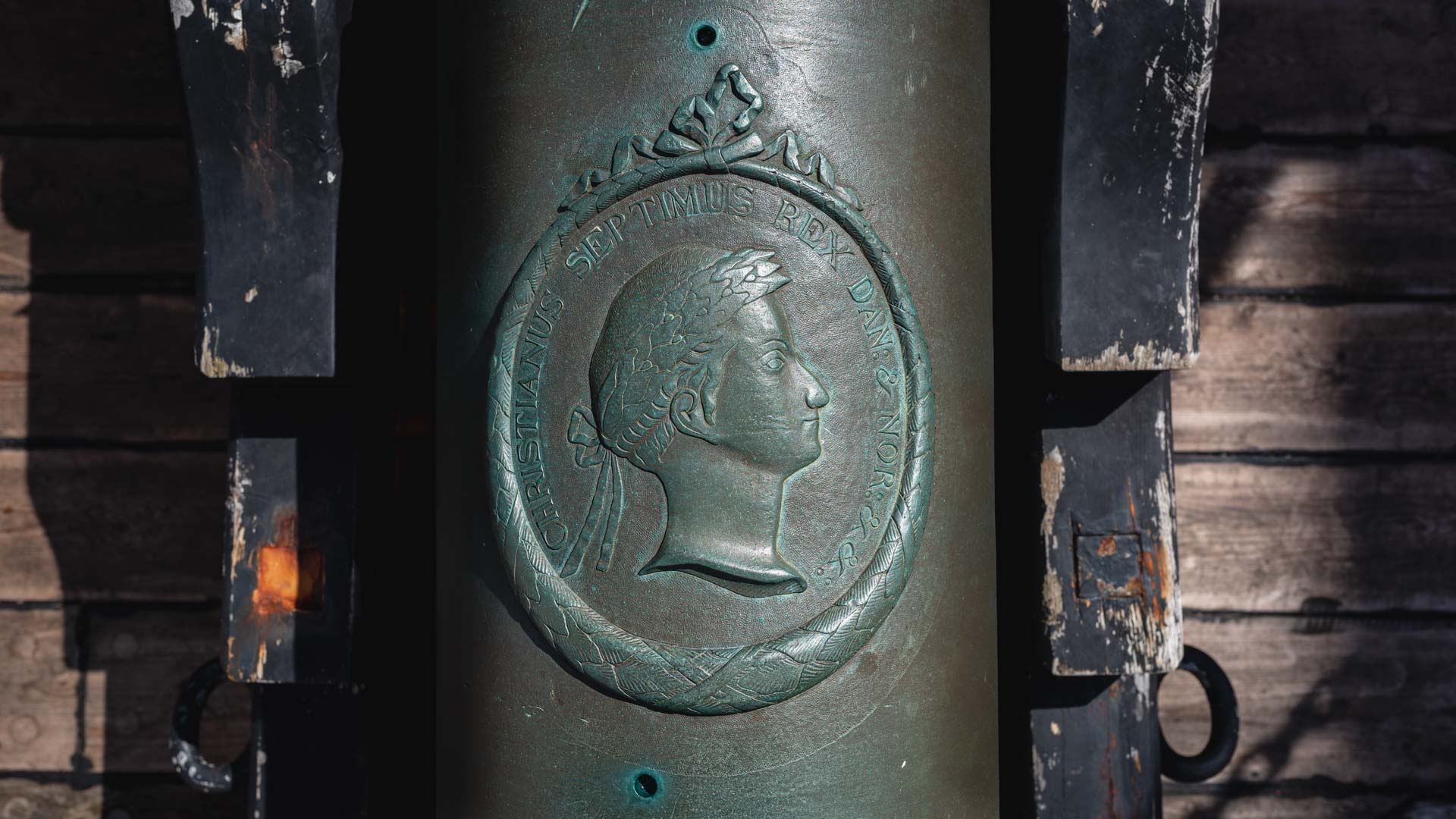
One of the highlights is the gun deck, lined with rows of imposing cannons. Although Jylland only has a single gun deck compared to HMS Victory’s three, it’s easy to imagine the powerful broadside it could unleash during its naval battles against Prussian and Austrian ships at Helgoland.
Some of the cannons, despite their brutish design, are intricately adorned with gilded coats of arms and manufacturer’s marks, hinting at the artistry behind their construction.
As a naval history enthusiast, I relish the chance to explore any old warship, and it was particularly rewarding to visit a vessel so deeply connected to Denmark’s own maritime past. Though Denmark lost the war of 1864, the Jylland’s victory at sea stands as a proud reminder of the country’s naval tradition. This ship is the last of its kind, a final relic of an era when wooden-hulled warships ruled the seas.
How to get there
Though Ebeltoft is about an hour outside Aarhus, it’s easy to reach by car or public transport. If you’re relying on public transportation, Bus 123 from central Aarhus takes you directly to the heart of Ebeltoft, and the frigate is just a short walk from the bus stop. Whether you’re a history buff or simply curious about Denmark’s naval heritage, Frigatten Jylland is well worth the trip.