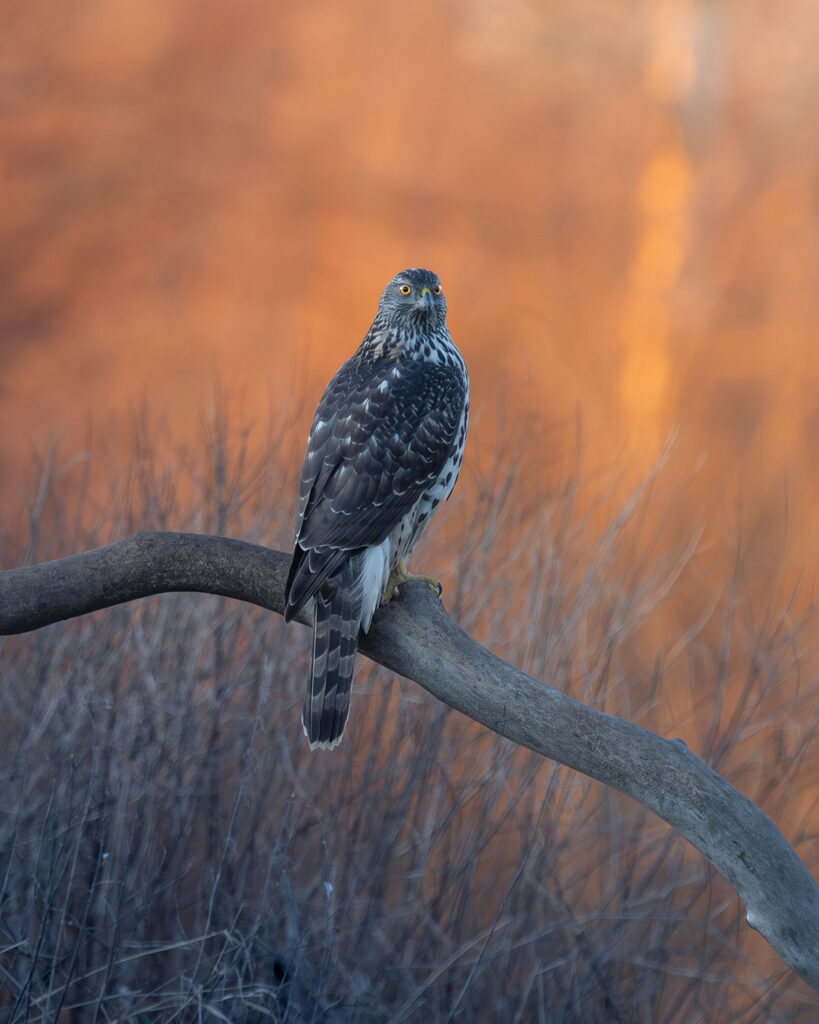

Northern Goshawk
This January marked my fourth visit to Friskens Fotogömsle in southern Sweden, solidifying what’s becoming an annual tradition. Every trip offers something unique, and this year was no exception. While our usual focus on White-Tailed Eagles was met with fewer opportunities, the day’s excitement came from an unexpected and thrilling encounter with a Northern Goshawk – my first-ever images of this elusive predator.
Located near Vittskövle in Southern Sweden, Friskens Fotogömsle has become my go-to destination for capturing bird-of-prey images. With no glass between the camera and the wild, it offers optimal photography conditions. The hide requires photographers to commit to an entire day, entering before sunrise and staying until the last light fades, but that immersive experience is part of what makes this place special.
This year, the White-Tailed Eagles – often the stars of the show – mostly kept their distance. Around six could be spotted in the surrounding trees, their unmistakable silhouettes framed against the wintery sky. While none ventured close enough for prime shots, other species kept the action alive.
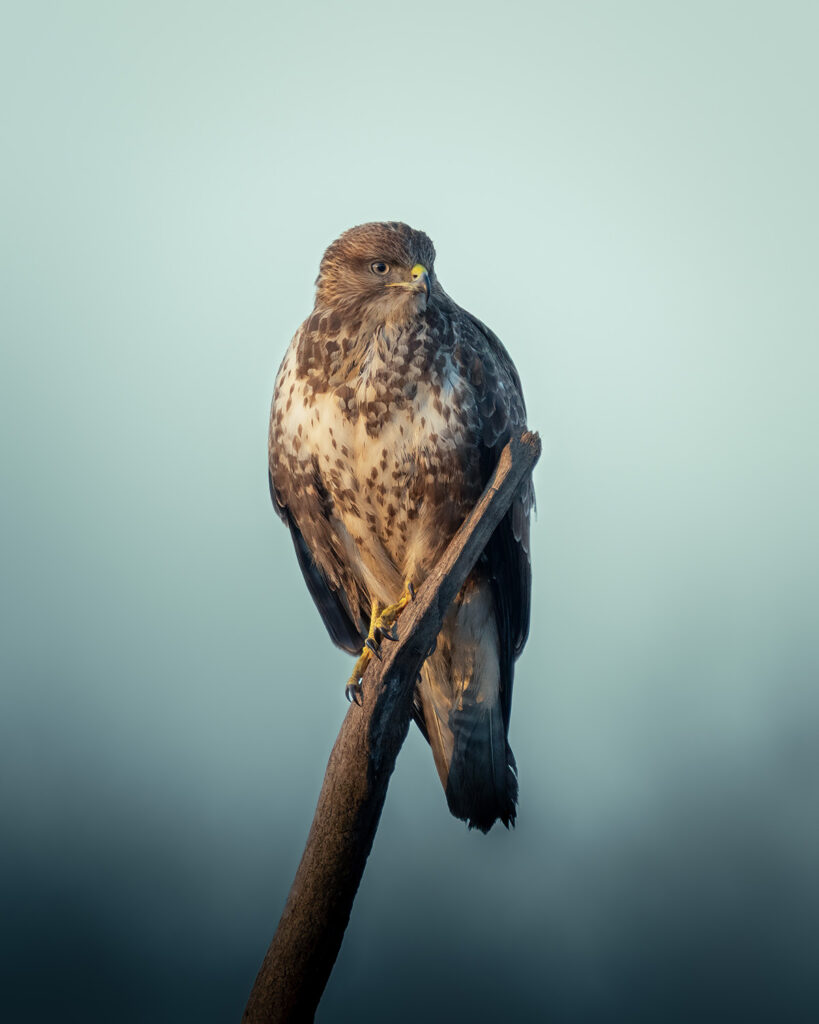
Common Buzzard
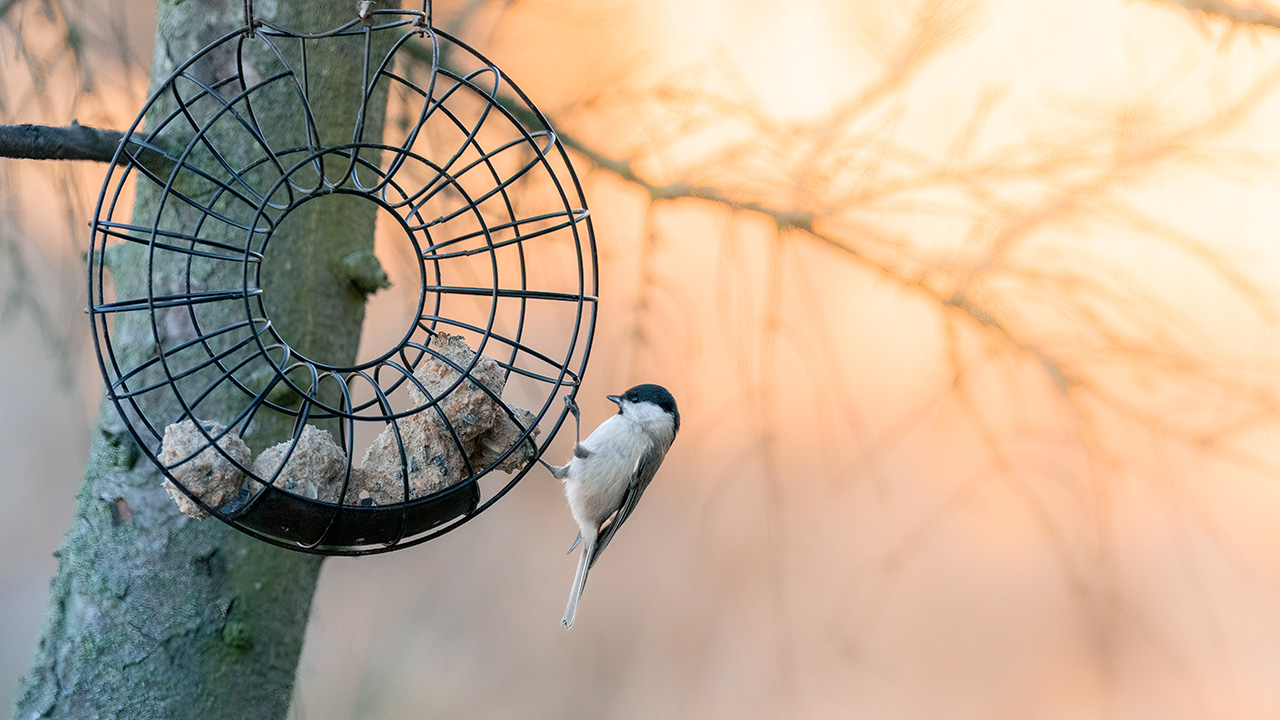
Marsh tit
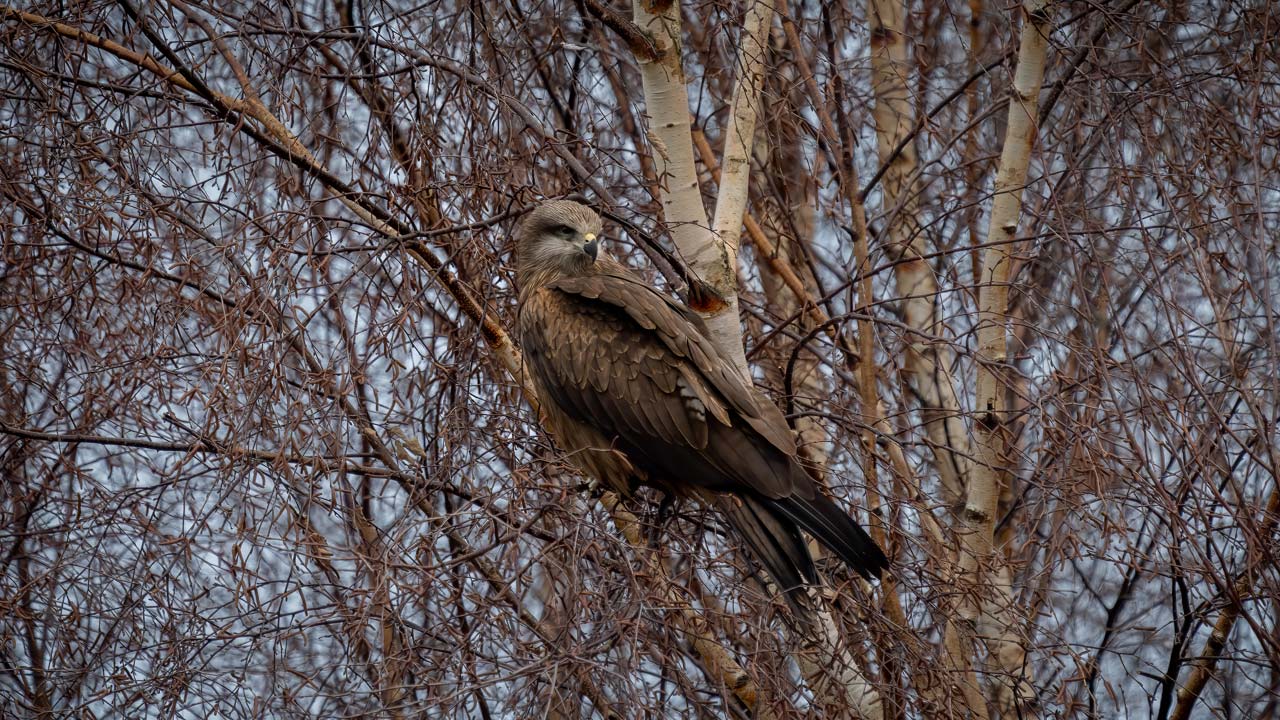
A variety of gulls and Common Buzzards took full advantage of the food placed outside the hide. Their movements provided constant activity, while Red Kites occasionally soared overhead. But it wasn’t until midday that the real surprise appeared: a lone Black Kite glided above us before perching in a nearby tree. Seeing this bird at Friskens was a rare treat, one that made the hours of waiting worthwhile.
Black Kite
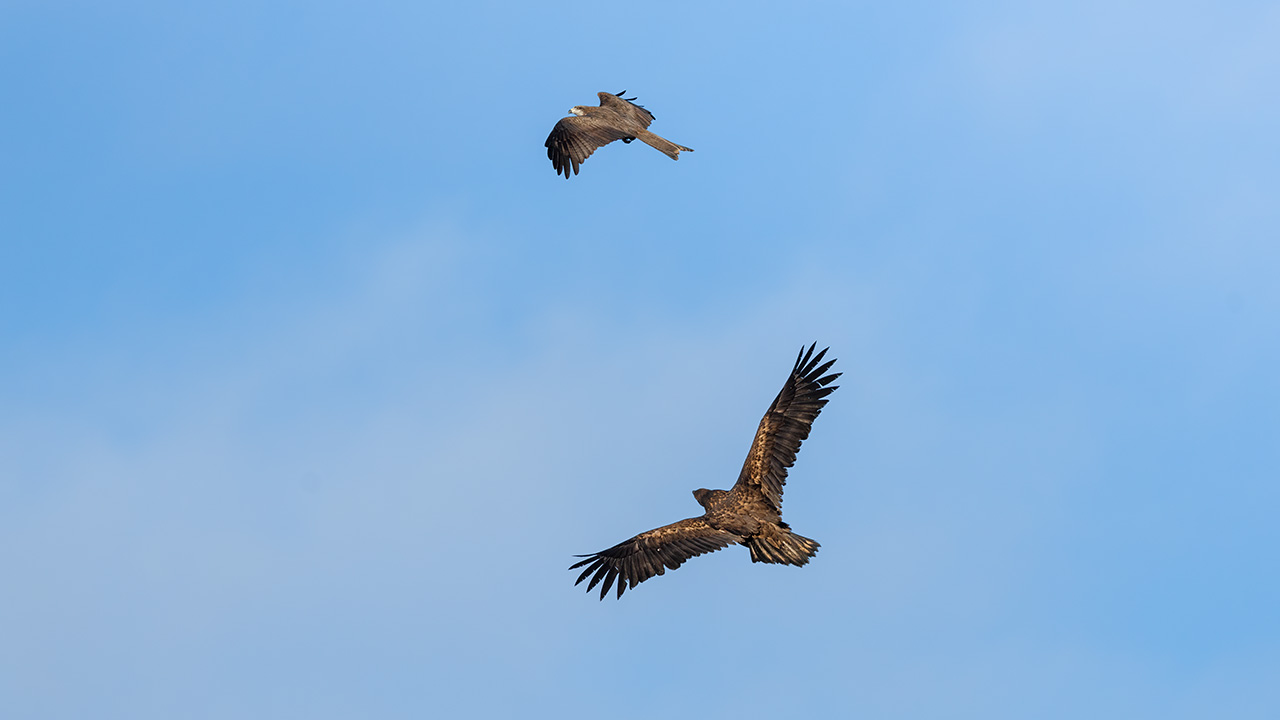
White-tailed Eagle and a Black Kite
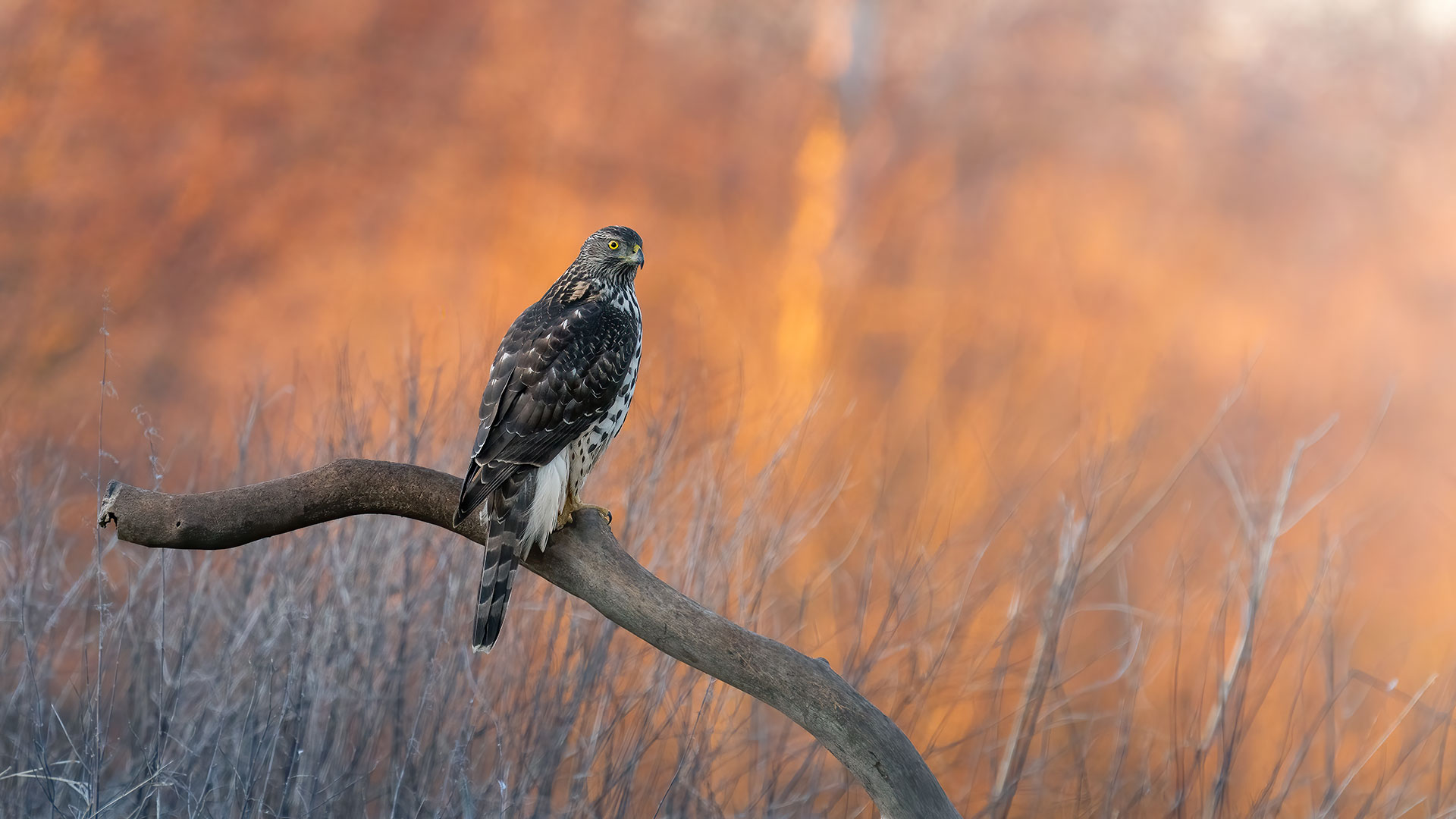
As the sun dipped lower and we began to pack up, I noticed movement in the fading light. At first, I thought it might be another buzzard, but something about its posture and presence was different. Quickly unpacking my camera, I focused my lens on the unexpected visitor.
It was a Northern Goshawk.
Northern Goshawk
This powerful predator, often elusive and rarely seen up close, perched on a branch just long enough for us to capture a series of shots. This was my first time photographing a goshawk.
Each visit to Friskens Fotogömsle offers new challenges and rewards. While we didn’t capture as many eagle images as in previous years, the experience is always worth the trip and money. The Northern Goshawk was a highlight I hadn’t dared to hope for, and it reminded me why I keep returning to this special hide year after year.

In October 2024, I made my third visit to Friskens Fotogömsle in southern Sweden, returning earlier than usual this year with one goal in mind: to capture wild eagles and other birds of prey set against the stunning autumn colors – and perhaps, to finally see the elusive Golden Eagle or Black Kite.
Friskens Fotogömsle (Swedish for photo hide) is a premier wildlife photography hide in southern Sweden near Vittskövle. I’ve had the pleasure of visiting twice previously with fellow photographer @mariusfolkmann. During our trips, we captured fantastic images of White-Tailed Eagles in their natural habitat.
Friskens is known for offering exceptional opportunities to photograph eagles, kites, and other birds of prey up close. Unlike many other hides, there’s no glass barrier between your camera and the wildlife; instead, the lens is placed through a small opening in the wall, allowing for unobstructed shots right outside the hide, providing ideal conditions for bird photography.
Like many photography hides, you must enter Friskens before sunset and remain inside until the sun has fully set in the evening. We usually arrive the day before our shoot and sleep in the hide, allowing us to wake up at 6 AM and prepare for the day ahead. Starting in 2024, Friskens offers nearby accommodation, but we still prefer the experience of sleeping inside the hide, ready to capture the first light and the wildlife it brings.
We woke about 6AM and prepared the hide and camera equipment for the day. As on previous visits, the morning began with a flurry of activity in front of the hide just before sunrise. Around 10-15 White-Tailed Eagles soared overhead, joined by about 10 Red Kites circling the feeding grounds. But amid the White-Tailed Eagles, something unusual caught our eye. There it was—our first Golden Eagle at Friskens Fotoglömsle! What an incredible sight!
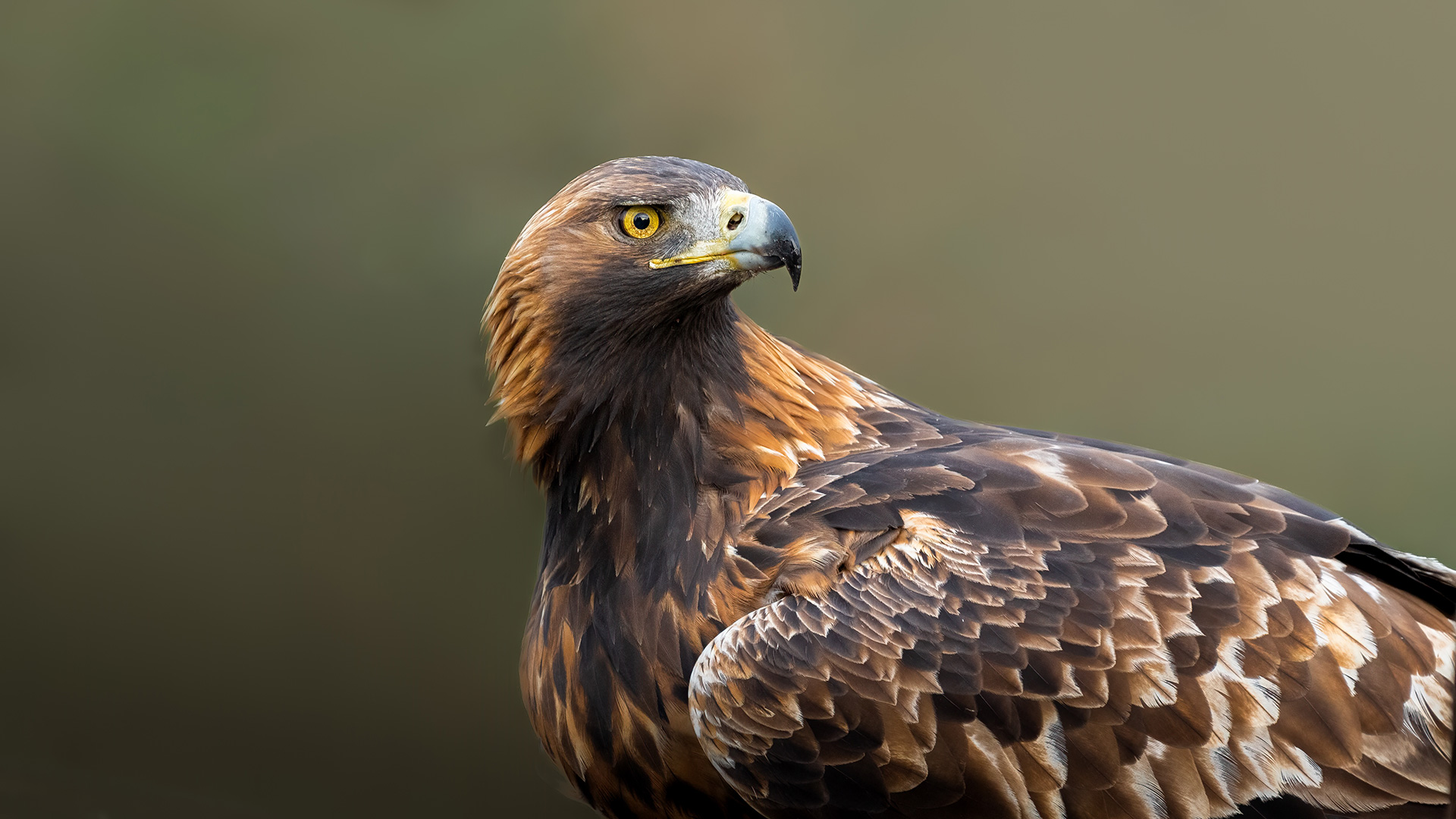
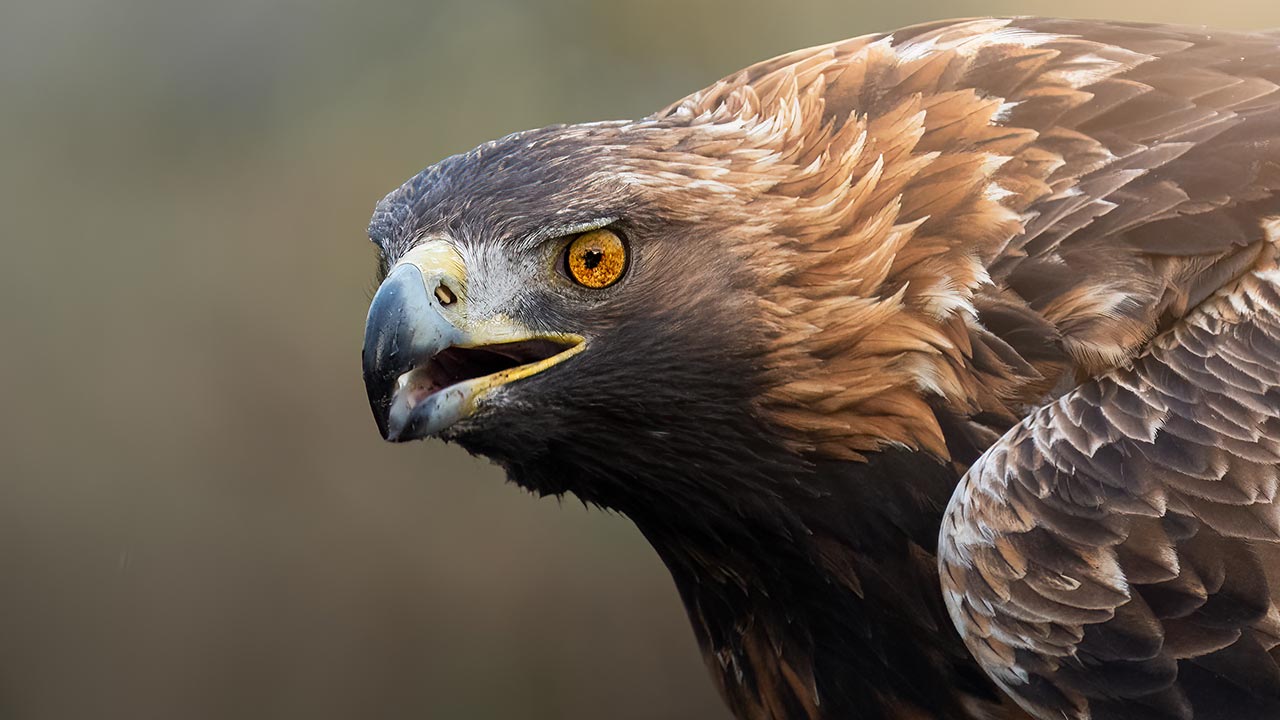
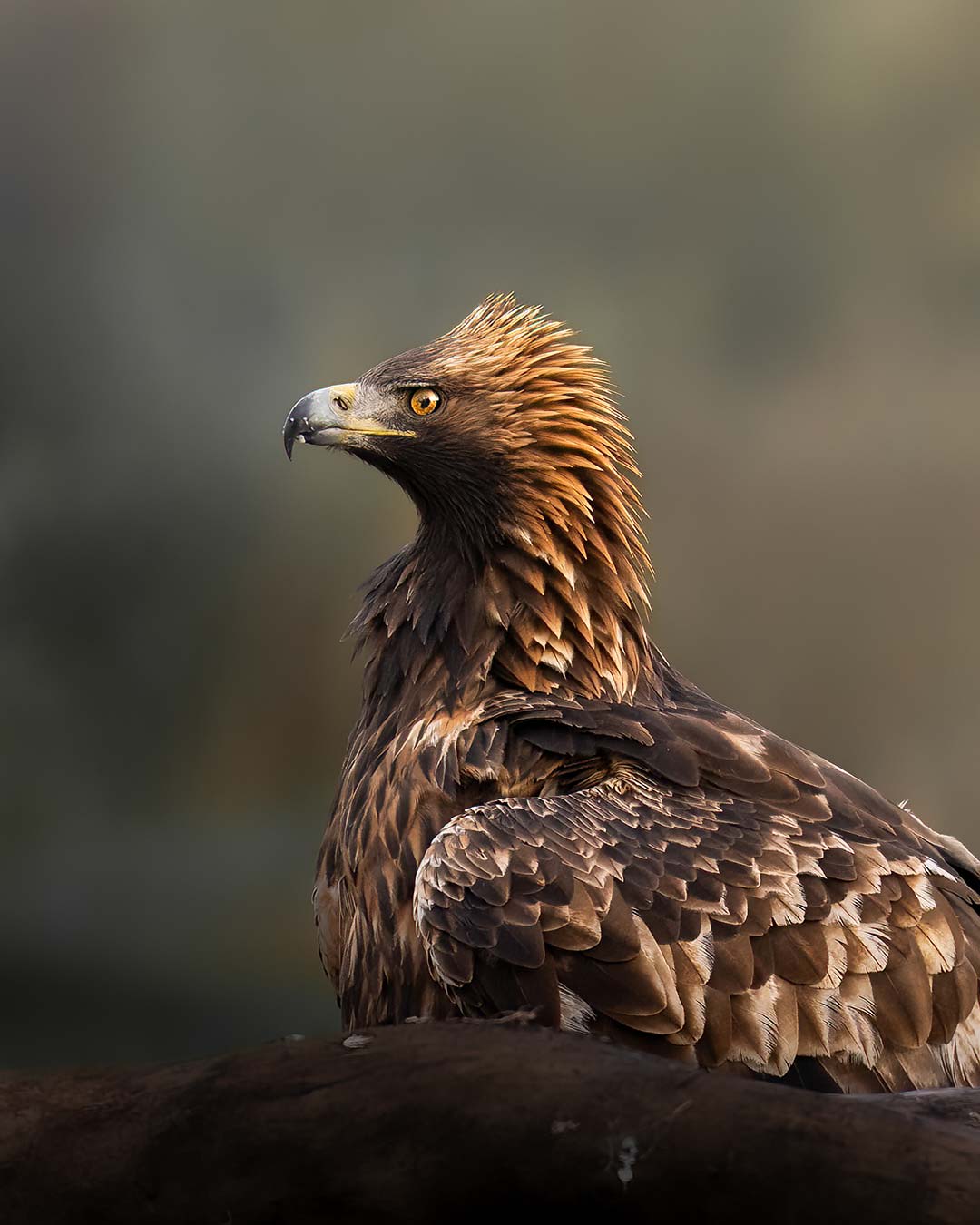
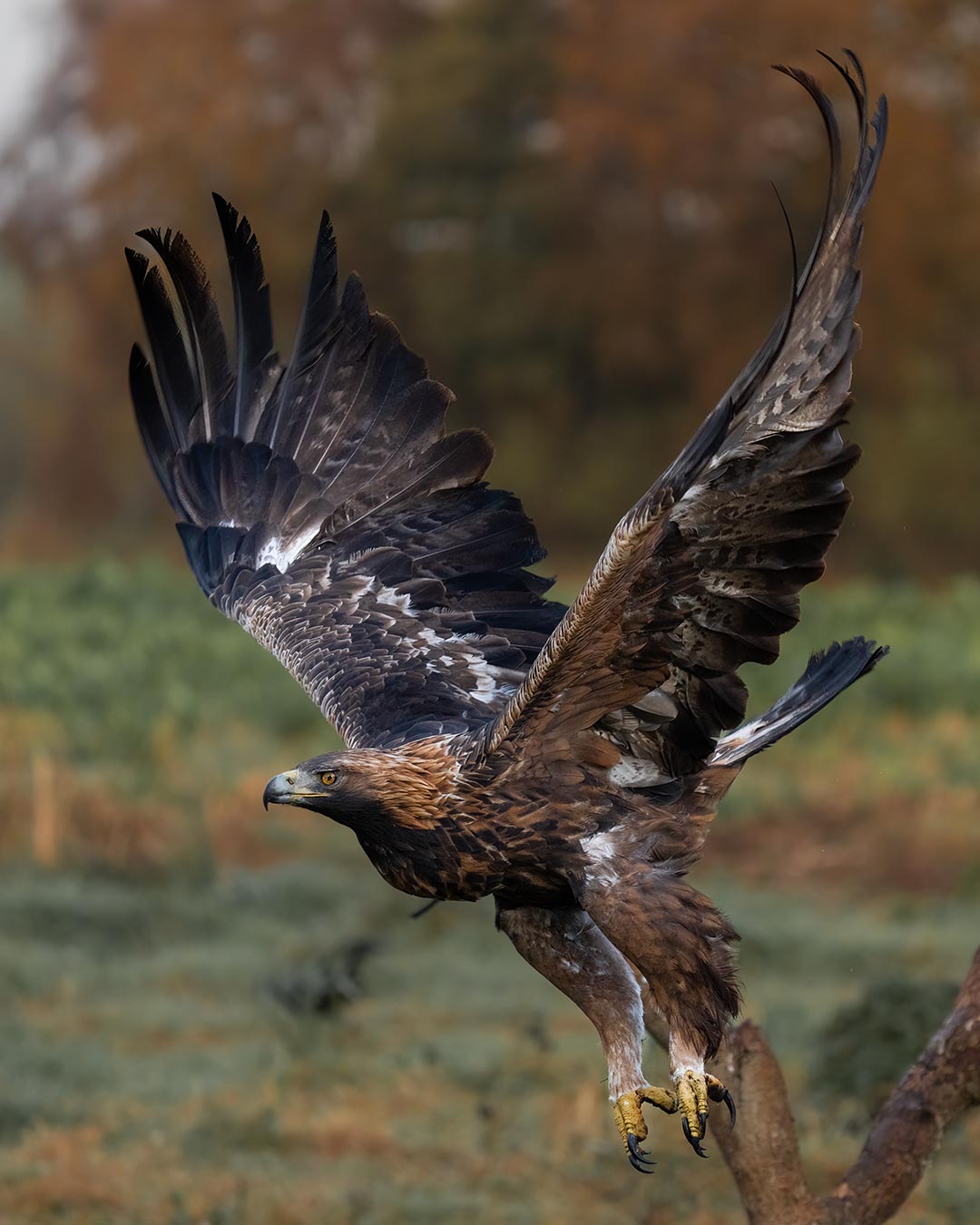
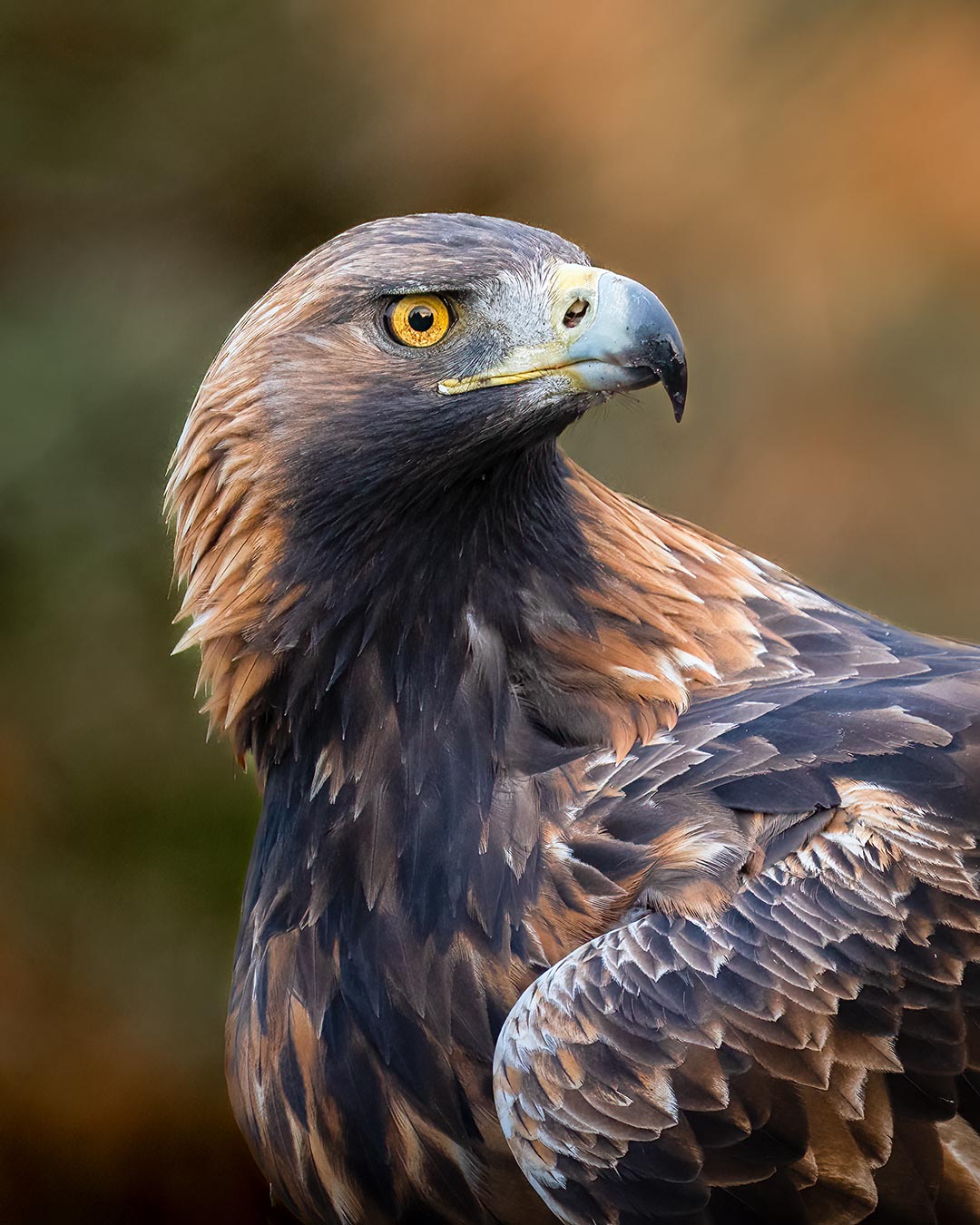
Golden Eagle
Short video of the Golden Eagle in front of the hide
The Golden Eagle is a large bird of prey, but it’s highly cautious and quickly detects any sudden camera movement. I suspect it noticed us in the hide at one point, as it flew 10-15 meters away and stared intently at the hide for a while. We stayed perfectly still and avoided moving our cameras, which eventually convinced the eagle to return to the feeding frenzy in front of us. This gave us plenty of opportunities to photograph it.
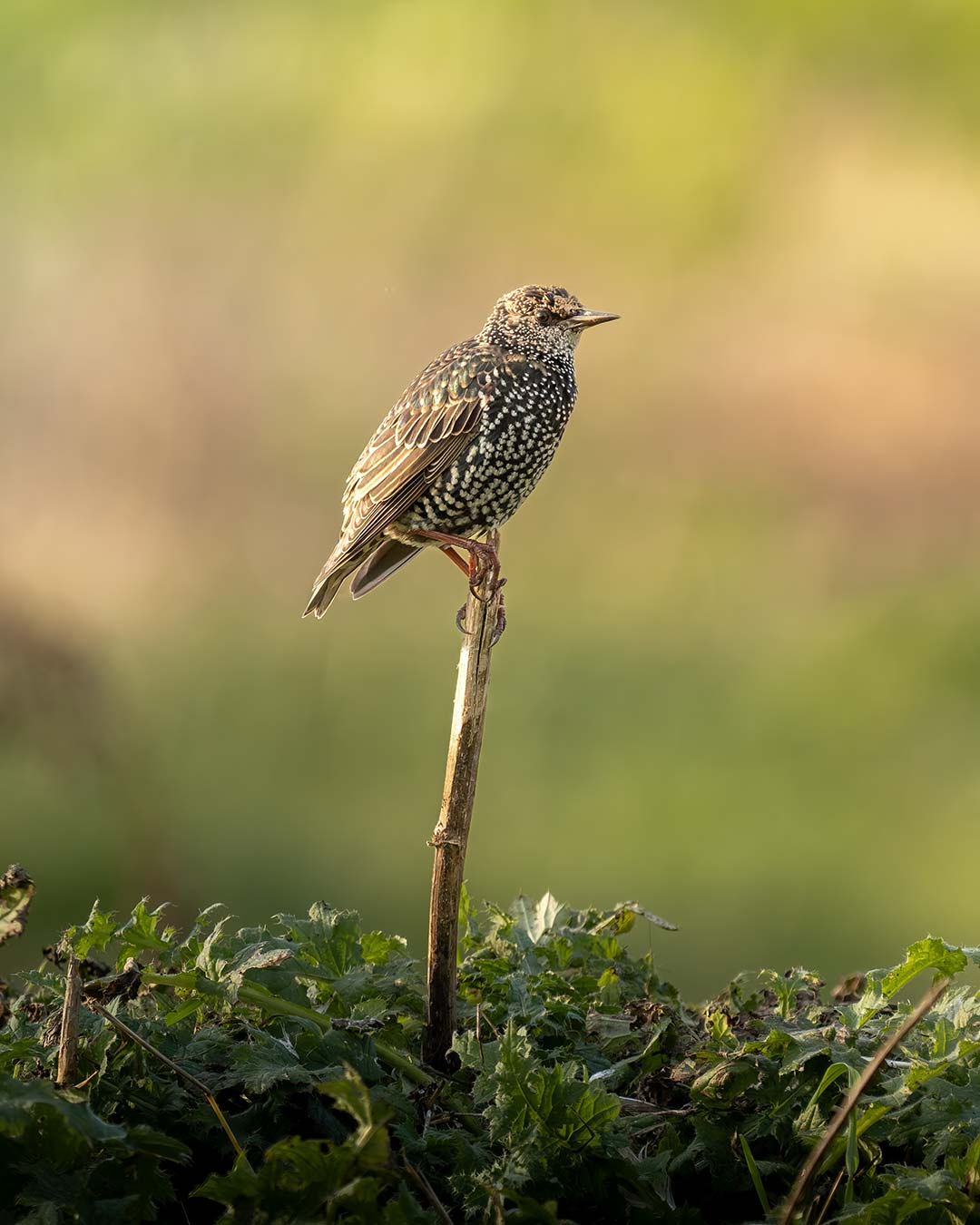
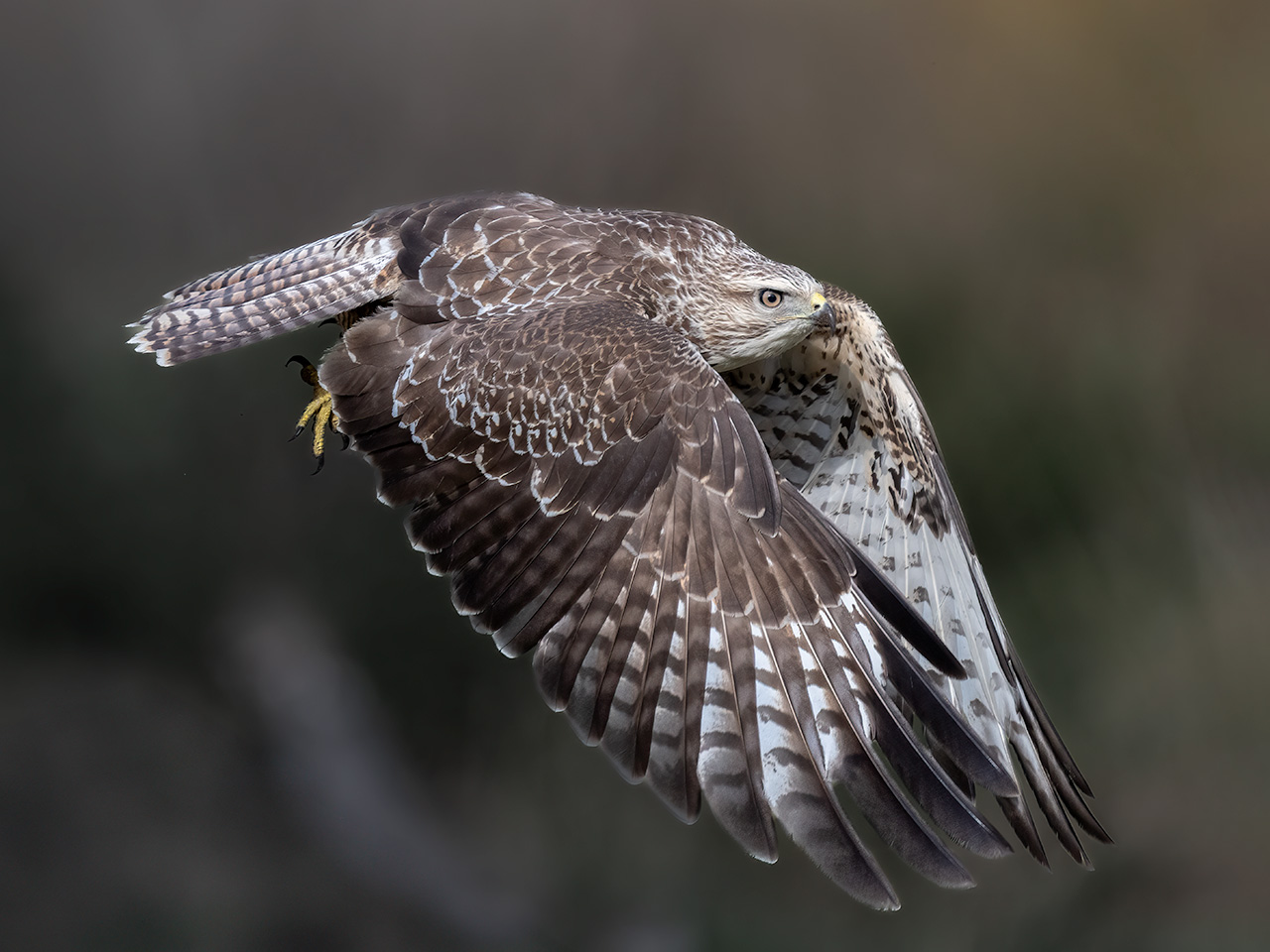
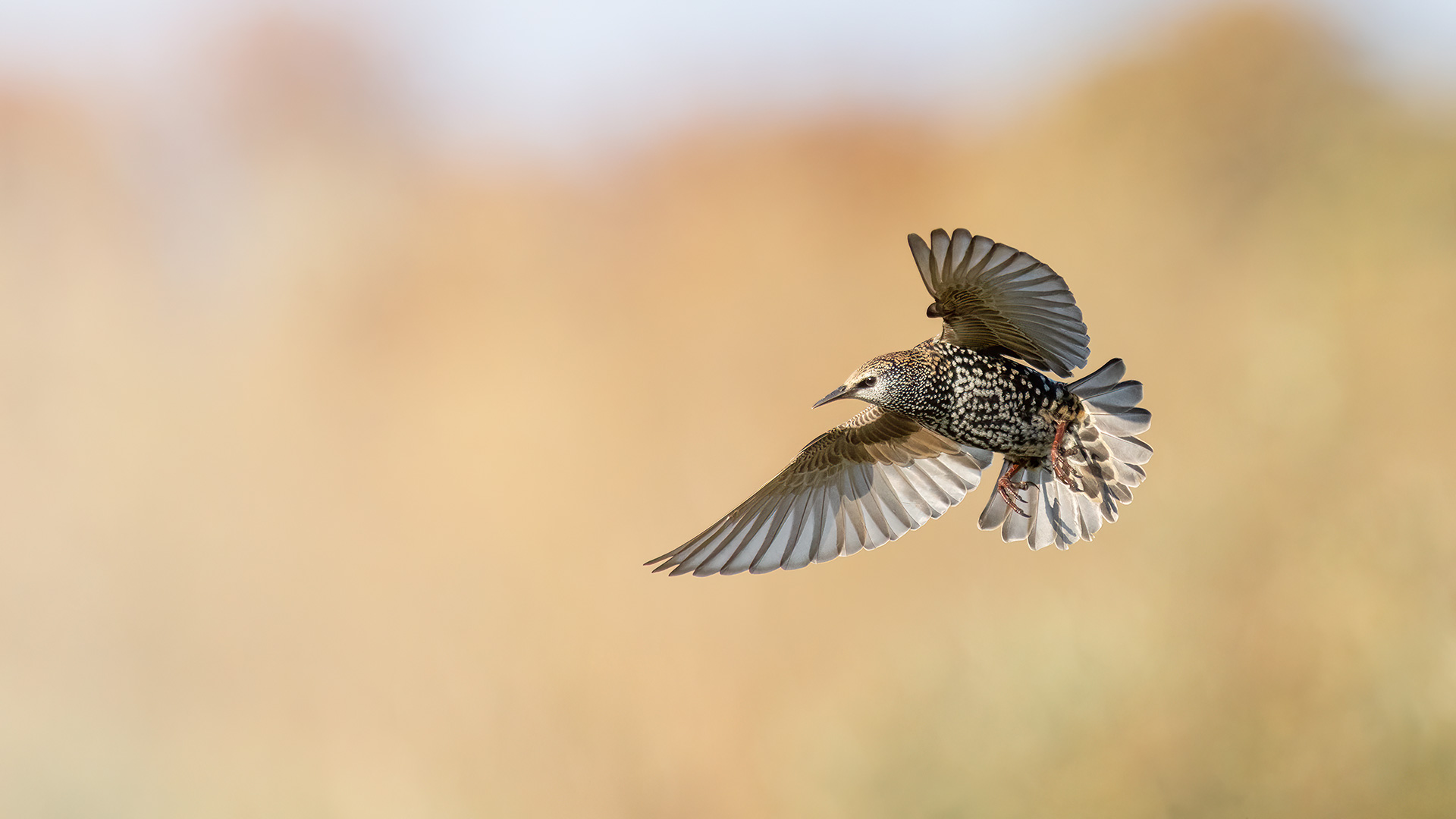
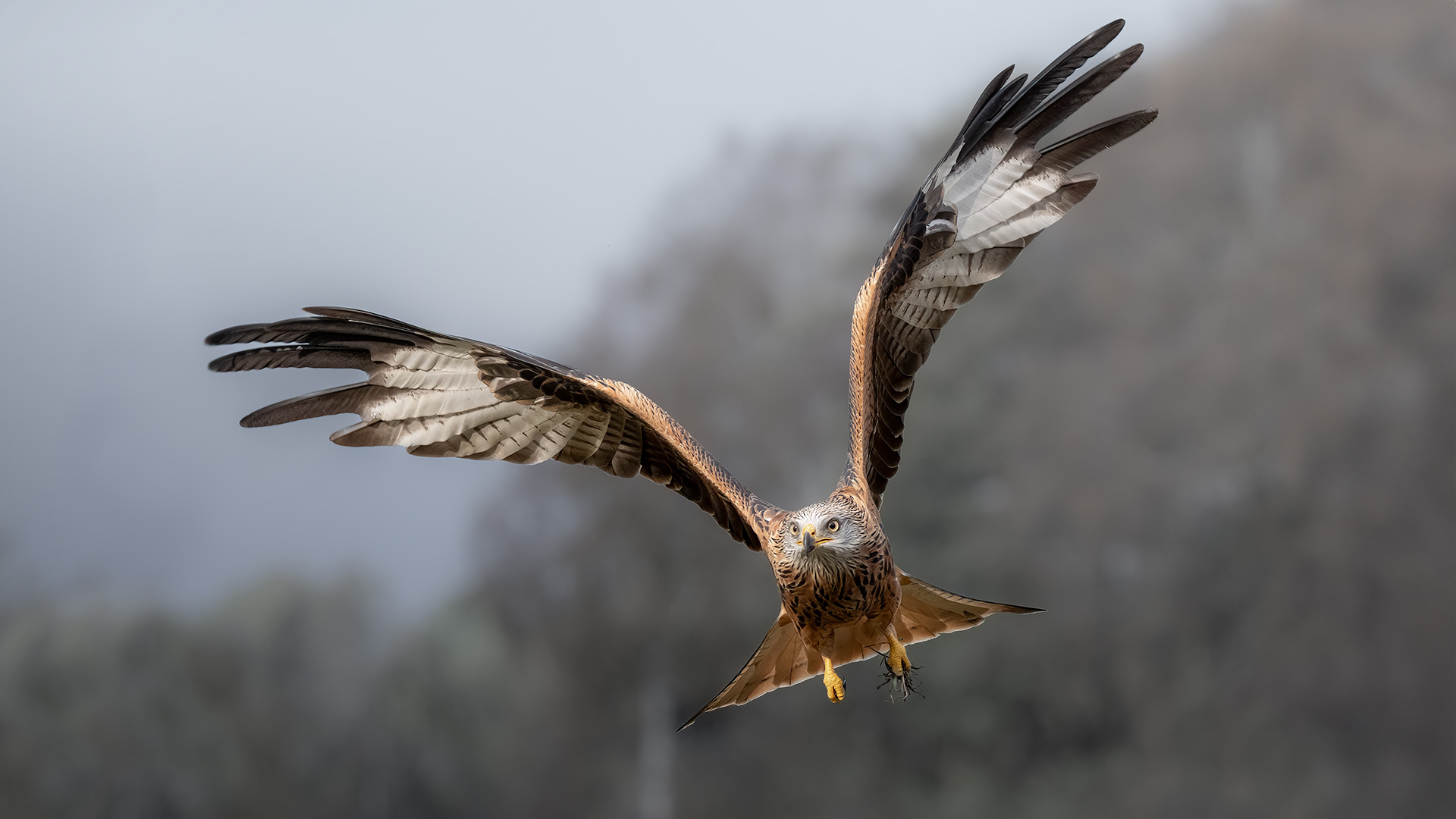
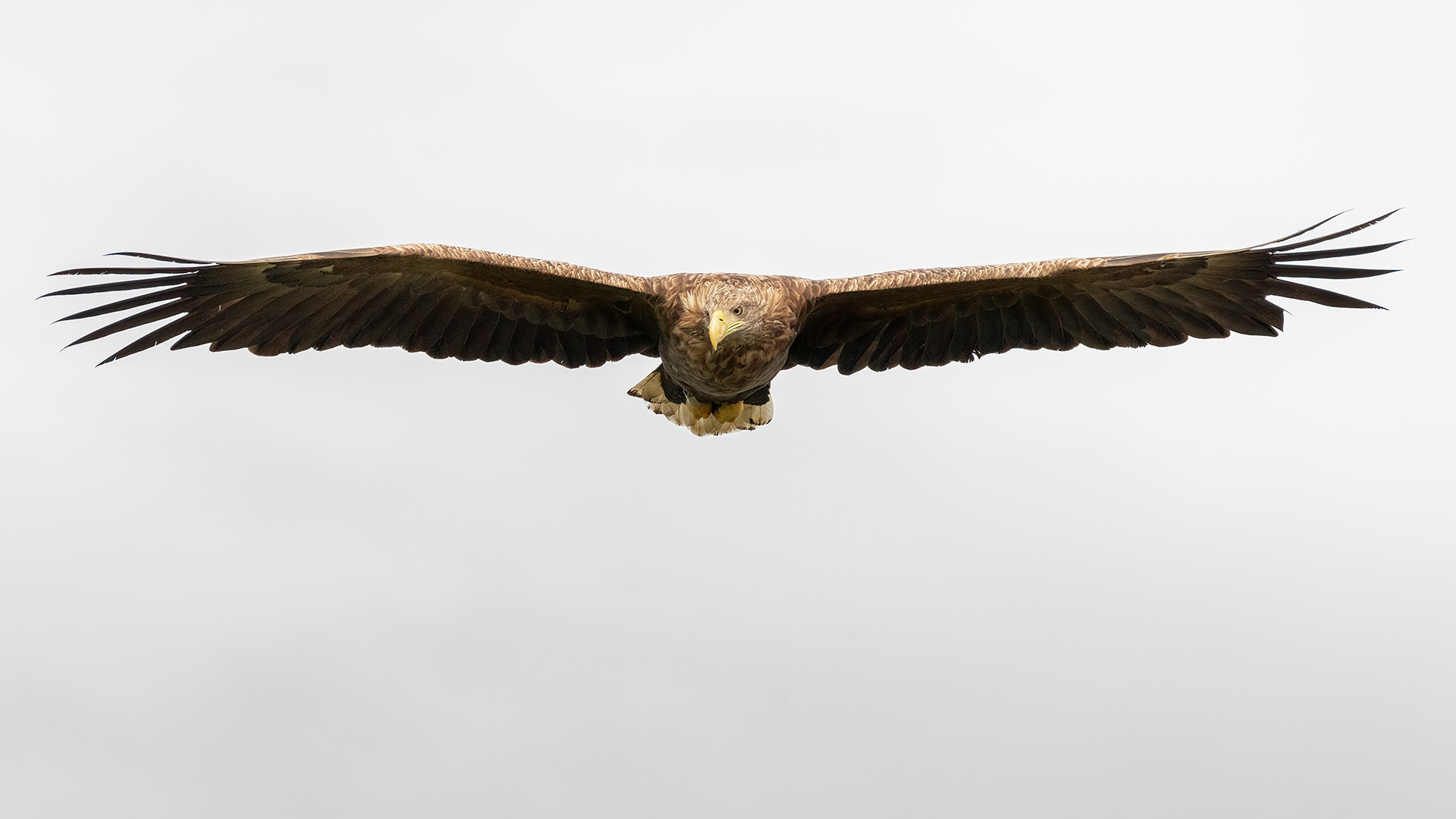
While the Golden Eagle was the highlight of our trip, we also captured photos of the White-Tailed Eagle, Common Buzzards, Red Kits and even some Common Starlings.
Read more about Friskens Fotogömsle at friskensgomsle.se or see my previous posts about my first visit in January 2023 and second visit in November 2023.

I embarked on a wildlife photography trip to El Taray Hides, a renowned nature reserve in Spain. Here’s a glimpse into my experience and the incredible moments I captured.
As a wildlife photographer, I’ve found that connecting with fellow photographers is the best way to uncover prime wildlife locations around the world. While I frequently share tips on Danish spots with other enthusiasts, I sought recommendations for areas with bird hides across Europe.
I reached out to a Facebook group dedicated to Danish wildlife photographers, where one member suggested El Taray in Spain, along with a local travel agency that organizes trips there.
Although the agency’s website, hideseltaray.com, was only in Spanish — something that initially gave me pause — I decided to take a leap of faith and contacted them in English via email. To my delight, they responded promptly and helped me book a four-day trip for September 2024, priced at €1,017. While I was responsible for arranging my own flights, the agency took care of the hotel, hide rentals and transportation from the airport and to the hides.
This article chronicles my journey to El Taray and the images I captured along the way. I hope it serves as a helpful guide for other photographers planning their own trip to this remarkable area. For more details, including information about the travel agency Wild Travel Spain, be sure to check out the end of this article.
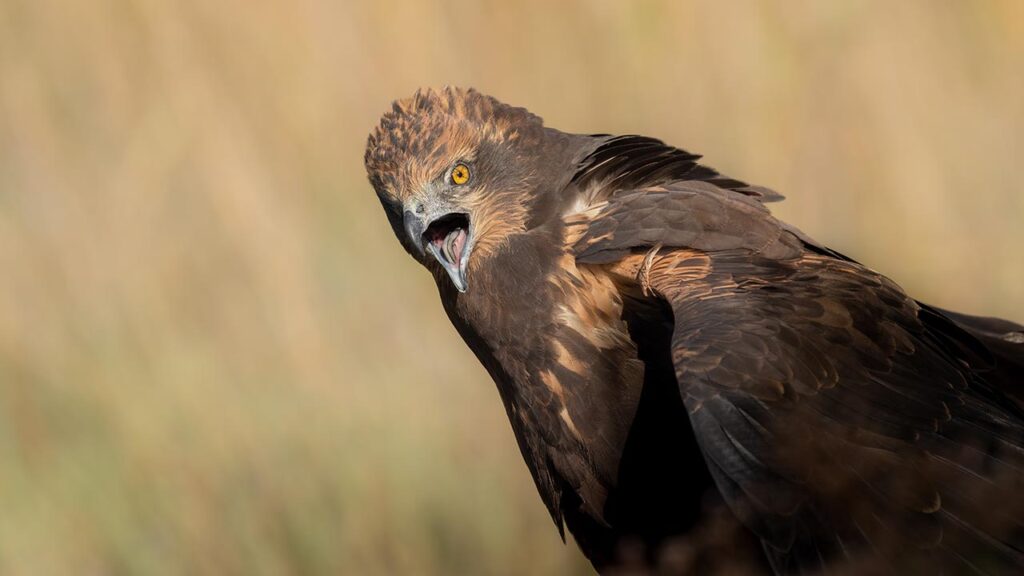
A Marsh Harrier let out a piercing scream at El Taray, where they were the most frequently spotted birds in front of the hides.
The travel agency Wild Spain Travel, which operates the website hideseltaray.com, arranged for my pickup at Madrid-Barajas Airport around 2:30 PM. From there, I was taken directly to Villacañas in the southeastern part of Toledo province, where they had arranged my stay at Hostal Prickly.
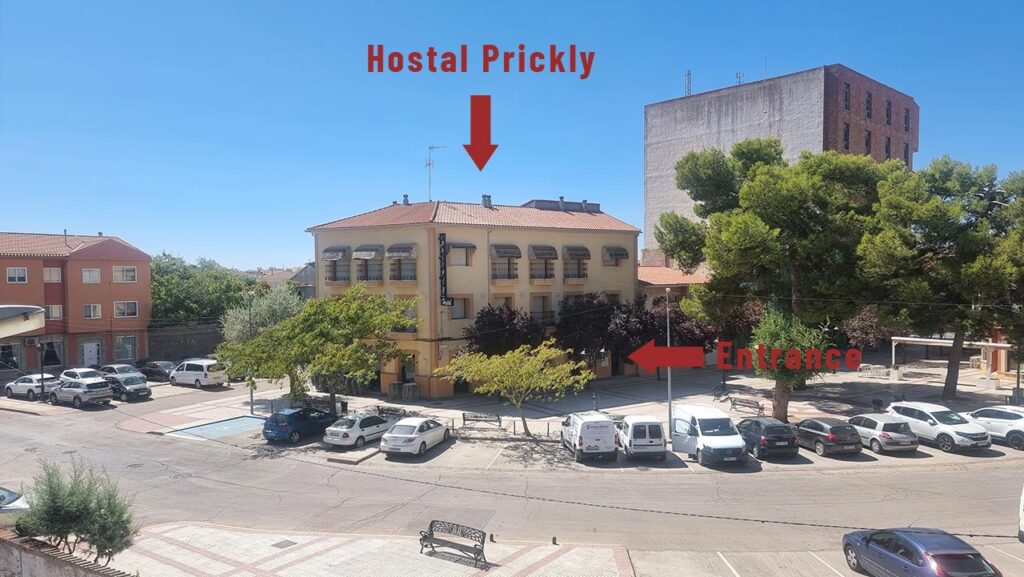
The accommodation for the trip was at Hostal Prickly, though finding the entrance was a real challenge.
Unfortunately, my Spanish is almost non-existent, and neither the drivers nor the hotel staff spoke any English, making communication quite challenging. However, we were able to get by using gestures, ChatGPT translations, and the Google Translate app to convey the essentials.
Despite the early start to catch my flight from Copenhagen to Madrid, I was excited for my first hide visit that afternoon. At 5:45 PM, I was picked up my the hostel, and by 6 PM, I was settled into the La Mangada hide, eager for my first experience with the birds of Spain.
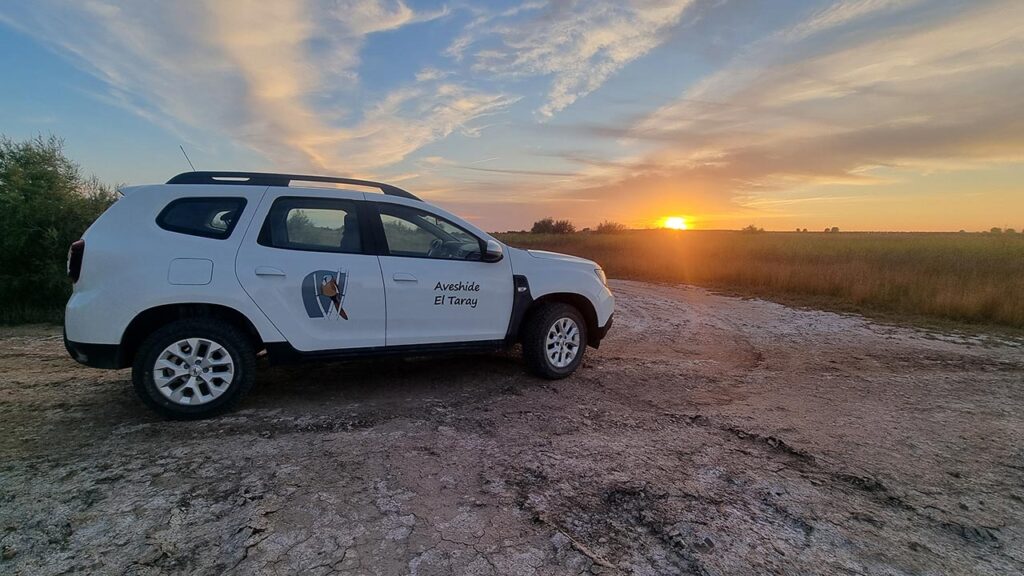
The transport to and from the hides
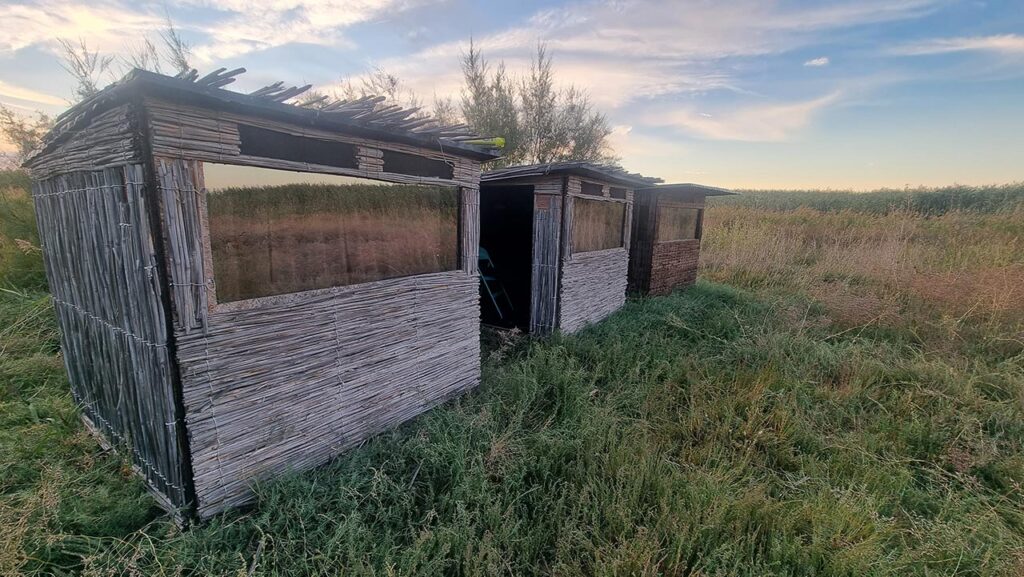
The La Mangada hides. Each hide could hold two photographers
The La Mangada hide offers a prime opportunity to photograph Marsh Harriers, Common Buzzards, and even the occasional Mongoose. I only encountered Marsh Harriers on my visit to the hide, but even though they are common in my home country of Denmark, it is always a delight to witness these birds up close.
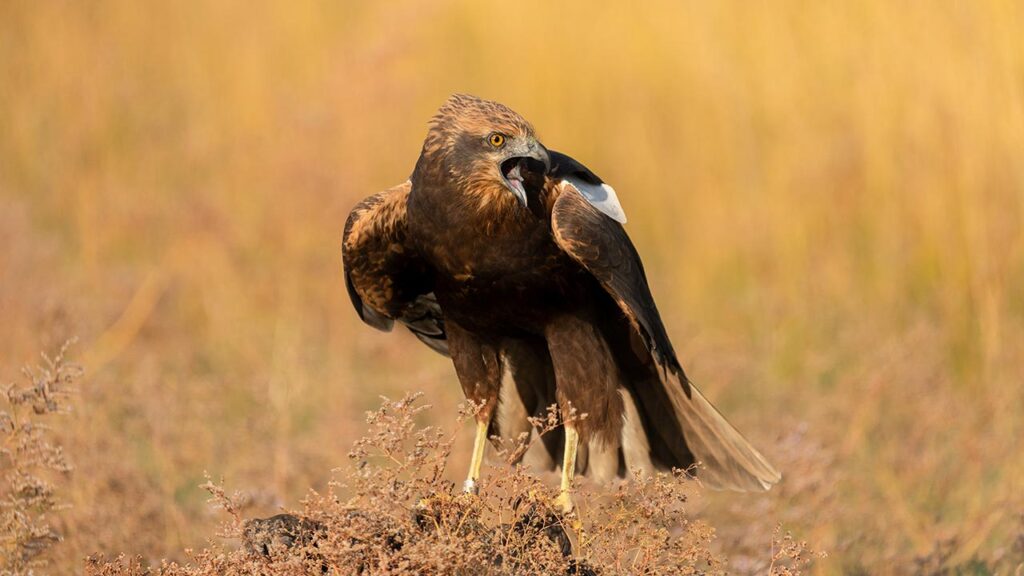
Marsh Harrier at the La Mangada hide
We where only two photographers at this hide, so I was lucky to get a whole hide for myself. We were visited by only three different Marsh Harriers during our 3½ hour, but the hides and offered excellent opportunities to use both my Sony 200-600mm and Sony 70-200 F2.8 GM2 lenses.

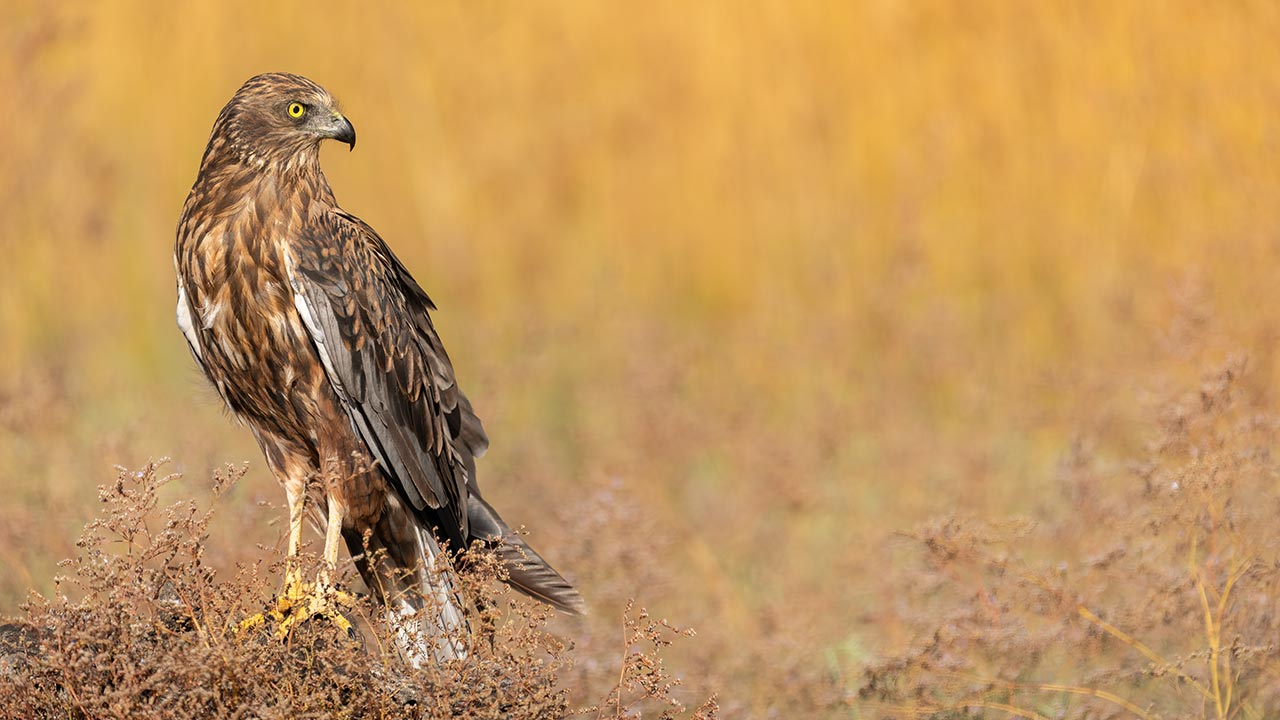
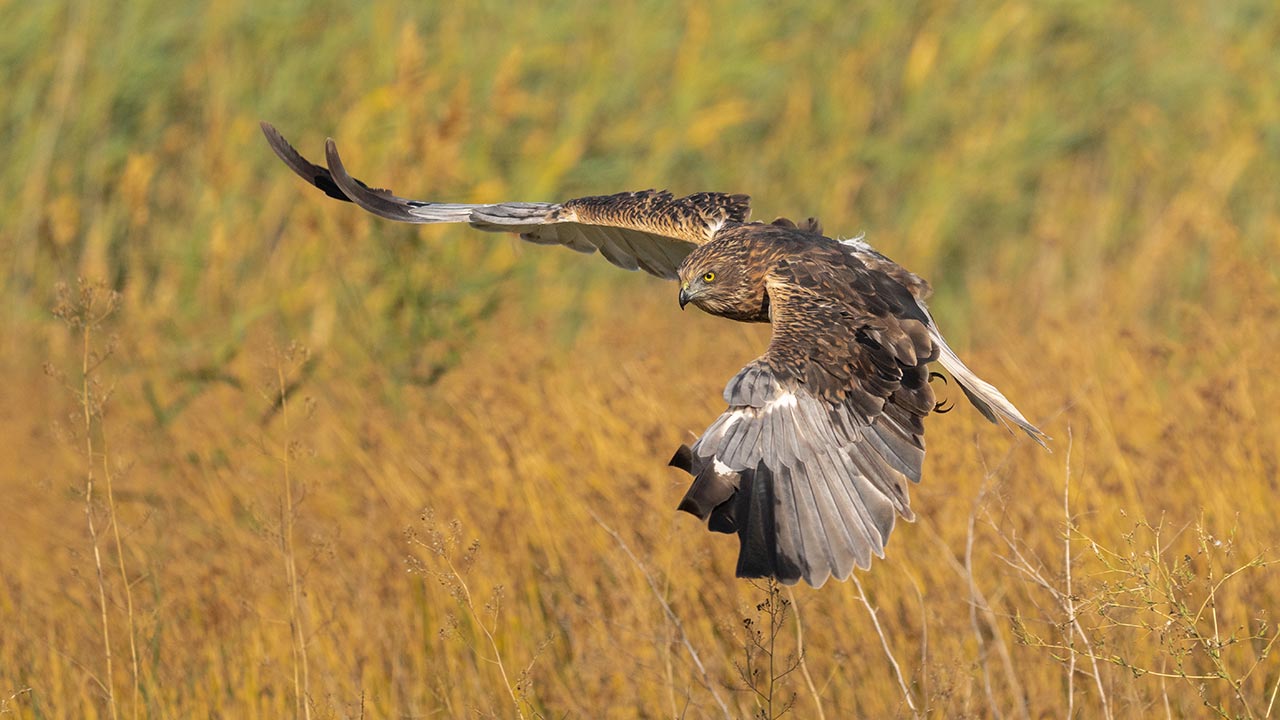
Various Marsh Harriers from the La Mandaga hide
In the evening I returned to my hotel to edit my photos. Luckily Spanish restaurants are open late, so when I finished around 10PM I could walk down the starts to an excellent pizzaria and enjoy a nice pepperoni pizza and some local beer.
At 5:40 AM, the same driver arrived to take me to Laguna El Taray, where I joined two fellow wildlife photographers for a morning session in the El Espartal hides. Our mission was to witness the magnificent Spanish Imperial Eagle — the crown jewel of my trip.
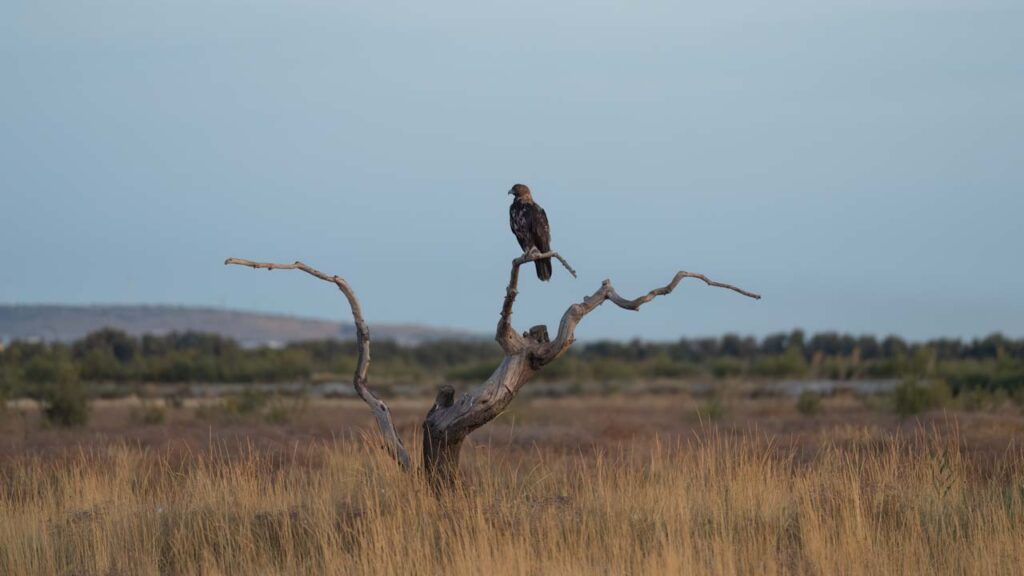
First sighting of the Spanish Imperial Eagle
At first, only a few Marsh Harriers appeared, but then, unexpectedly, a large bird of prey landed in a nearby tree, scanning the area before swooping down to join the feeding frenzy in front of the hides. With the sun still low on the horizon and the blue hour lingering, I believe I managed to capture some decent shots of the Spanish Imperial Eagle – my primary goal for the trip.
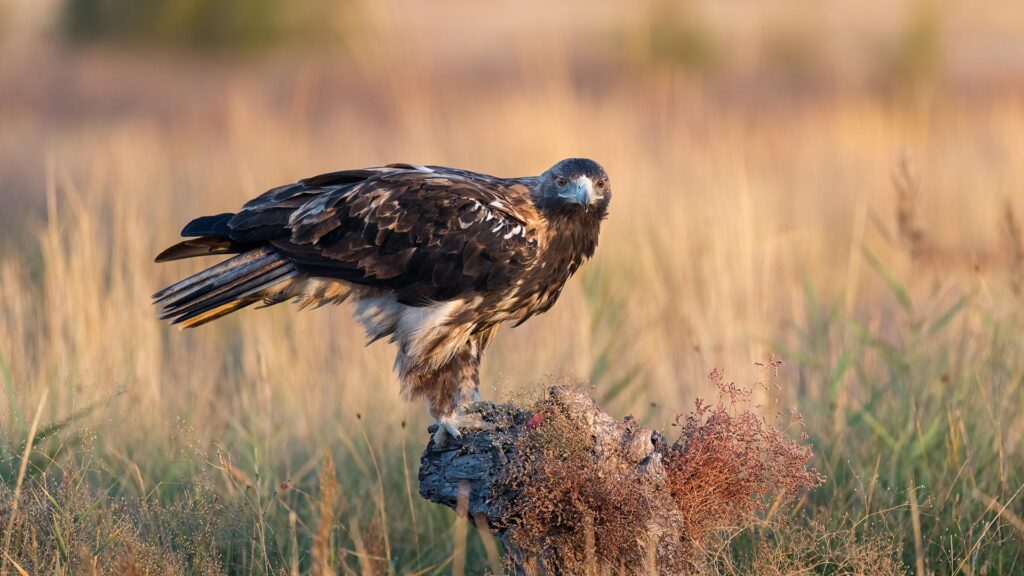
Spanish Imperial Eagle
While witnessing the Spanish Imperial Eagle was an incredible thrill, the morning held one final surprise — a rare and unexpected visitor, the Bonelli’s Eagle. Its sudden appearance added an extra layer of excitement to an already unforgettable session. Watching this elusive raptor in its natural habitat felt like the perfect way to close the morning, making the experience even more rewarding.


Bonelli´s Eagle
Bonelli’s Eagle is named after the Italian ornithologist Franco Andrea Bonelli (1784–1830) – a prominent naturalist and zoologist. The eagle was named in his honor due to his contributions to ornithology, particularly in documenting species in the Mediterranean region.
Like the day before, we were visited by Marsh Harriers, along with several Common Buzzards. Known for being quite shy, I was pleased to capture a few photos of them before our local guide arrived to pick us up.
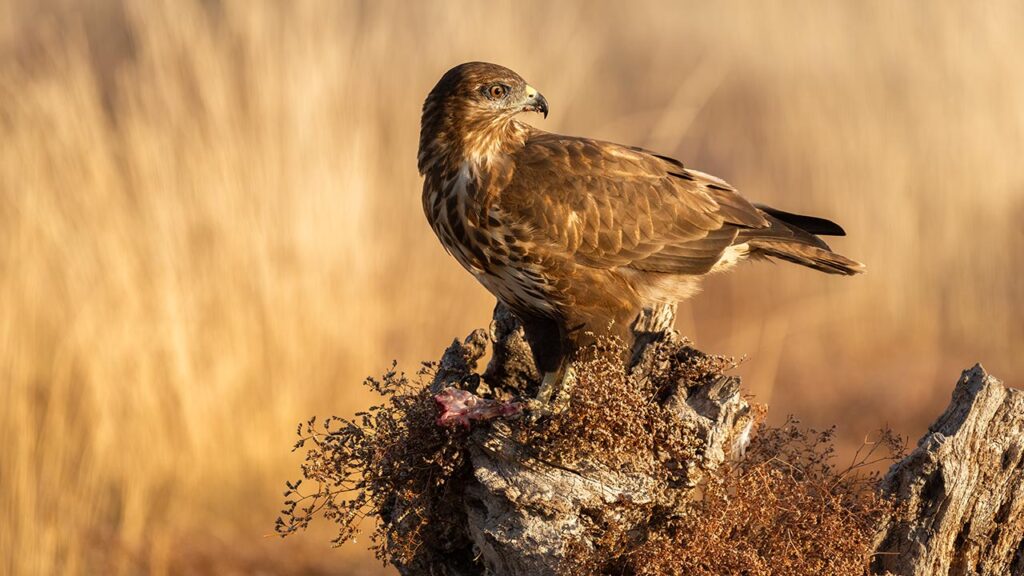
Common Buzzard at the El Espartal hide
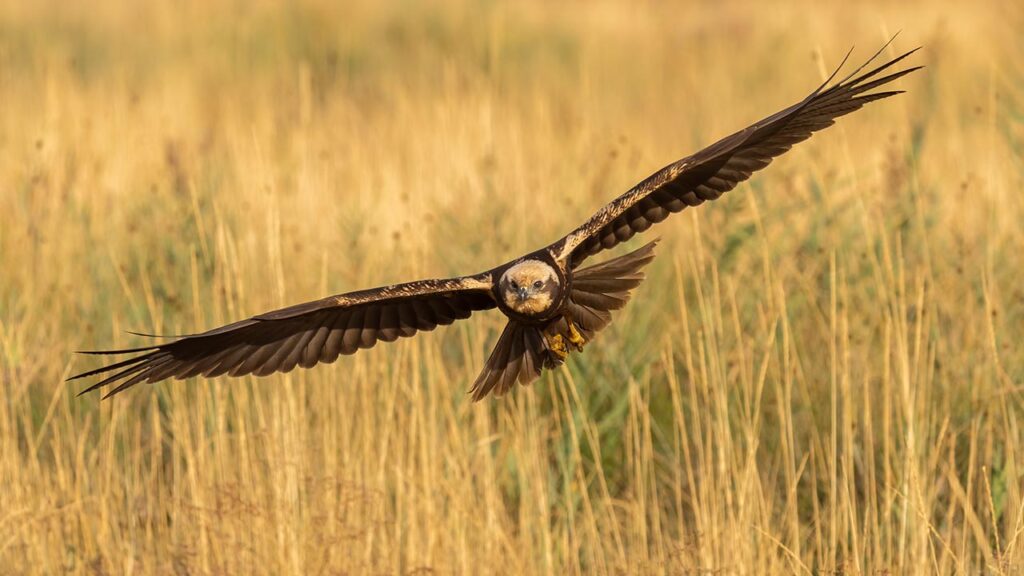
A Marsh Harrier in flight
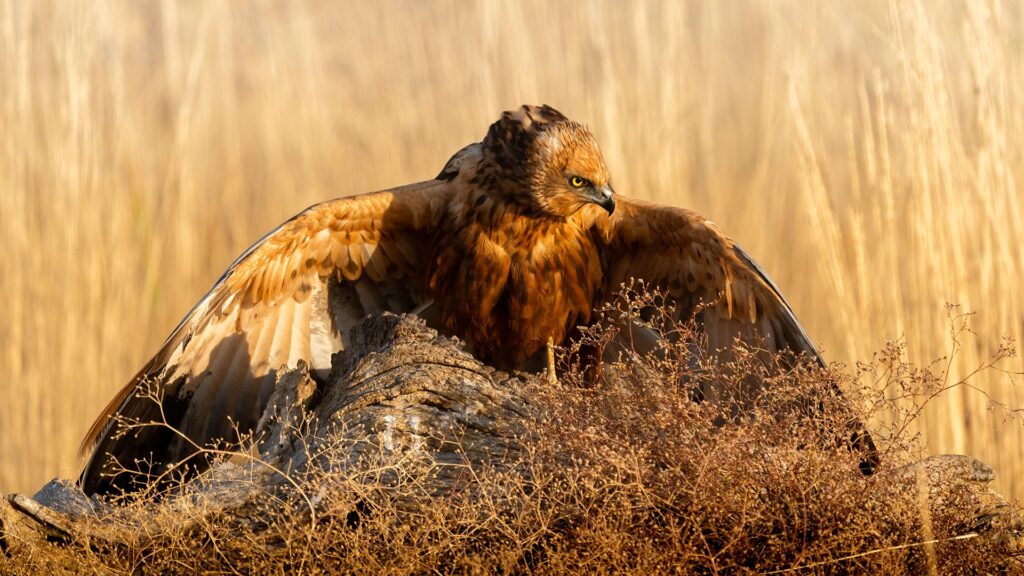
A Marsh Harrier protecting its lunch
After a siesta from around 1:00 to 5:00 PM, I was picked up again for an evening excursion. The original plan was to spend the evening in a hide near a wetland, but unfortunately, the summer heat had dried up the area. Another photographer mentioned seeing almost no wildlife there the previous day. Our driver quickly devised an alternative: we would drive around the El Taray region in search of more promising wildlife sightings.
While not being in a hide meant losing the opportunity to get close to the wildlife, driving around offered a much better chance to encounter a wider variety of species. It turned out to be a perfect alternative, balancing exploration with the possibility of new discoveries.
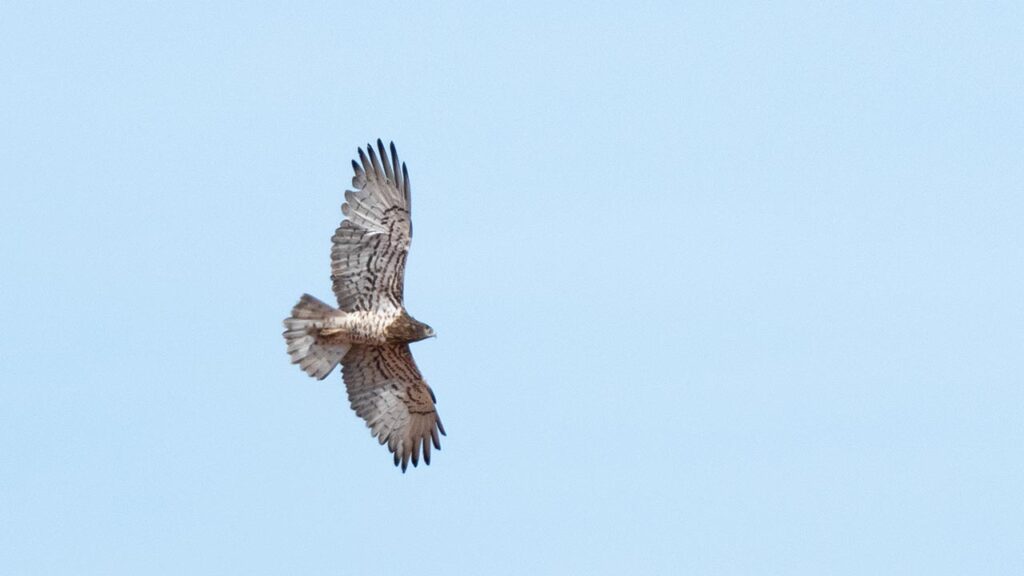
Snake Eagle (heavily cropped photo)
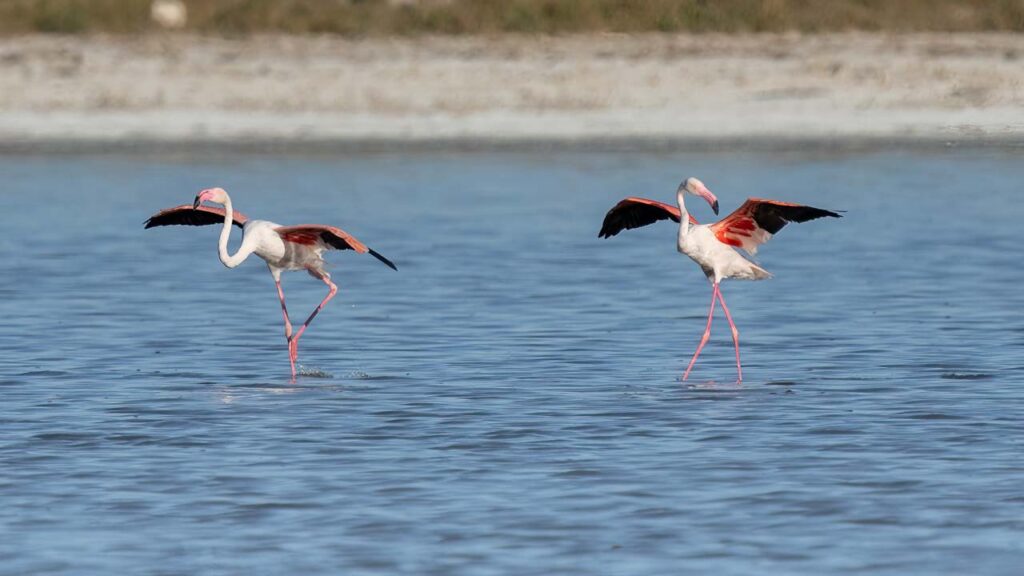
Flamingos at El Taray
Although I didn’t capture any standout photos during the drive, I was thrilled to spot several species that were new to me, including a Snake Eagle, Flamingos, and a Great Grey Shrike. The experience itself was incredibly rewarding.
On my third day, I began with a morning visit to the Vega Mazón hide, hoping for another glimpse of the Spanish Imperial Eagle. Unfortunately, only Marsh Harriers, buzzards and a few ravens made an appearance, and I didn’t manage to capture any noteworthy photos. But that’s the nature of wildlife—it’s unpredictable. Some days you get lucky, and other times, nature has its own plans. Sadly, this was the theme for the whole day.
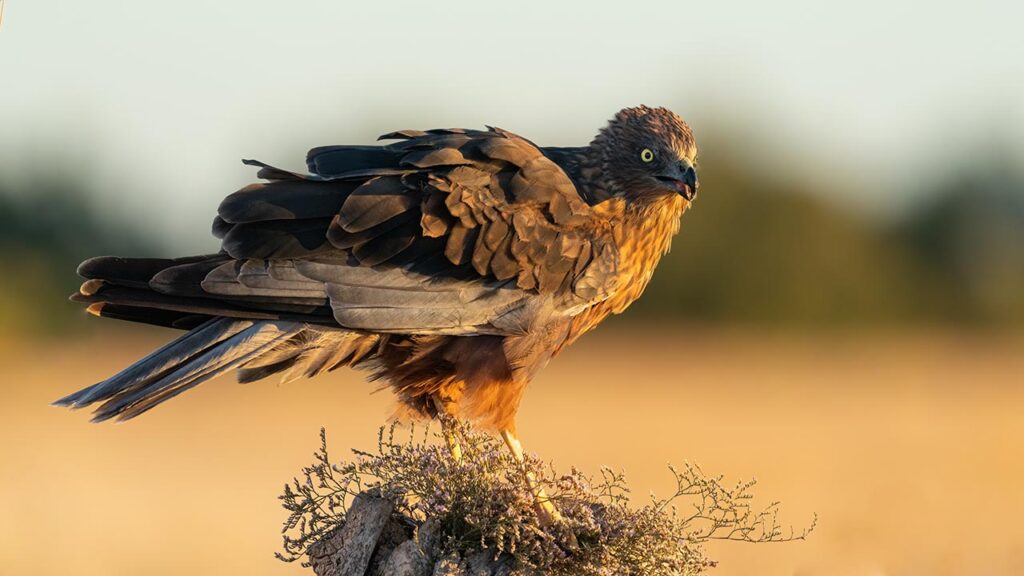
Marsh Harrier at the Vega Mazón hide
I did spot two Hoopoes, but unfortunately, they were perched in a tree too distant for good photos. I also heard a Little Owl near the hide, though it never made an appearance. On the drive back, I was fortunate to encounter two new species: a vulture and a black stork soaring high above. I can now cross them off my list—though I’ll still need better photos of them, of course.
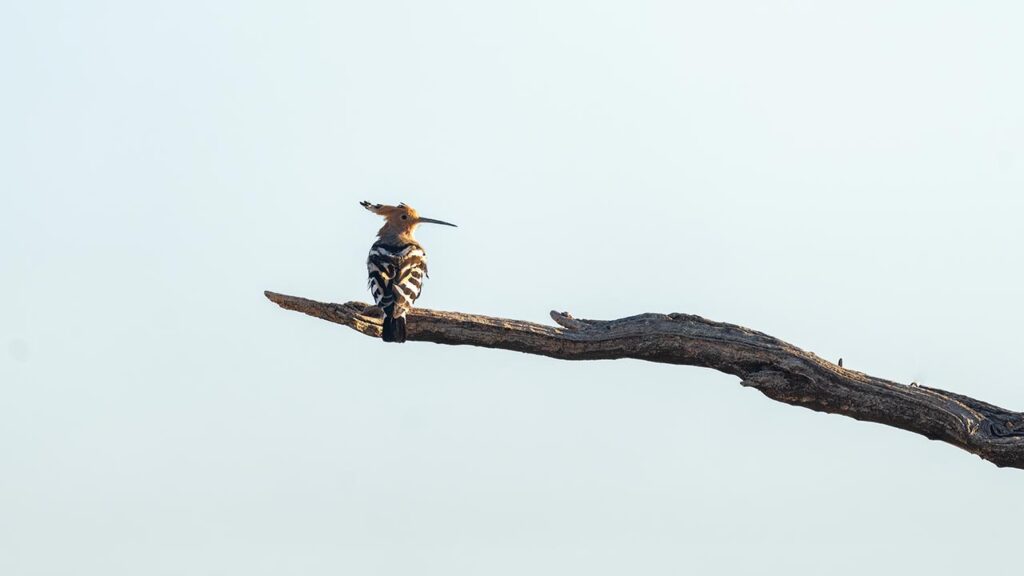
The Hoopoe at the Vega Mazón hide. Sadly it did not come close to the hide.
In the afternoon, I was originally scheduled to visit the Waterhole Casa de Labor hide, but plans changed, and I ended up at a large floating hide specifically designed for photographing the elusive Kingfisher. This hide was one of the most impressive I’ve ever encountered, featuring a large window section with a perch for the Kingfisher just three meters away.
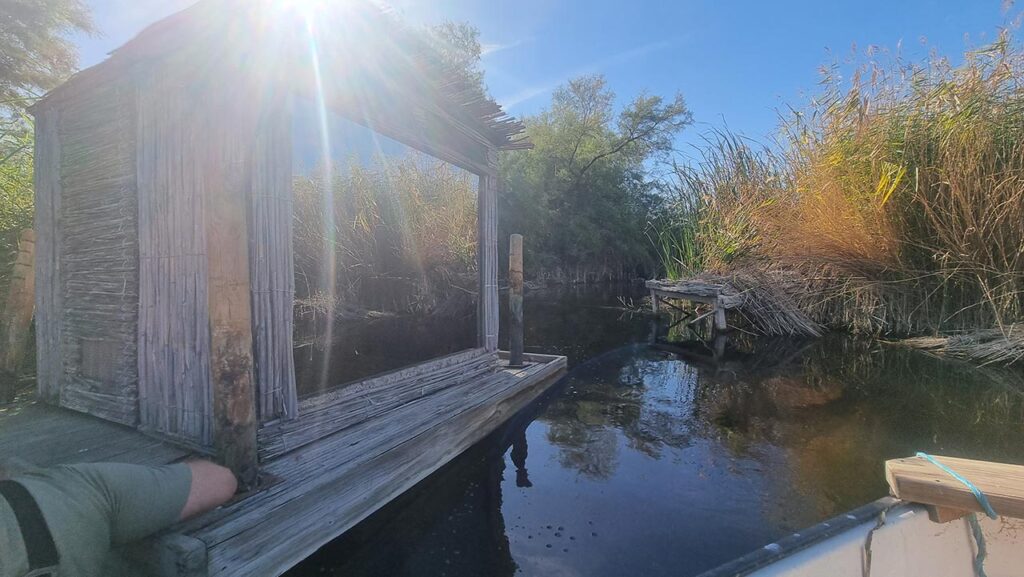
The Kingfisher hide
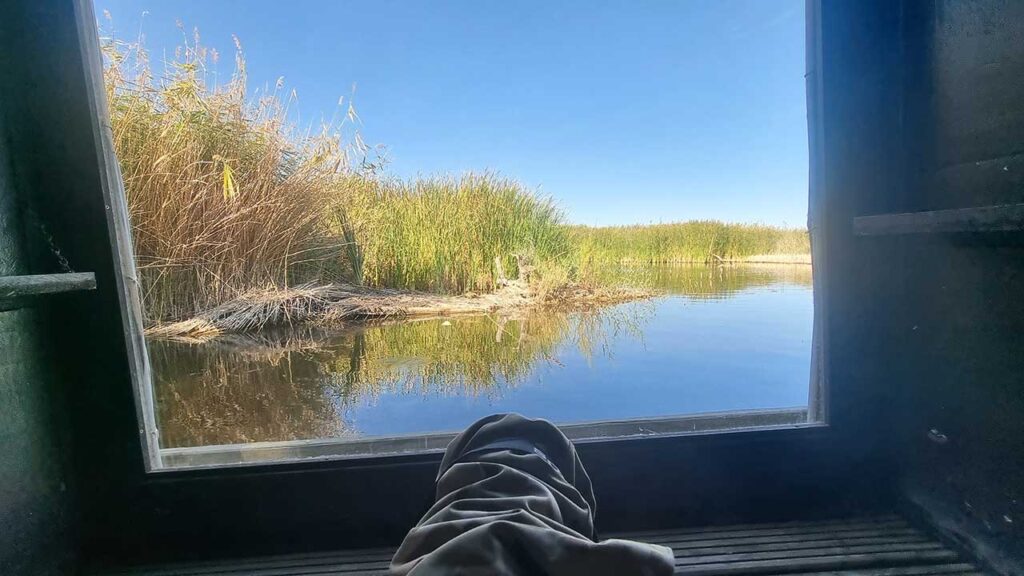
The view from inside the Kingfisher hide
While I was stationed in the hide, which could only be reached by boat, a Kingfisher flew by, instantly filling me with excitement. I had been dreaming of capturing the perfect photo of this bird for years, and I felt certain this was my chance. Unfortunately, despite spending two hours in the hide between 6 and 8 PM, the Kingfisher never landed in front of me. It flew past several times and even perched nearby once, but never within the view from my hide. I went home that evening feeling quite disappointed, still without my dream photo.
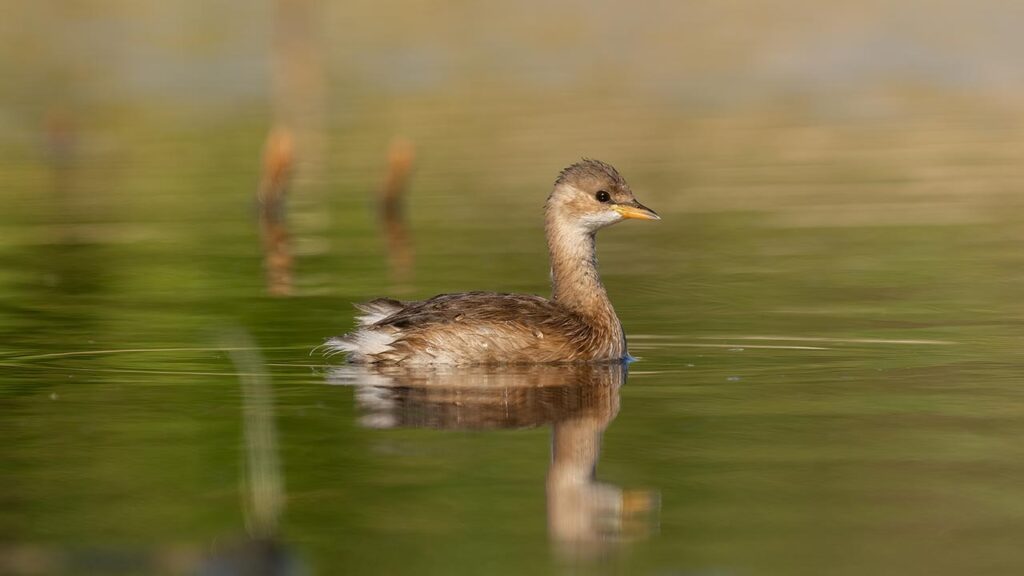
Little Grebe
On the bright side, I spotted a Western Swamphen for the first time and managed to capture a photo of a Little Grebe. However, it didn’t quite make up for the disappointment of the Kingfisher not appearing. I have been chasing that little bird for the better part of 2 years now.
On my final day, my local guide picked me up around 6:40 AM and drove me to the ranch. There, I waited for about an hour while he assisted other photographers in setting up at a different hide. Once they were settled, we returned to the familiar Kingfisher hide. However, this time, my guide took me by a small boat to a new hide, offering the chance to photograph both Kingfishers and Bearded Reedlings.
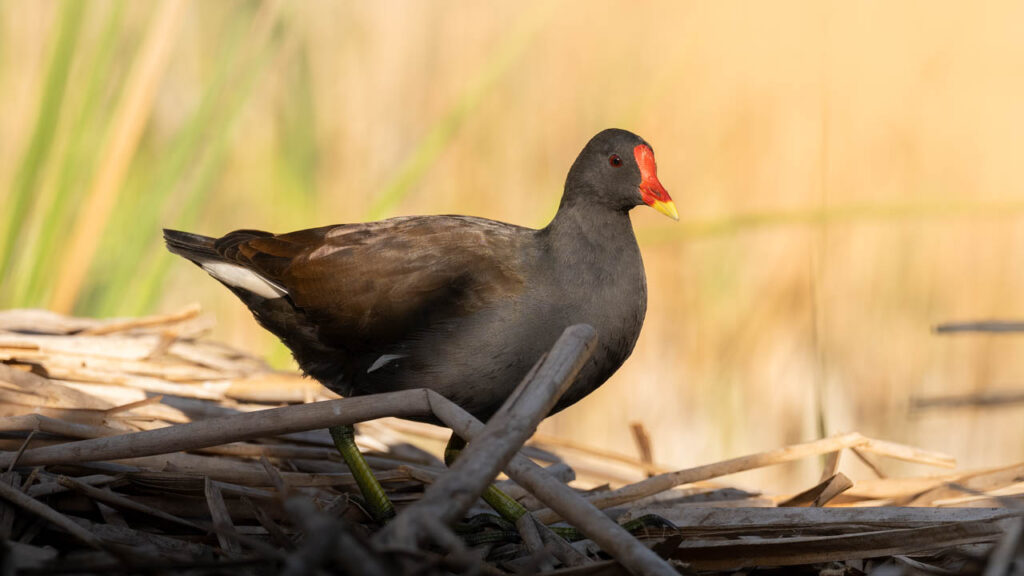
Common Moorhen
Unfortunately, the hide turned out to be a complete disappointment. For two hours, the only activity was a small family of Common Moorhens, with nothing else in sight. It was the low point of the entire trip, and I felt a bit disheartened when my guide picked me up around 10 AM.
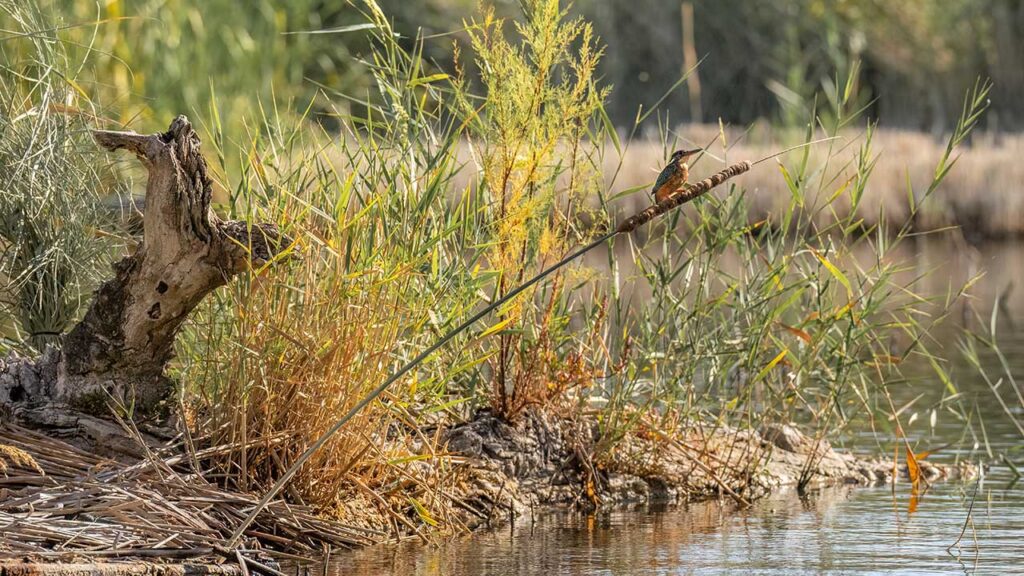
When we returned to the Kingfisher hide by boat, where the car was parked, we spotted a Kingfisher flying around and even perching right in front of the hide. My guide gave me 10 minutes to try to capture a photo from the boat while he played Kingfisher audio from his phone to attract the bird. Unfortunately, I managed to snap only a single shot of it, perched some distance away in front of the hide.
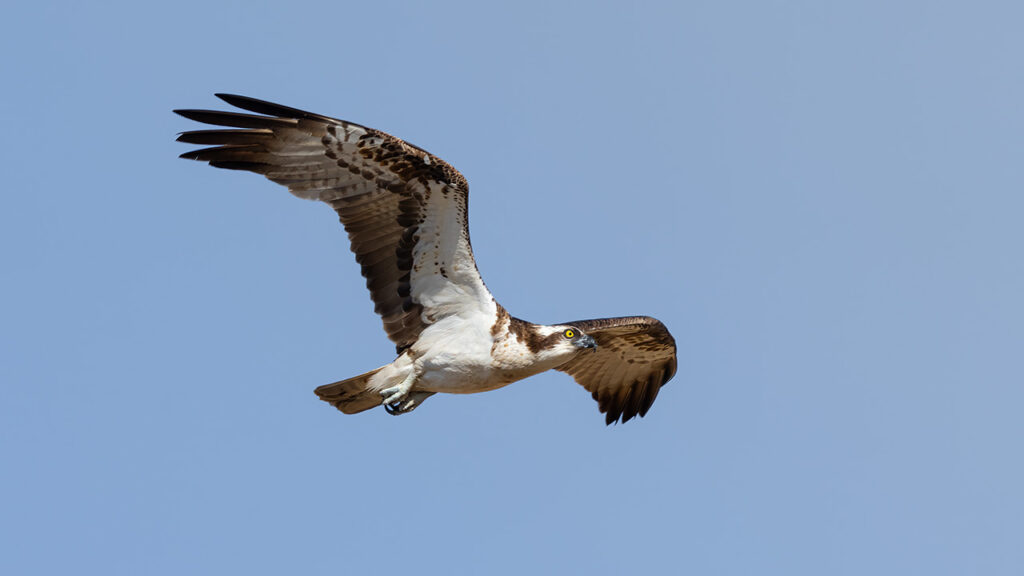
Osprey flying over El Taray
As we were driving out of the El Taray area and heading back to the hotel, we spotted a lone Osprey perched on a pole, eating a fish. I managed to snap a few photos before it flew off, marking my final shots from El Taray.
El Taray certainly offers a wide varity of wildlife. Wild Travel Spain did an excellent job arranging everything, from accommodations and transportation to the hides themselves. The local driver was knowledgeable about the area and its wildlife, always ready with alternatives if a particular hide was unusually quiet.
Unfortunately, I did encounter several hides with little to photograph — either nothing appeared, or the birds perched too far away or out of view. After speaking with other photographers, I got the impression that a trip in spring or early summer might offer better luck. That being said, I did manage to spot a Spanish Imperial Eagle and snap a photo, although only one appeared on the second morning, and the light was quite poor. Despite this, I’m definitely considering a return trip to El Taray in the future, now that I know how accessible it is—just not in September.
I have compiled a list of the birds that I witnessed at Laguna El Taray during my stay. Not all of them was close enough to photograph, but seing such a wide variety of birds is something of a treat and well worth travelling for.
If you’re planning a trip to Laguna El Taray, I recommend using this checklist. You’ll be transported almost directly to the hides, so there’s minimal walking involved, making it easy to carry a heavy backpack. Just a heads-up: the hides can be quite chilly in the morning but feel almost like a sauna by evening.

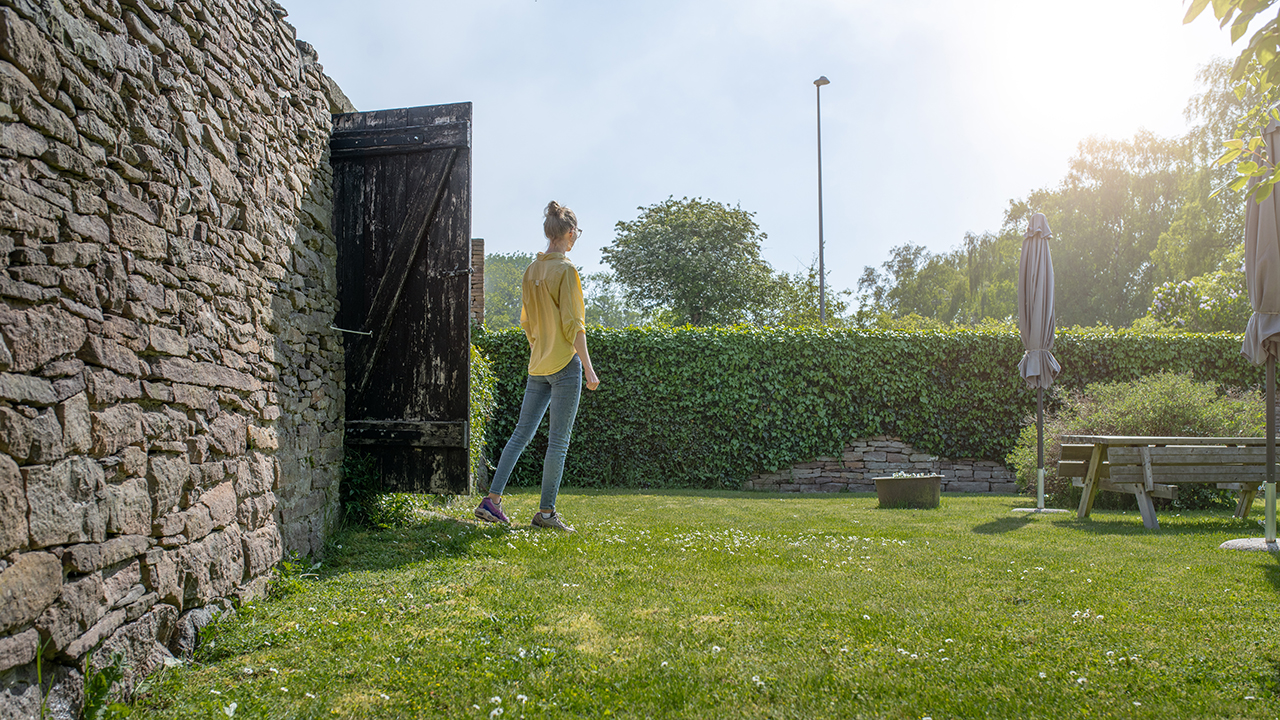
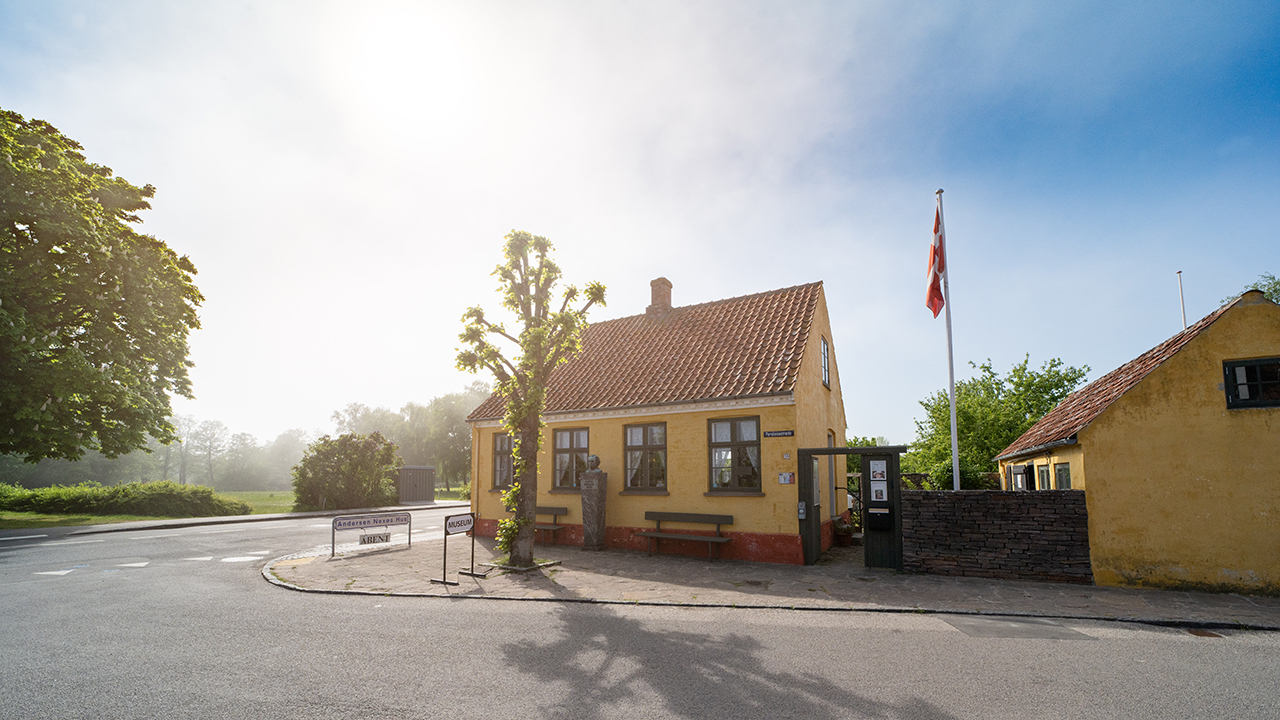
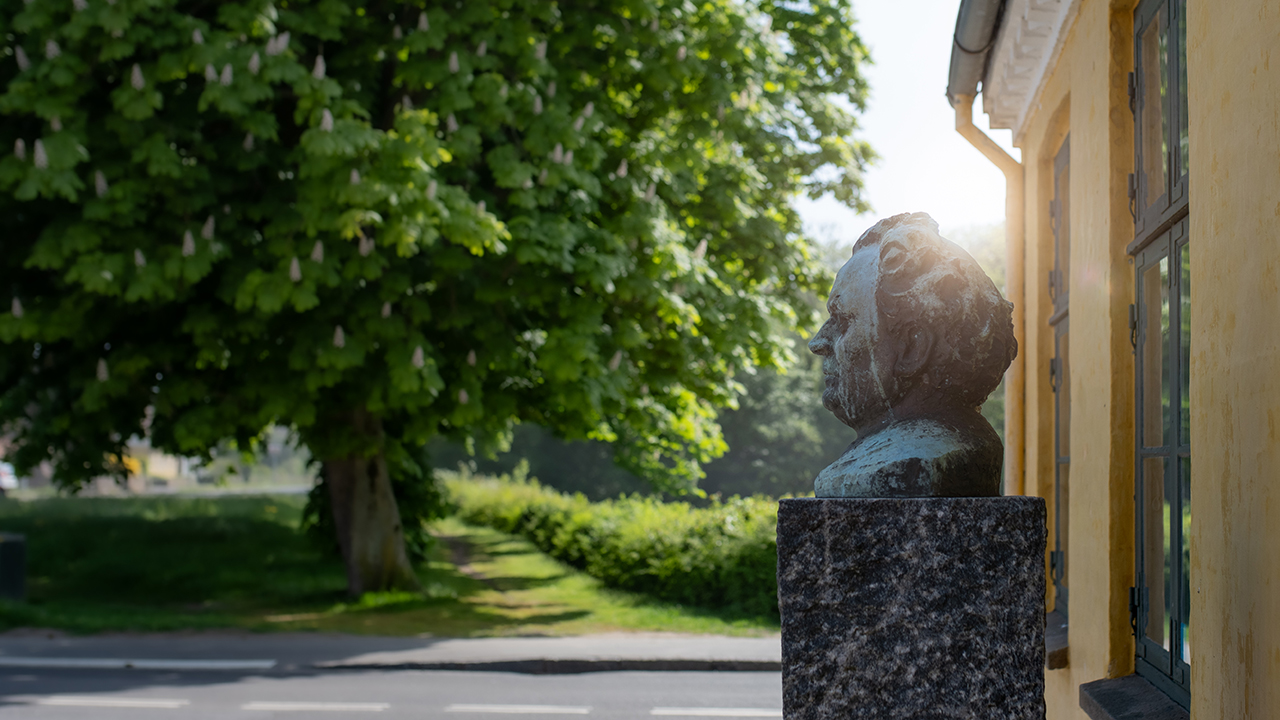
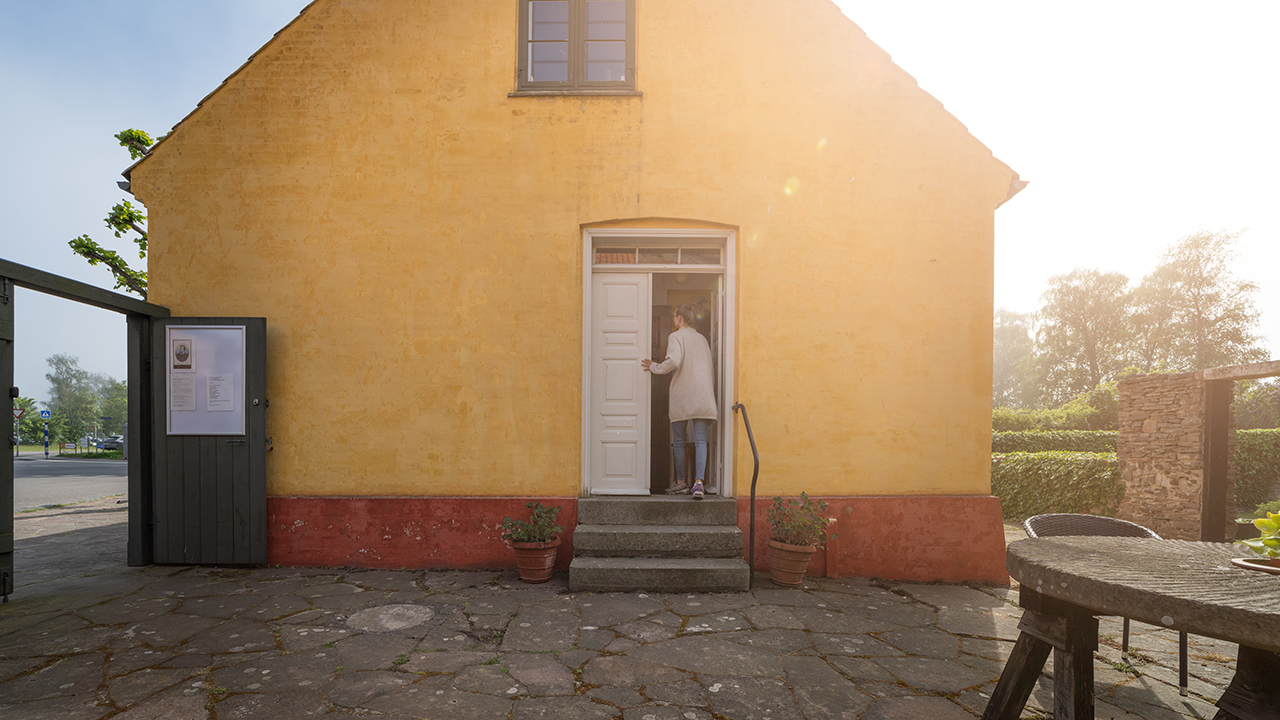
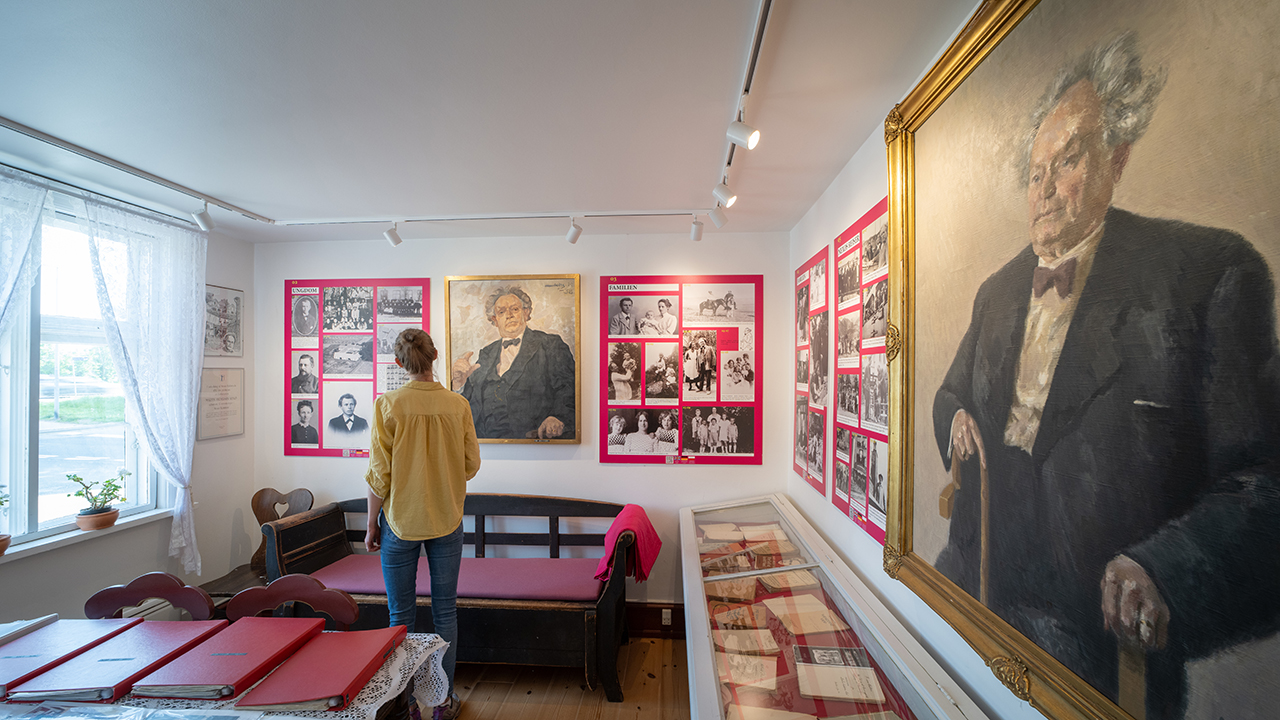
Recently, I had the pleasure of photographing at Martin Andersen Nexøs Mindestuer, a cultural hub in the town of Nexø on Bornholm. The building is the childhood home of the famous Danish author Martin Andersen Nexø and today it is a museum dedicated to his life and work. Their exhibits offers a glimpse into the world of one of Denmark’s literary giants, whose works like Pelle the Conqueror and Ditte, Child of Man have left an indelible mark on Danish literature.
The Museum’s staff and volunteers are currently working on a new website to draw in visitors and renew interest in Nexø’s legacy. My task was to capture the charm of the old building. This is the result:




Iceland is a bird watcher’s dream, teeming with a wide array of bird species in picturesque settings. In this article I explore ten birding spots where you can experience the magic of Iceland’s wildlife, including puffins, loons, and various wading birds in their natural habitats.
Iceland, with its dramatic landscapes and unique geological features, is not just a paradise for nature enthusiasts but also a haven for bird watchers. The country’s diverse ecosystems, from rugged coastlines and serene wetlands to expansive lava fields, provide ideal habitats for a rich variety of bird species. Whether you’re eager to catch a glimpse of the iconic puffins, hear the haunting calls of loons, or observe the elegant wading birds in their natural settings, Iceland offers a plethora of prime birding locations. Here are ten must-visit spots that promise unforgettable avian encounters, showcasing the breathtaking beauty and biodiversity of this enchanting island.
I spent ten days in Iceland in early June, eager to experience the country’s wildlife and breathtaking landscapes. Although I was ready for some bad weather and windy conditions, I wasn’t prepared for nearly ten days of relentless rain, snowstorms, and fierce North Atlantic gales. The weather hindered my visits to some locations, and my birding experiences at others were less than ideal. However, Iceland’s unpredictable nature is part of its charm, so you should also be ready for inclement weather. In this article, you’ll find birding spots that are easily accessible even in challenging conditions—just don’t forget to bring a rain cover for your camera and lens.
We used the Norwegian weather site yr.no to track the changing weather, and it proved very accurate in its predictions.
Iceland also experiences volcanic activity near the capital, Reykjavik, and the country’s main airport. Our trip was nearly canceled at the last minute due to a volcanic eruption on the Reykjanes Peninsula. Fortunately, air traffic remained unaffected. If you encounter a similar situation, the official tourism website for Iceland, www.visiticeland.com, provides up-to-date information and essential details, allowing you to adjust your travel plans accordingly. I highly recommend checking the site for updates on air and road travel conditions in Iceland.
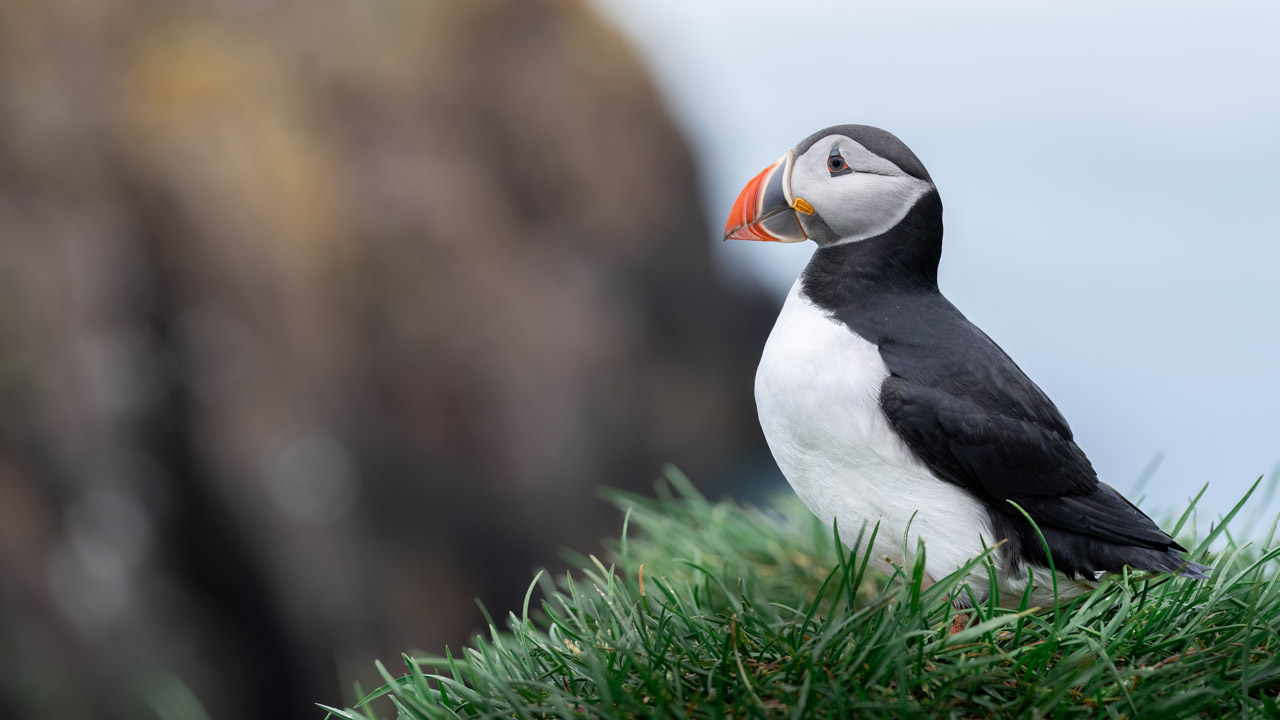
As highlighted in the article’s introduction, adverse weather conditions greatly impacted my travel itinerary. Despite thorough research on Iceland’s birding spots, I couldn’t visit all of them during my 10-day trip. Consequently, this article begins by detailing six birding locations I explored and concludes with recommendations for four additional spots. These four recommendations stem from my pre-trip research and are deemed worthy of inclusion in this guide.

Amidst the desolate beauty of Iceland’s southeastern coast lies the Ingólfshöfði bird colony, a remote oasis in a vast expanses of black sand accessible only with a guide and a tractor. While the landscape is breathtaking, visitors should be aware that sightings of puffins and razorbills may not always be abundant, requiring binoculars to spot them in the distance.
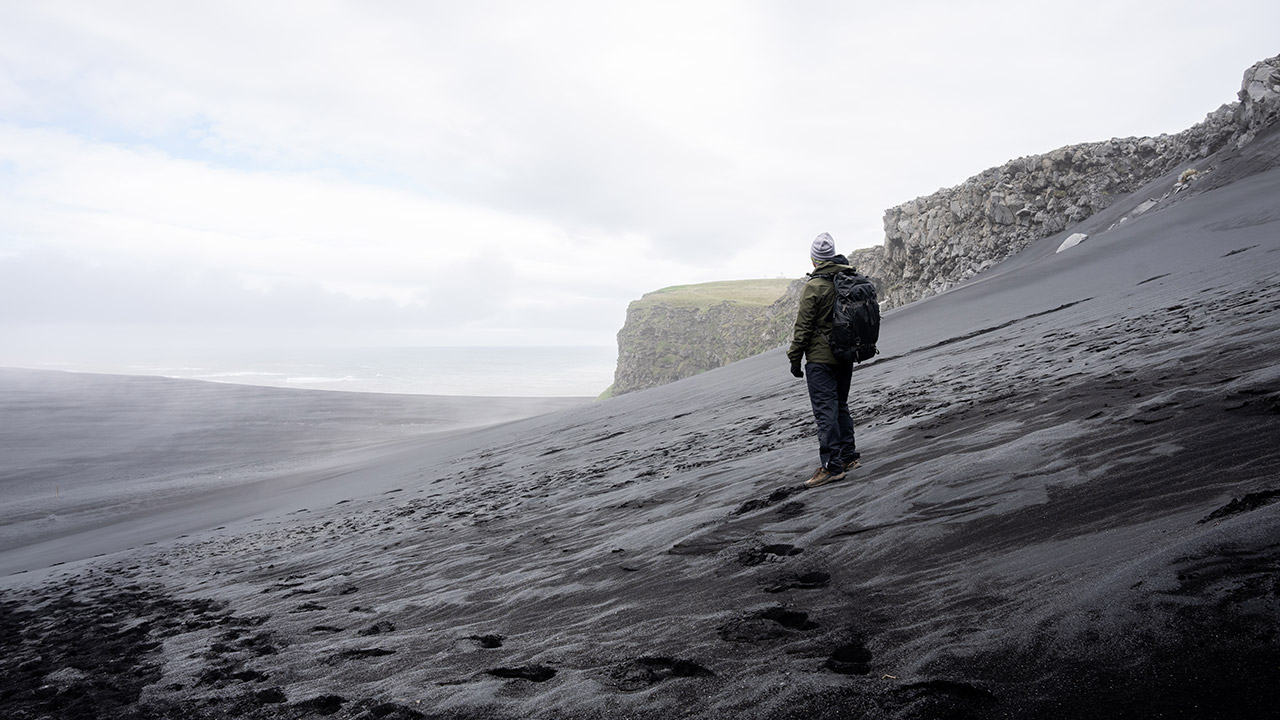
This stretch of coastline brings you into the realm of the Great Skua. Icelanders call it Sterkorinn, a name that suits the bird’s muscular frame and soot‑dark plumage. It stands out against the wind‑carved cliffs, a sentinel watching the tides and the sky with equal intensity.
Here, its fierce territorial streak is unmistakable. A single step too close to its nesting ground sends the skua into the air, banking sharply before dropping into a bold warning pass. Fish and carrion sustain it, but the guide’s quiet laugh said enough — puffins are not always safe in skua country.
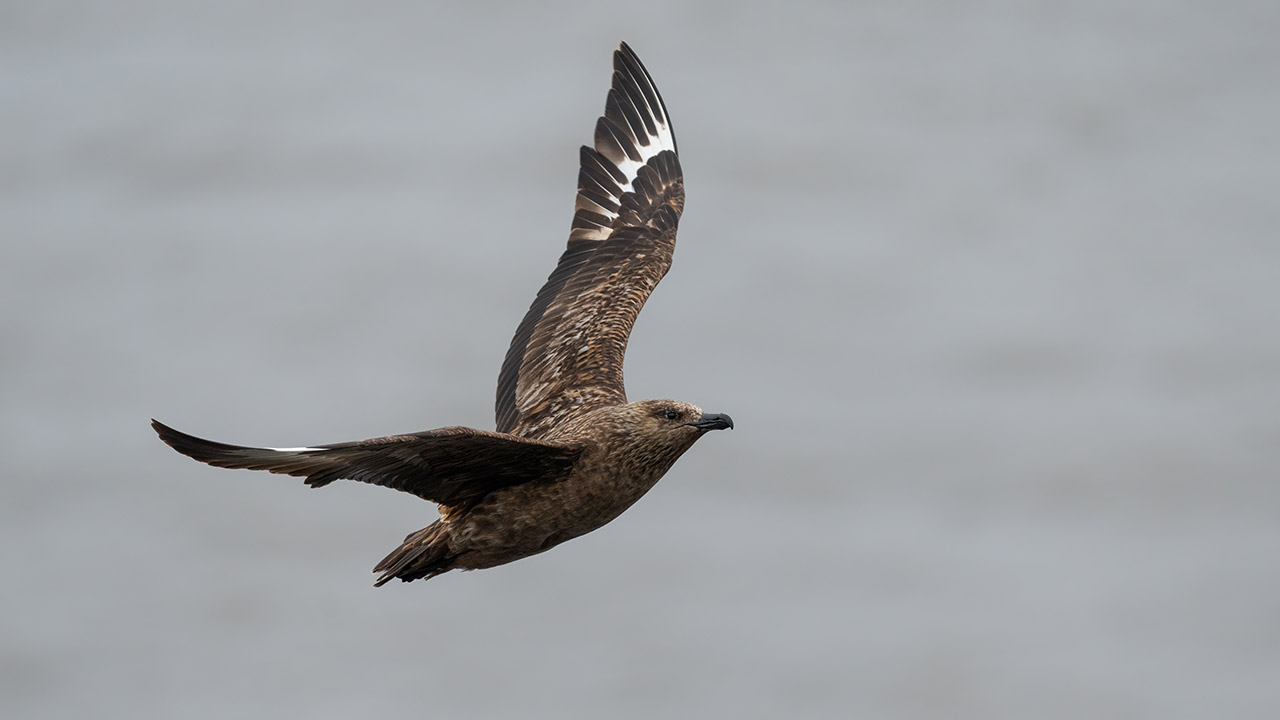
The Great Skua
As you journey through the nesting area, be mindful of these large birds and avoid getting too close to their nests. Stick together with your group and follow the guidance of your tour guide to ensure a safe and memorable experience.
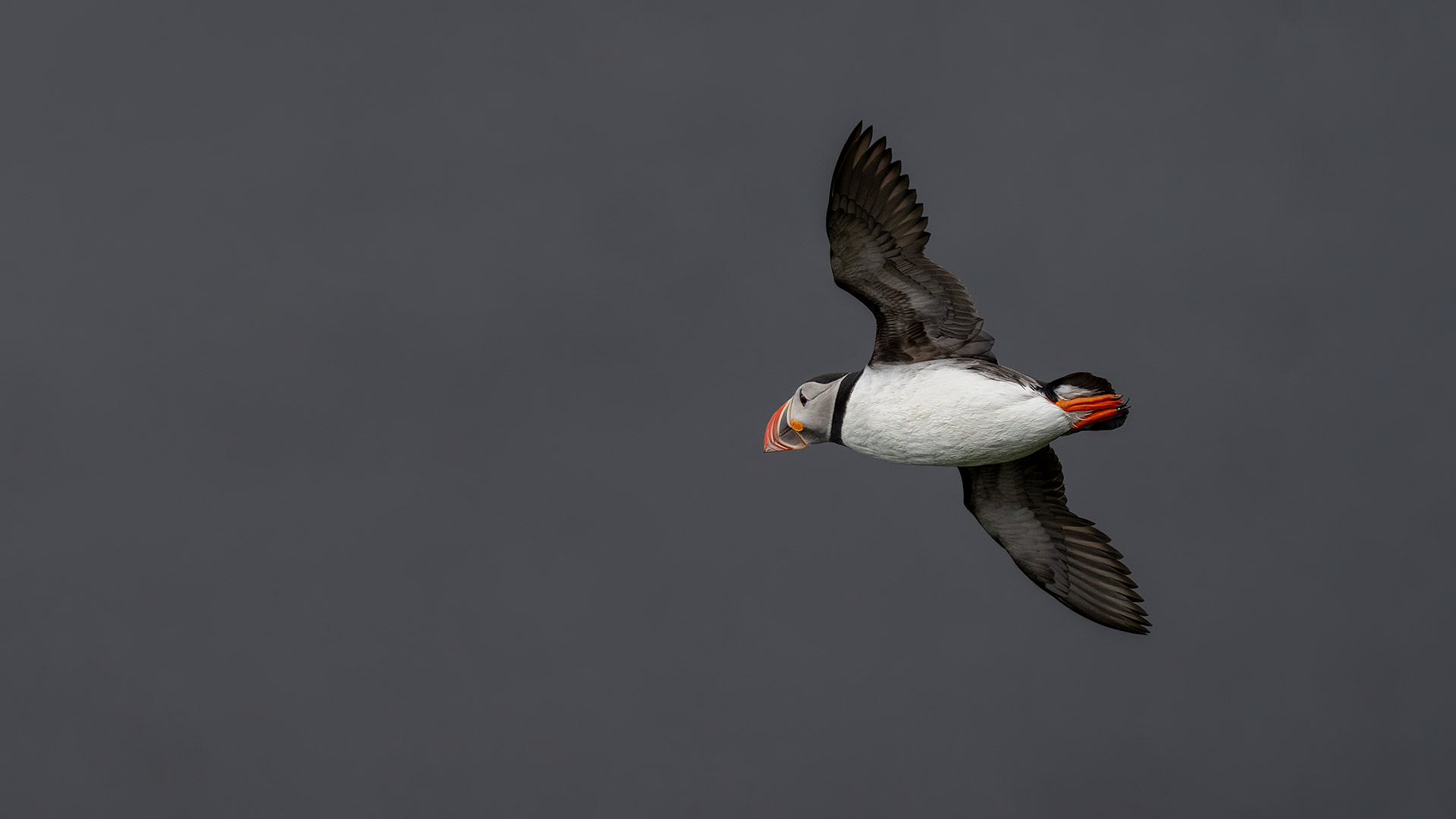
A puffin flies by at Ingólfshöfði with the black sand as a perfect backdrop
To get to this remote island colony you need to book a guide and a tractor ride from the company From Coast to Mountain, a family-operated business with over 30 years of experience. Their excellent guides will enhance your birding adventure and provide insights into the fascinating wildlife in the area.
Visit their website at fromcoasttomountains.com for more information and to book your tour.
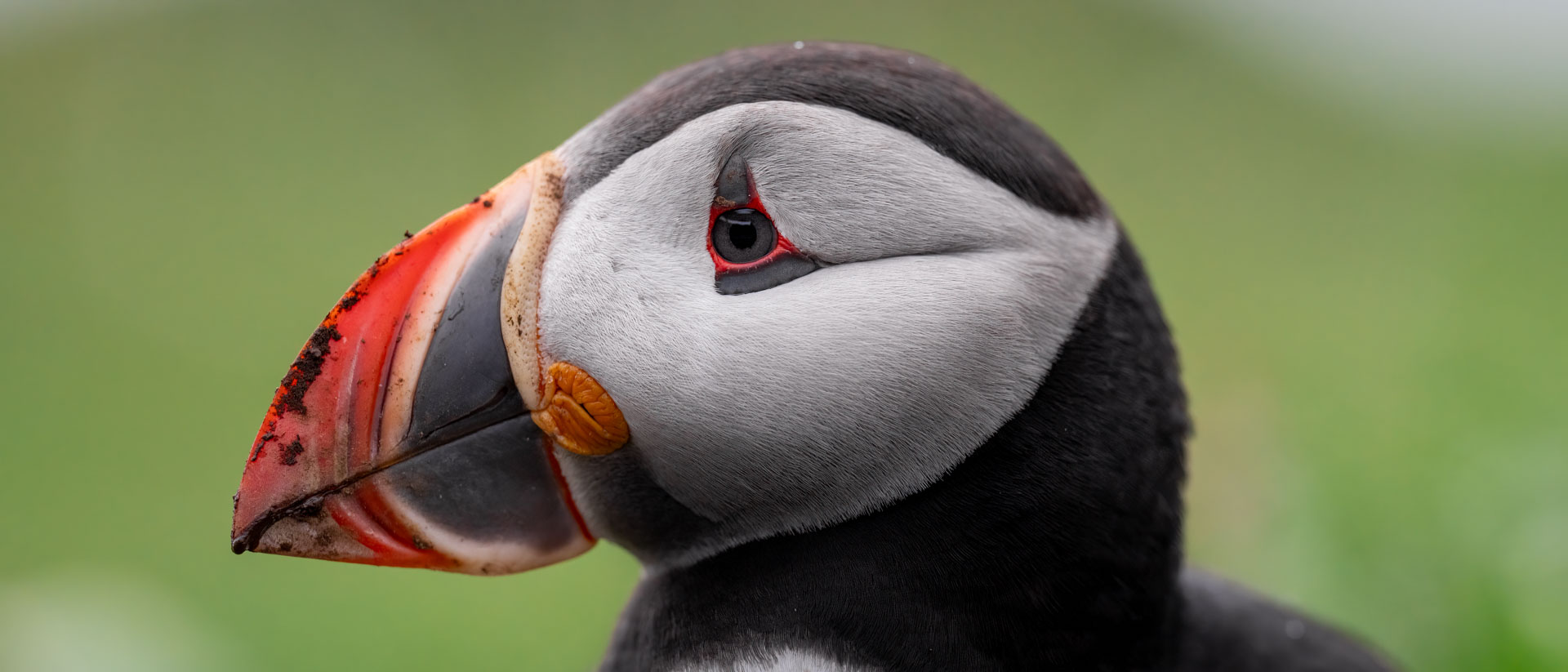
Borgarfjörður Eystri, ranking as number two on my list, offers an unparalleled opportunity to witness puffins up close – truly up close, reminiscent of my experience on Mykines on The Faroe Islands.
A short video of Borgarfjörður Eystri shot on my mobile phone. It was overcast and raining, but still a wonderful experience
Despite its remote location, Borgarfjörður Eystri stands out as the ultimate spot in Iceland for photographing puffins. The puffin colony sits adjacent to the local harbor, with a wooden walking path leading up the small hill. During the summer months, the hill comes alive with the bustling activity of up to 10,000 nesting puffins.
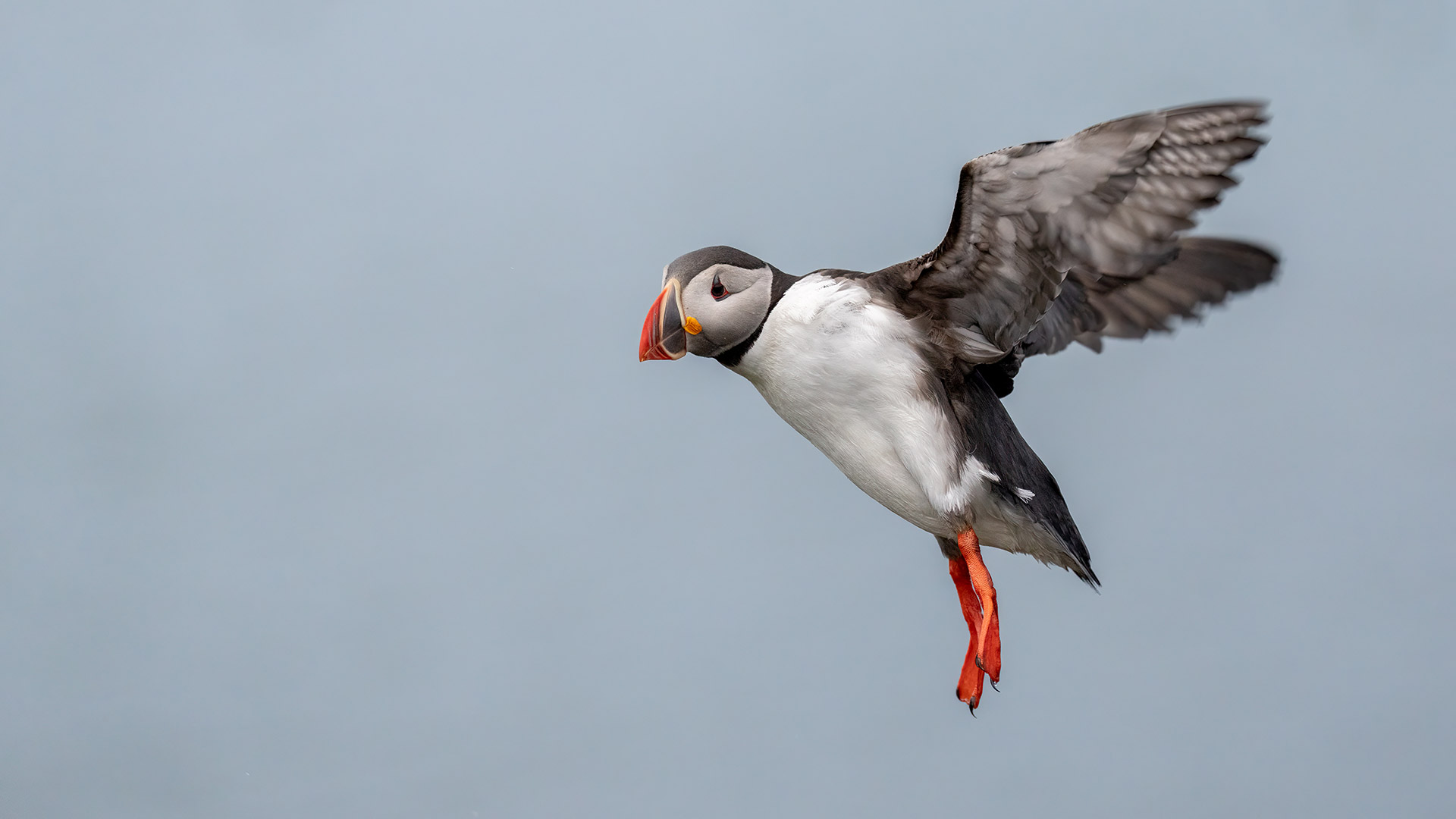
Visitors enjoy a unique experience, walking amidst the colony, surrounded by these iconic birds as they tend to their cave nests. Remarkably, the puffins remain undisturbed by human presence, providing close encounters and incredible photo opportunities to capture their colorful plumage and comical antics.
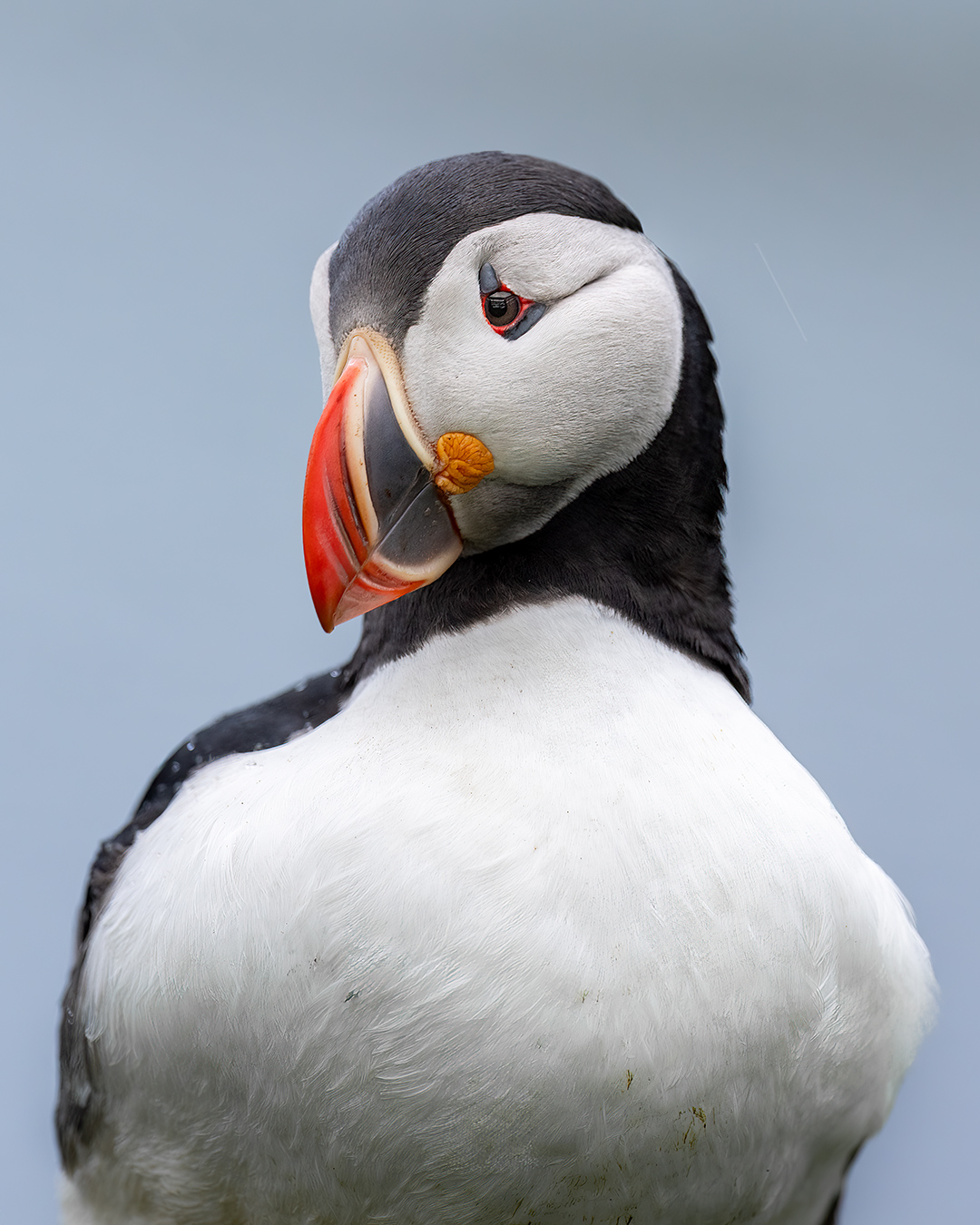
Surprisingly, even a wide-angle lens can yield stunning puffin portraits at this spot, but a 70-200 mm lens, like the one I brought, seems ideal for the task. I wholeheartedly recommend this extraordinary place to any traveler visiting Iceland.
Read more on Borgarfjörður eystri here.
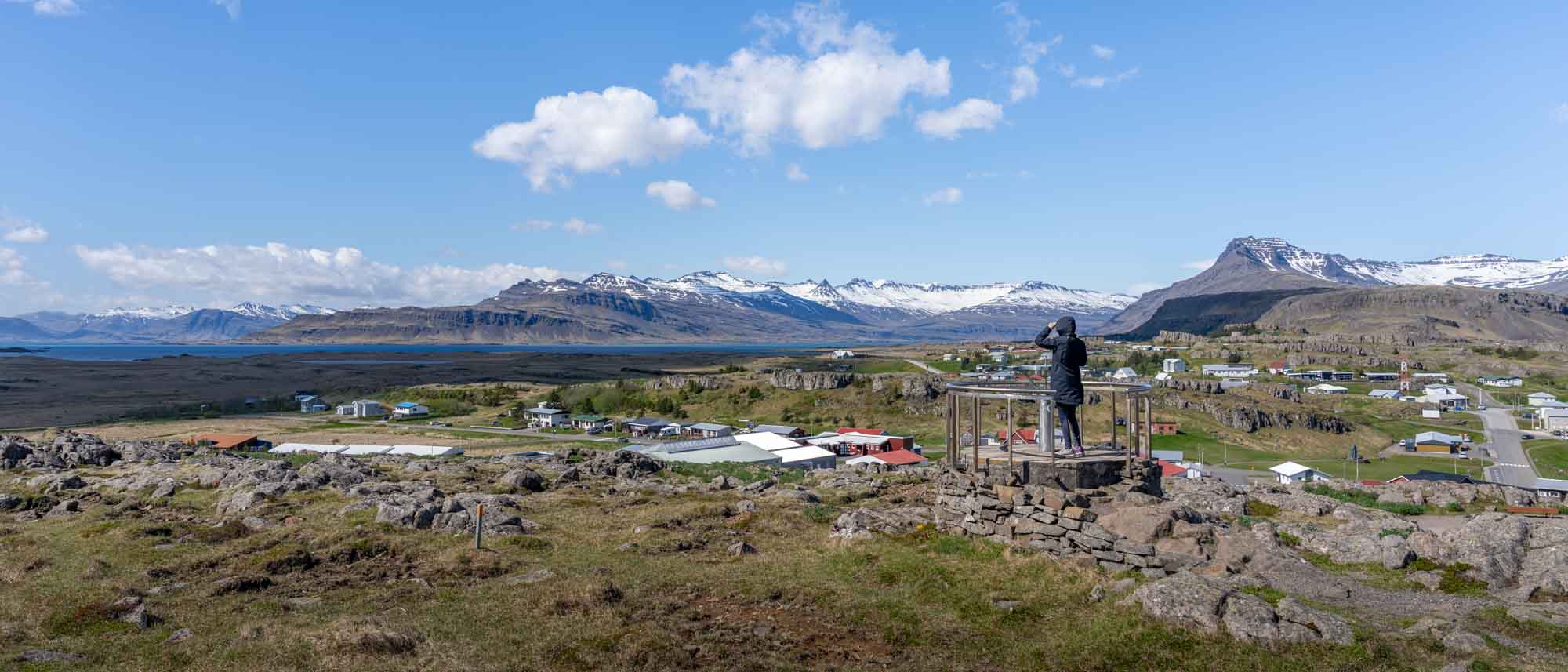
Djúpivogur might not feature in many tourist guides, and the local town doesn’t offer much except a couple of cafés and a supermarket. However, just south of the town is a small airstrip surrounded by wetlands, providing plenty of opportunities to spot birds.
To begin your birding adventure, drive to the northern end of the airstrip just outside town, where you’ll find a small parking lot near a birde hide (shed) that offers information about the local area and wildlife. From here, cross the airstrip’s northern section and follow the path through the wetlands. Small bridges over the streams will guide you to an bird hide with a stunning view of the lake. For the best experience, continue along the circular path around the wetlands, eventually leading you back to the airstrip and parking lot.
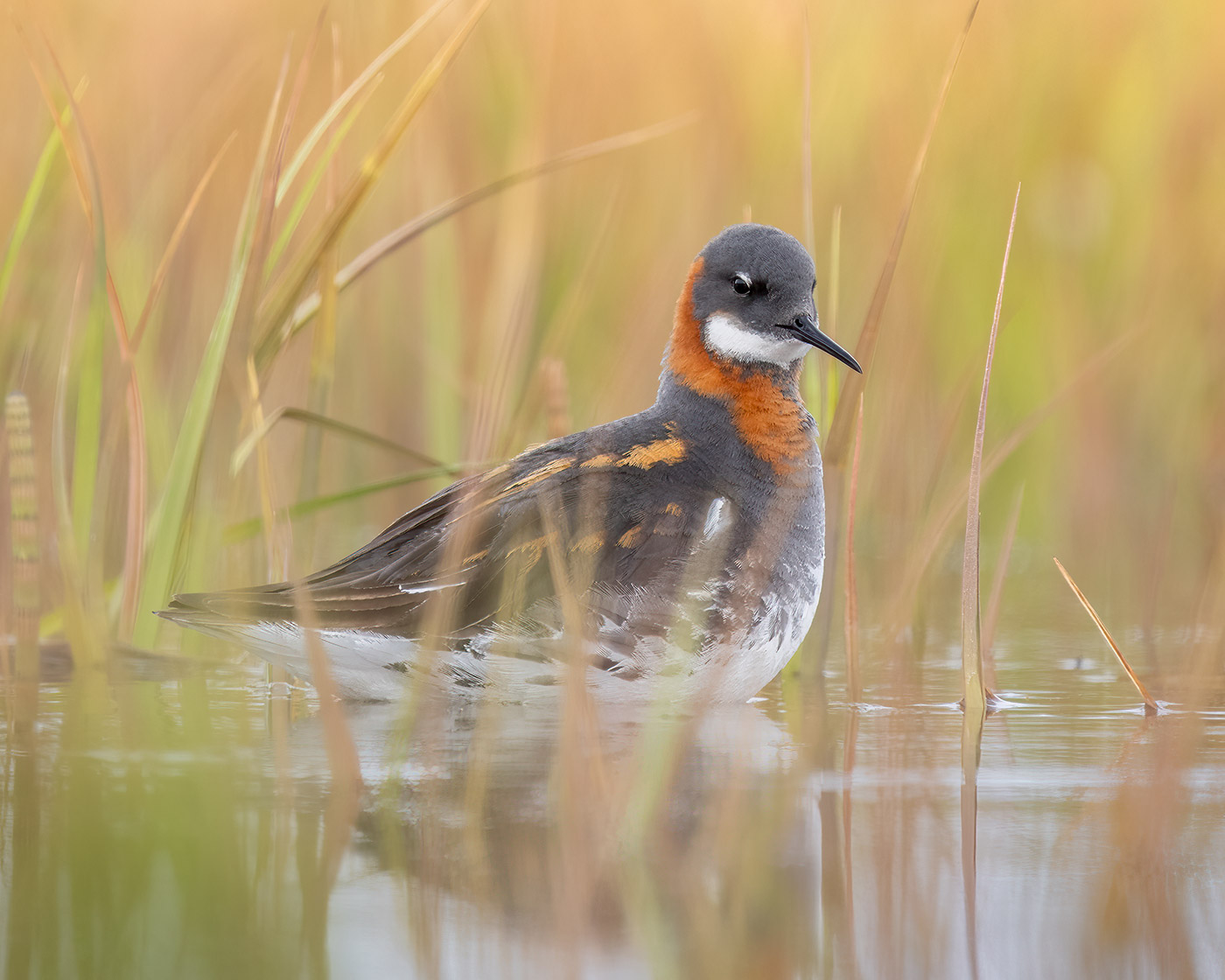
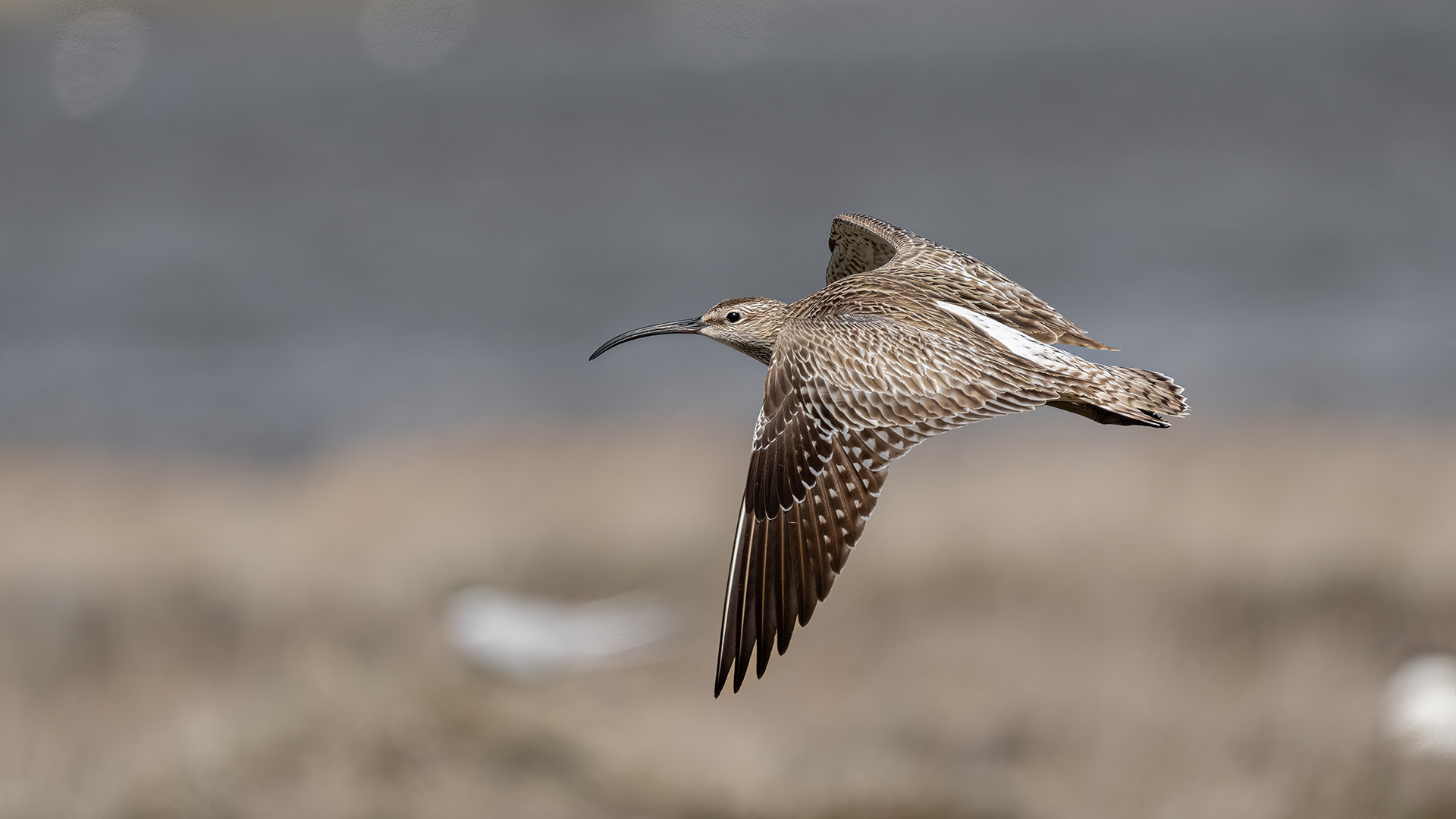
The wetlands and tidal zones are teeming with life, attracting wading birds such as the Redshank, Snipe, and Whimbrel. Along the rocky shores and serene beaches, you can also spot the tiny Red-necked Phalarope, while the open waters are frequented by seabirds like Arctic Terns and various duck species.
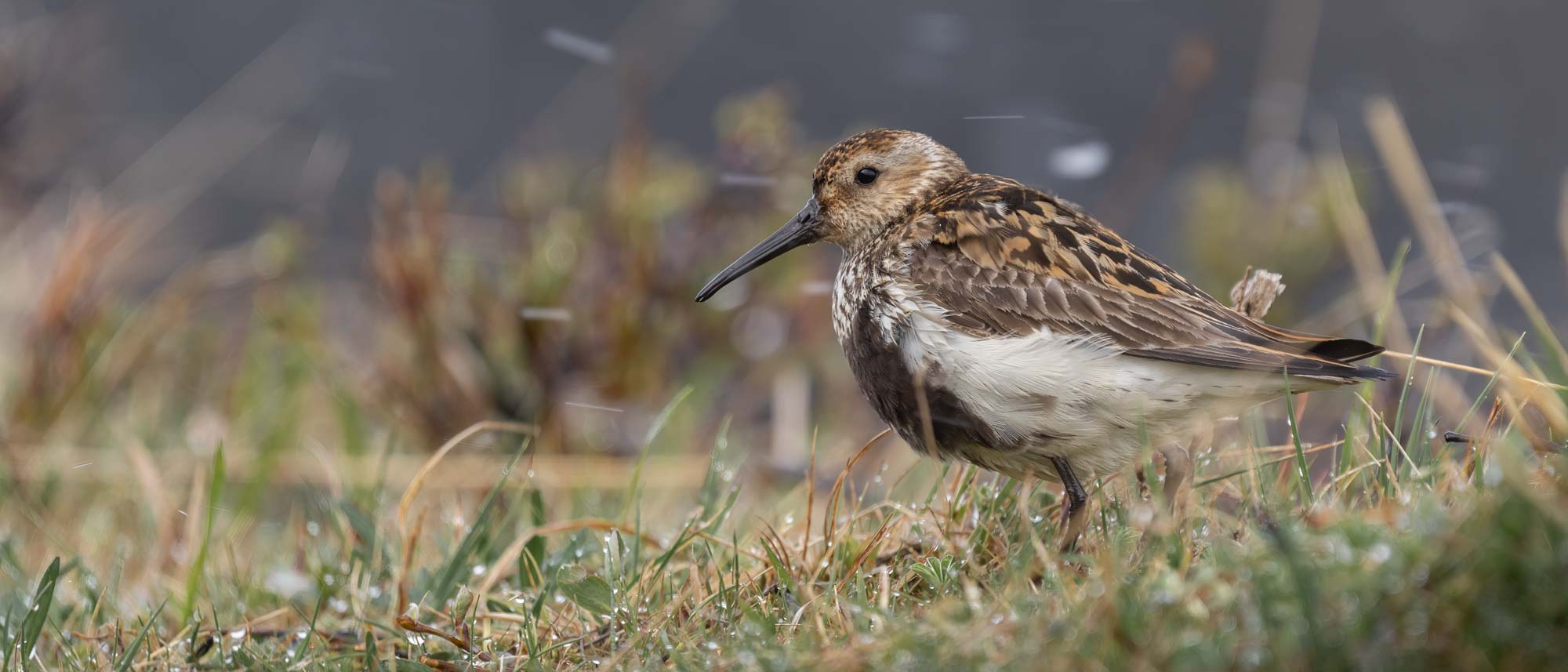
Lake Mývatn, located in northern Iceland, is a birdwatcher’s paradise and ranks as number four on my list of top birding spots in Iceland. This serene and expansive lake, surrounded by volcanic landscapes and lush wetlands, provides a diverse range of habitats that attract a wide variety of bird species. Its name, which translates to “Midge Lake,” hints at the abundant insect life that supports the area’s rich bird population.
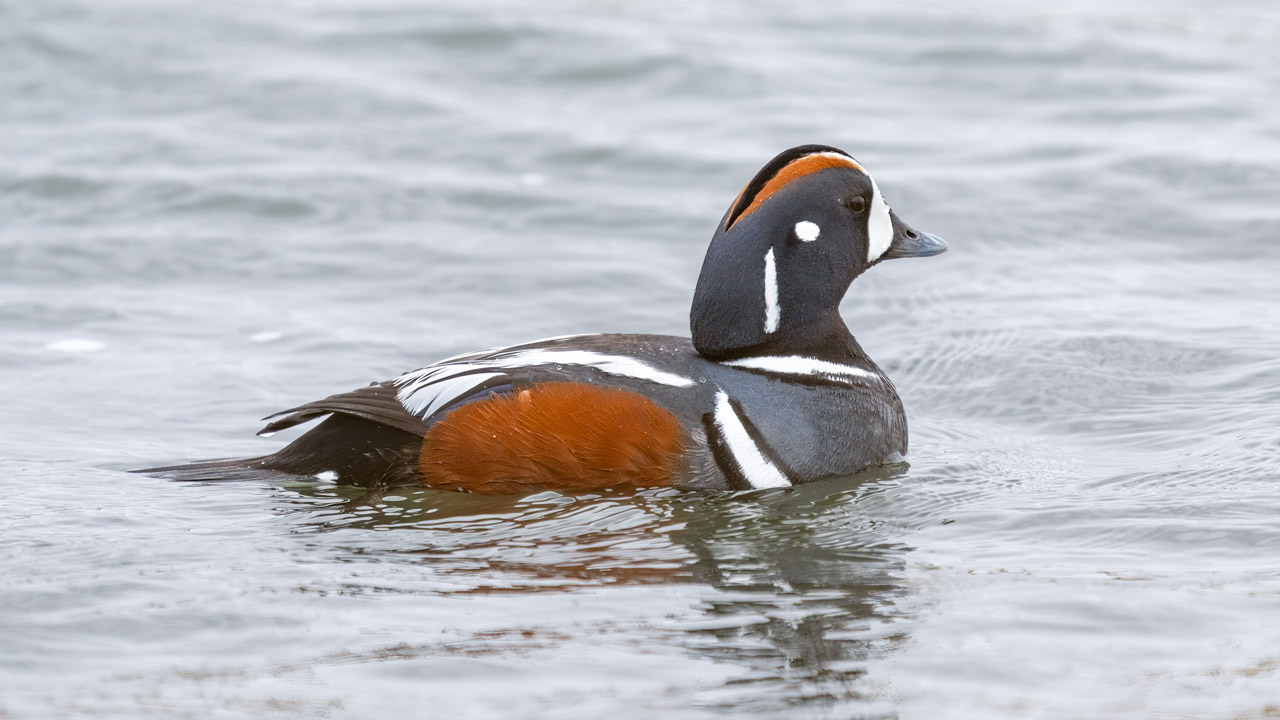
One of the most compelling reasons to visit Lake Mývatn for birding is the sheer diversity of species you can encounter. The lake and its surrounding wetlands are home to a significant population of waterfowl, including the striking Harlequin Duck and the Barrow’s Goldeneye, both of which breed in the area. The Eurasian Wigeon, Gadwall, and Northern Shoveler are also common sights. Additionally, the lake’s unique ecosystem supports a variety of waders and shorebirds, such as the Black-tailed Godwit and Red-necked Phalarope.
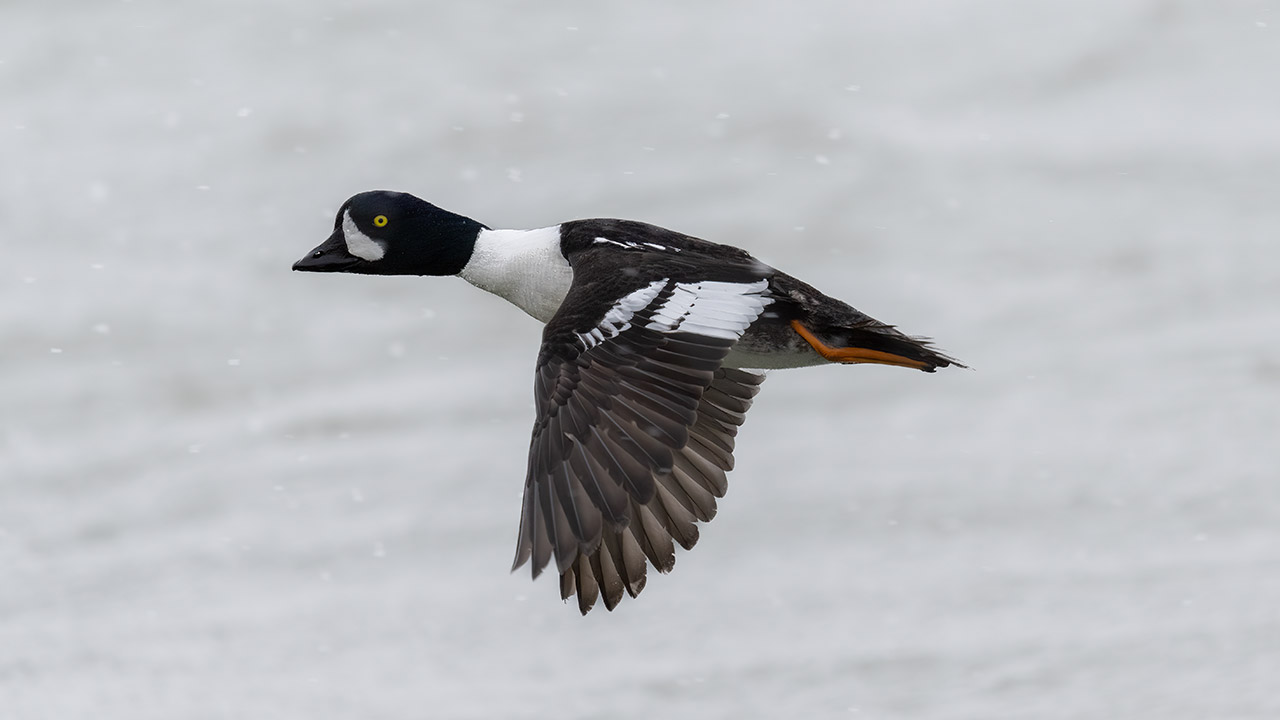
During the summer months, the lush vegetation and insect-rich waters make Lake Mývatn a breeding haven for numerous bird species. The area is particularly famous for its large colonies of breeding ducks, with over 15 species regularly observed. Birdwatchers can enjoy excellent views from various observation points around the lake, including well-maintained paths and hides that offer close encounters with the birdlife.
Moreover, the surrounding landscapes, featuring volcanic craters, lava fields, and geothermal springs, add to the area’s unique charm and provide additional opportunities for observing Iceland’s diverse flora and fauna. Whether you are a seasoned birder or a nature enthusiast, Lake Mývatn offers an unforgettable birding experience amidst some of Iceland’s most stunning scenery.
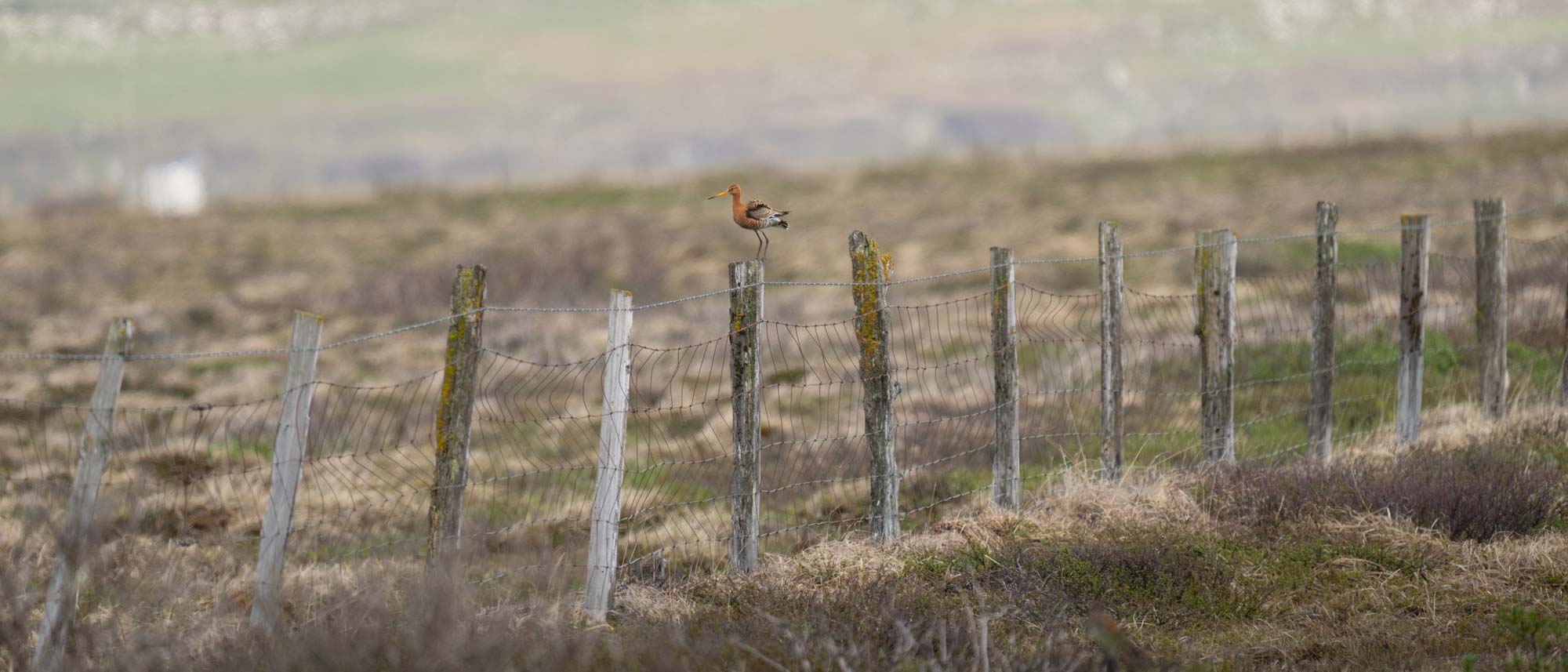
Áshildarholtsvatn, a serene lake nestled in West Iceland, ranks as number five on our list of top birding spots in Iceland. This tranquil location is a lesser-known gem that offers birdwatchers a peaceful and intimate setting to observe a diverse array of bird species.
The lake and its surrounding wetlands provide an ideal habitat for various waterfowl and wading birds. During the breeding season, Áshildarholtsvatn becomes a hub of activity, with species such as the Tufted Duck, Eurasian Wigeon, and Northern Pintail making their nests along the shoreline. The area is also home to the striking Red-throated Diver, which can be seen gliding across the water or diving for fish.
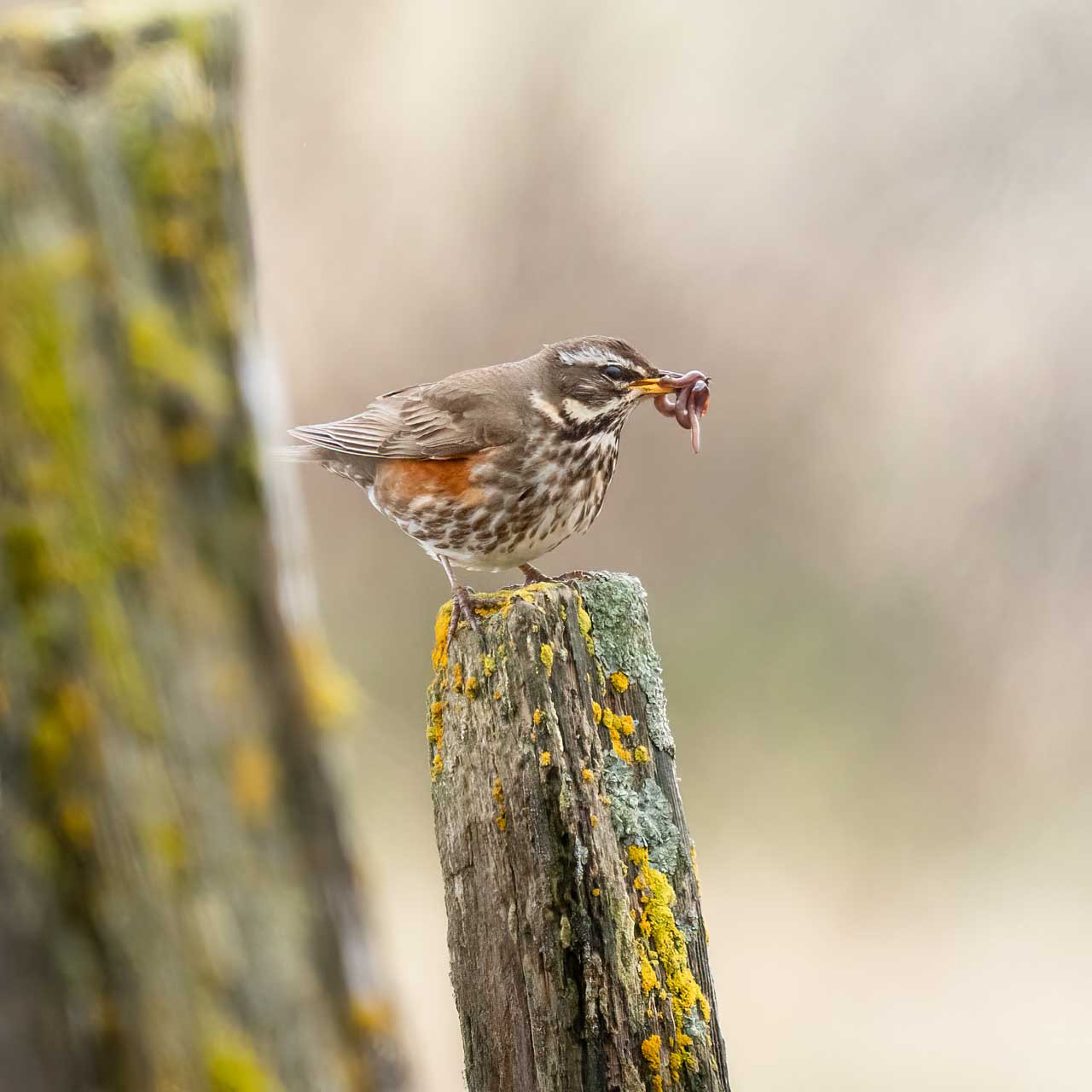
One of the standout features of Áshildarholtsvatn is its population of breeding Whooper Swans. These majestic birds, with their distinctive calls and graceful demeanor, are a highlight for any birdwatcher visiting the lake. Additionally, the wetlands surrounding the lake are rich in insect life, supporting a variety of smaller bird species, including the Snipe and the Black-tailed Godwit.

Birdwatchers can explore the area via a network of walking paths that wind around the lake, offering multiple vantage points for observing the birdlife. The paths are well-maintained and provide easy access to the best birding spots, ensuring that visitors can enjoy their experience without disturbing the natural environment.
Áshildarholtsvatn’s relatively remote location means that it remains a quiet and undisturbed spot, perfect for birdwatchers seeking a more secluded and immersive experience. Whether you’re a seasoned birder or simply enjoy spending time in nature, Áshildarholtsvatn offers a rewarding and picturesque birding experience amidst the serene landscapes of West Iceland.
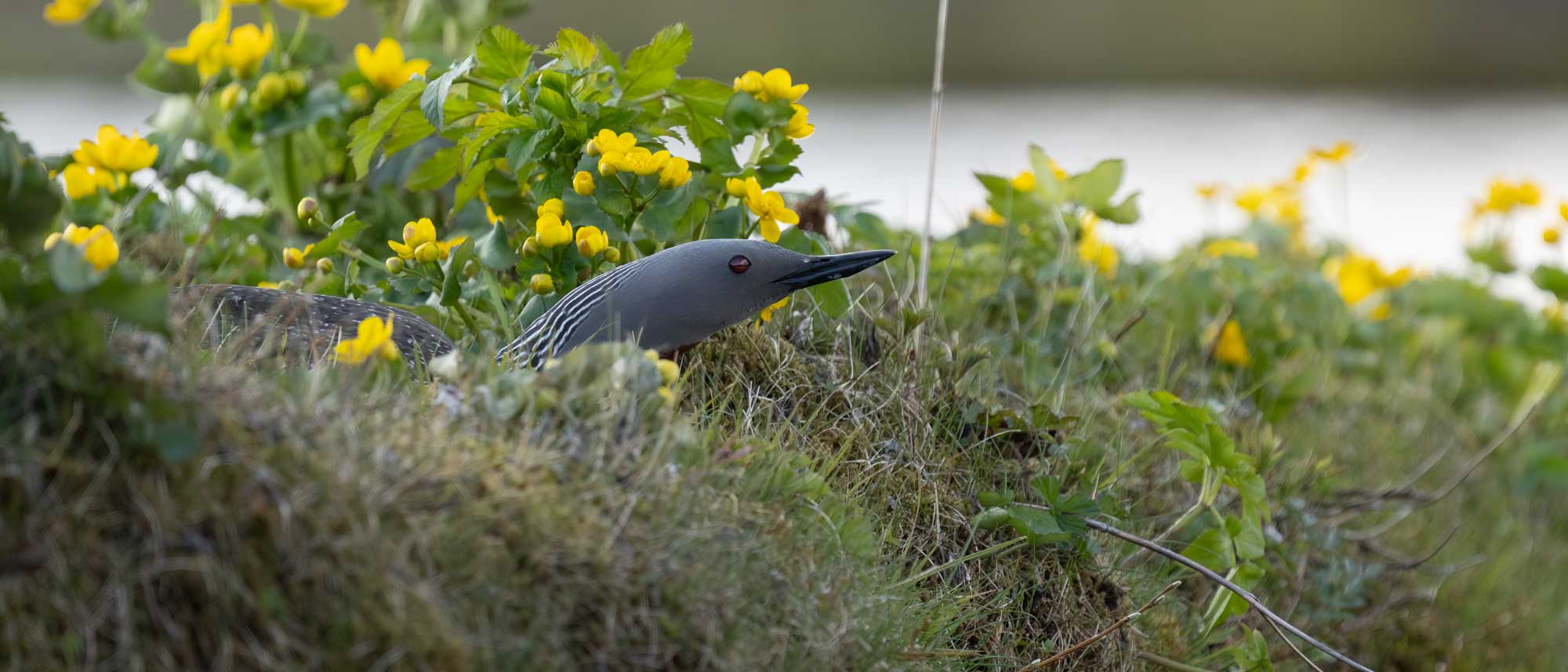
Flói Bird Reserve, located in South Iceland about an hour or so from Reykjavik, ranks as number six on my list of top birding spots in Iceland. This expansive wetland reserve is a haven for birdwatchers, offering flat wetland area that allows you to easily observe a variety of bird species in their natural habitat.
The reserve is particularly renowned for its rich diversity of wading birds and waterfowl. During the breeding season, visitors can expect to see species such as the Red-throated loon and Snipes, all of which thrive in the wetland’s lush, marshy environment. The Flói Bird Reserve is also home to the charismatic Whimbrel and the elegant Whooper Swan. You might even see a sole Short-eared Owl flying low over the marshes.
You have to drive quite some way along a dirt and gravel road, but at the very end is a large parking lot and a single house that is open to all visitors and offers brochures and information about the birds in the area.
The reserve features well-maintained walking paths and observation hides, allowing visitors to explore the area comfortably and get close to the birdlife without disturbing their natural behaviors. Information boards along the trails provide insights into the species you are likely to encounter, enhancing the educational aspect of your visit.
Flói Bird Reserve’s proximity to Selfoss makes it an easily accessible destination for birdwatchers traveling through South Iceland. The reserve offers a rewarding and picturesque birding experience amidst the stunning landscapes of Iceland.
Here are four additional birding locations I had researched and intended to visit during my trip to Iceland. Regrettably, adverse weather conditions prevented me from exploring these spots, so I am unable to share any firsthand experiences or photographs. Nonetheless, I believe they warrant inclusion in the list, as my thorough research indicated their significance. Therefore, if you are planning a birding or wildlife photography trip to Iceland, I recommend considering these locations as well.
Papey, a small island off the east coast of Iceland, is number seven on my list of top birding spots. This secluded island is a sanctuary for seabirds, providing an ideal habitat for a variety of species. Visitors to Papey can observe large colonies of Atlantic Puffins, Common Guillemots, and Razorbills. The island’s rocky cliffs and grassy slopes offer perfect nesting sites, making it a bustling hub of avian activity during the breeding season. Accessible by boat from Djúpivogur, Papey offers birdwatchers an exceptional opportunity to experience Iceland’s seabird diversity in a stunning, remote setting.
Rif Wetland, home to an Arctic Tern Colony, claims the eighth spot on my list. Situated on the northwest coast of Iceland, this wetland area attracts a plethora of bird species, with the Arctic Terns taking center stage during the breeding season. There are plenty of locations were you will encounter the Artic Tern on Iceland, but this should be one of the best. Visitors can witness the remarkable sight of these elegant birds as they dive and swoop over the wetlands, tirelessly guarding their nests. With its breathtaking coastal scenery and abundant birdlife, Rif Wetland offers birdwatchers a memorable and immersive experience amidst Iceland’s natural beauty.
Hornstrandir Nature Reserve, is found in the remote northwest corner of Iceland and secures the ninth spot onmy list. This pristine wilderness is a haven for birdwatchers, offering unparalleled opportunities to observe a variety of seabirds and coastal species in their natural habitat. Visitors to Hornstrandir can marvel at the majestic sight of soaring seabirds such as Northern Fulmars and Kittiwakes, while also catching glimpses of Arctic Foxes and seals along the rugged coastline. With its rugged landscapes and abundant wildlife, Hornstrandir Nature Reserve promises an unforgettable birding adventure amidst Iceland’s untamed wilderness.
Látrabjarg, marking the final spot on my list, is a must-visit destination for bird enthusiasts in Iceland. This towering cliff, located in the Westfjords region, is renowned as one of the largest seabird colonies in the world. Here, visitors can witness the awe-inspiring sight of thousands of seabirds, including Atlantic Puffins, Razorbills, and Northern Gannets, nesting precariously on the cliffs’ sheer edges. The dramatic coastal scenery combined with the cacophony of bird calls creates an unforgettable experience for birdwatchers. As the westernmost point of Iceland, Látrabjarg offers a spectacular finale to any birding expedition in this remarkable country.

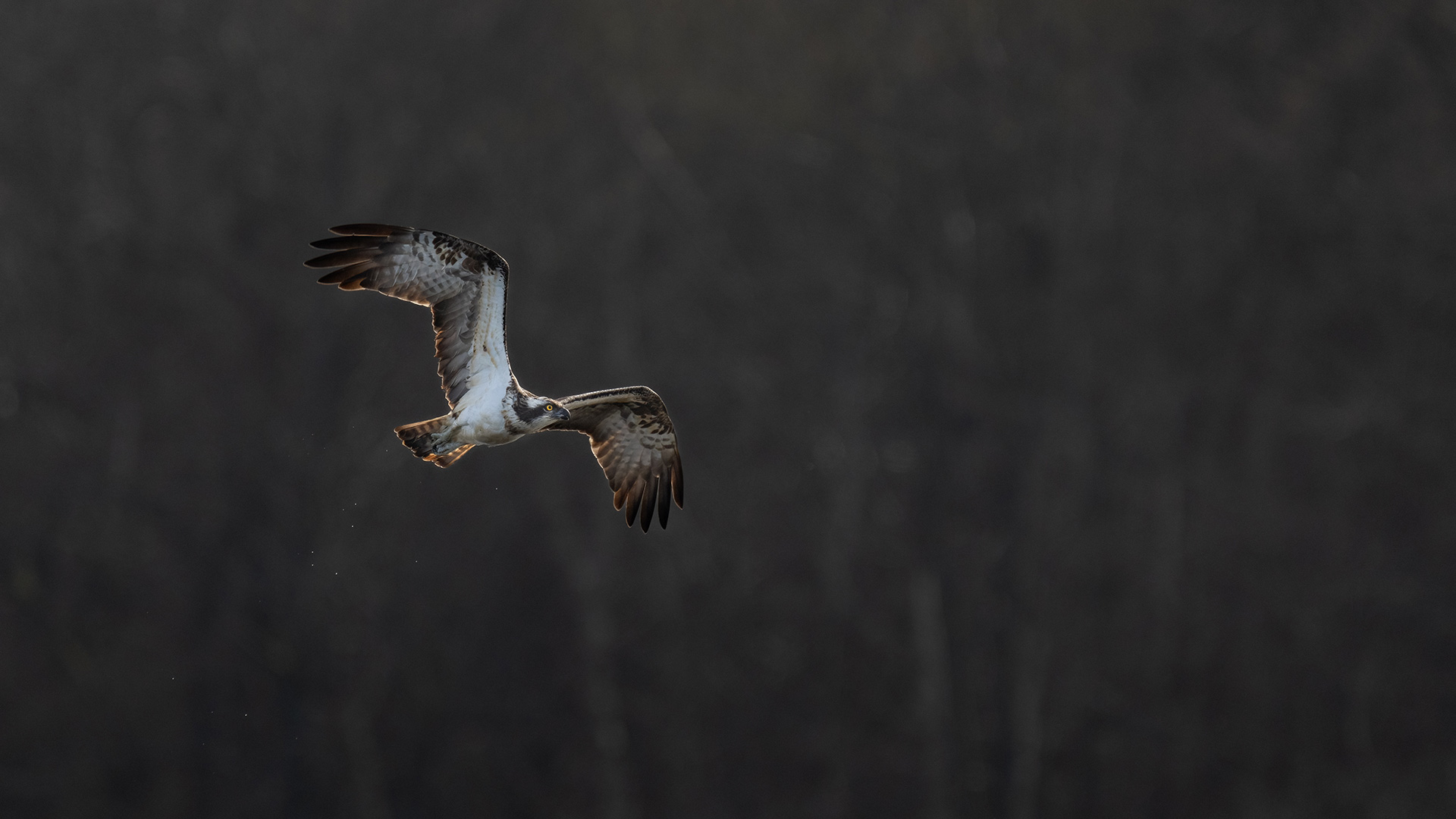
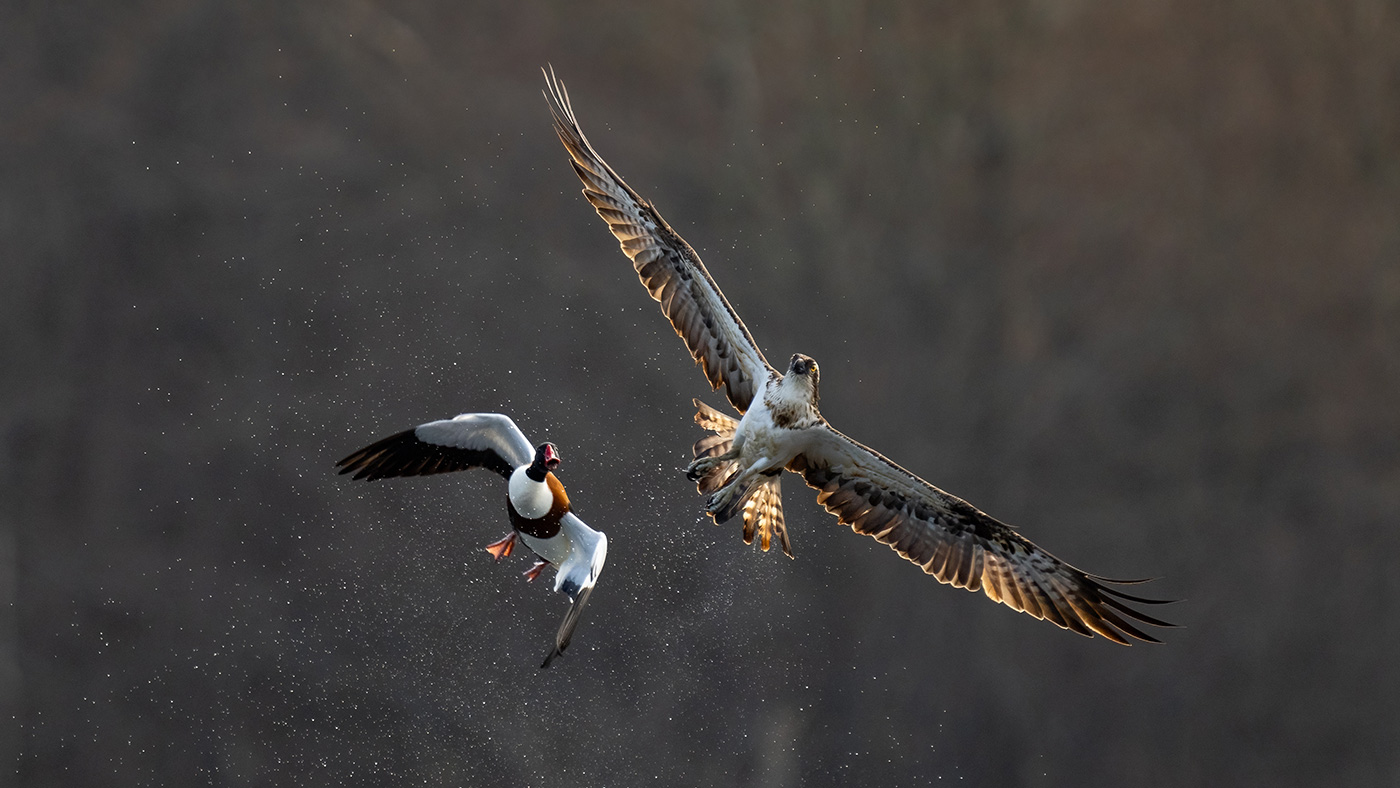
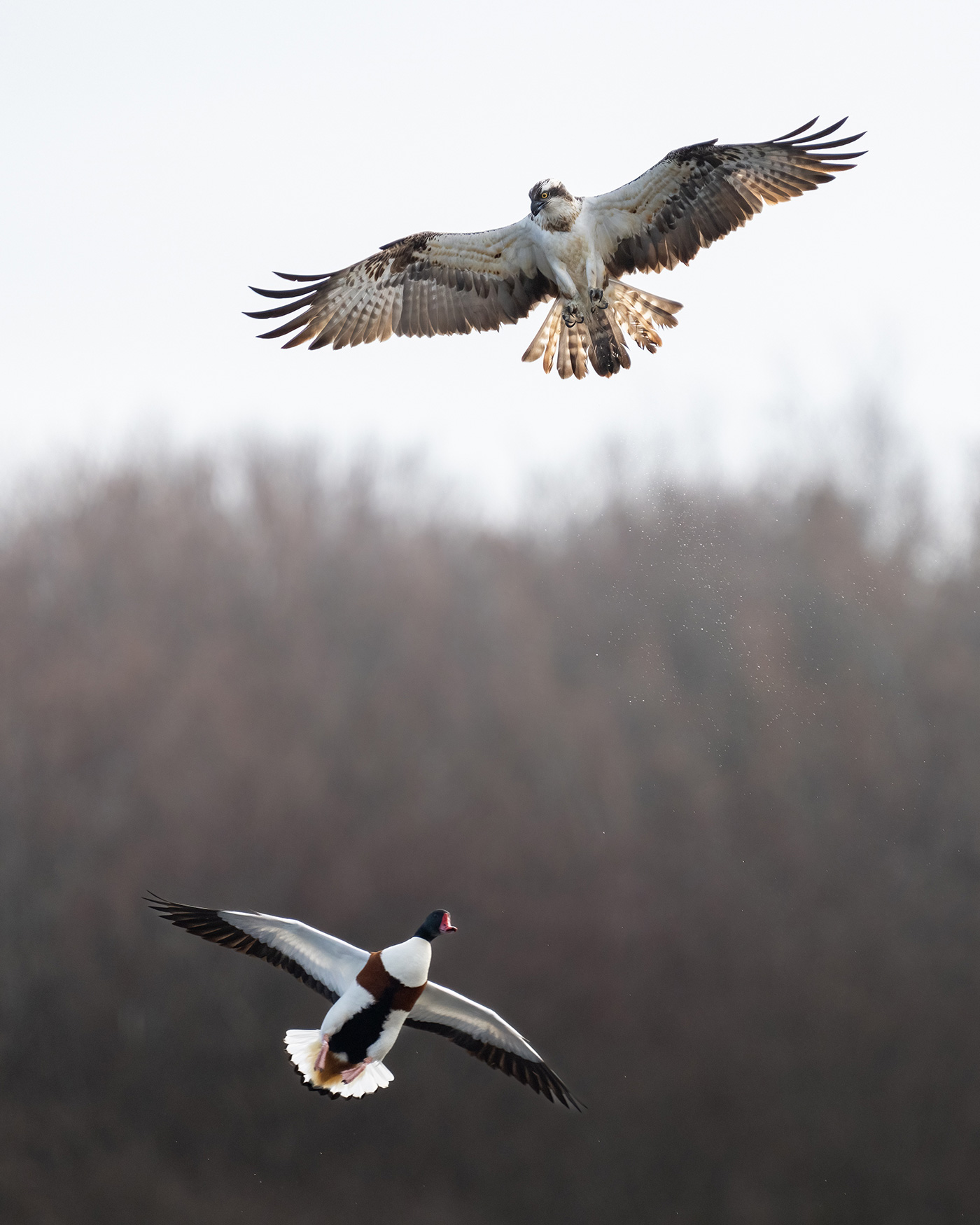
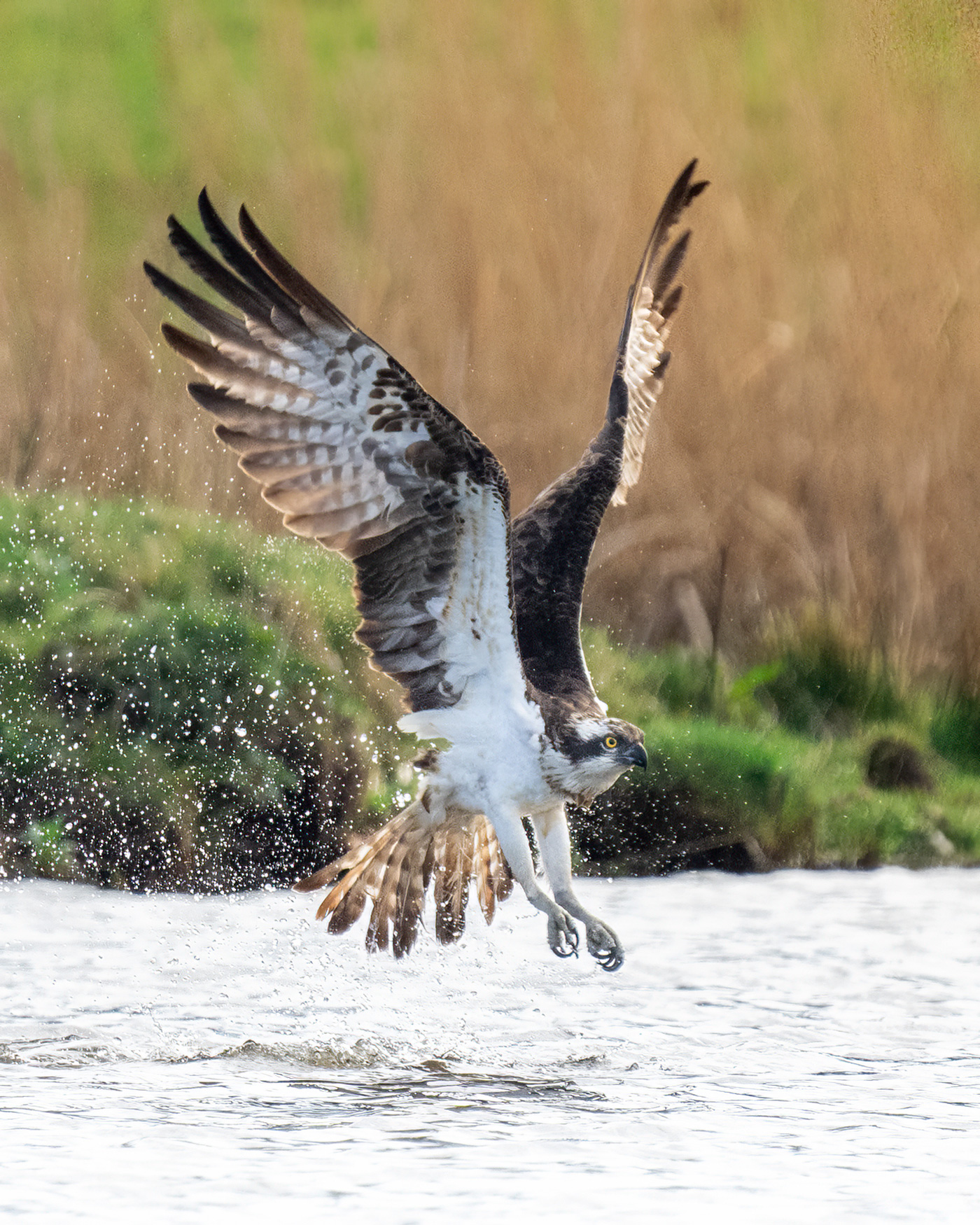
At the break of dawn, my friend @mariusfolkmann and I journeyed from Bornholm to the lake Strødam Engsø near Hillerød, Denmark. Our goal? To witness Ospreys in action.
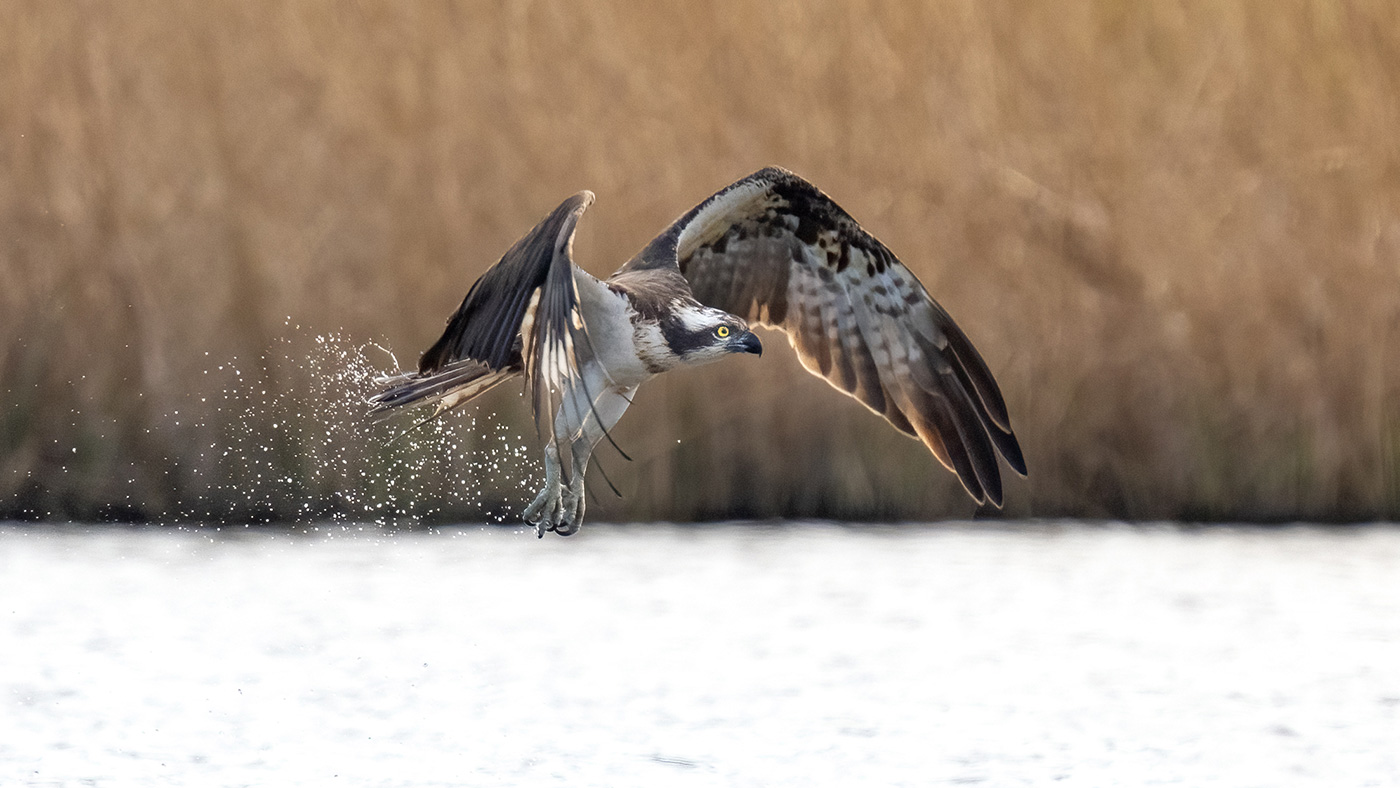
The Osprey, a master of the skies, boasts a wingspan of up to 6 feet. It is an impresseive predator with a keen eyesight. I flies above the water seeking the glimmer of fish below. When it spots its prey, it dives, talons outstretched, breaking the surface in a violent splash. Its reversible outer toes and barbed pads ensure a secure grip on slippery catches. This is the sight we wanted to capture with our cameras.
Arriving at the lake at 10 AM, we settled into our chosen vantage point, cameras at the ready, eagerly awaiting the Ospreys. Hours passed, interrupted only by the occasional call of 4-5 Ospreys soaring above us. However, none descended to catch fish. Yet, just as we prepared to depart, we caught a glimmer of movement in the sky above us.

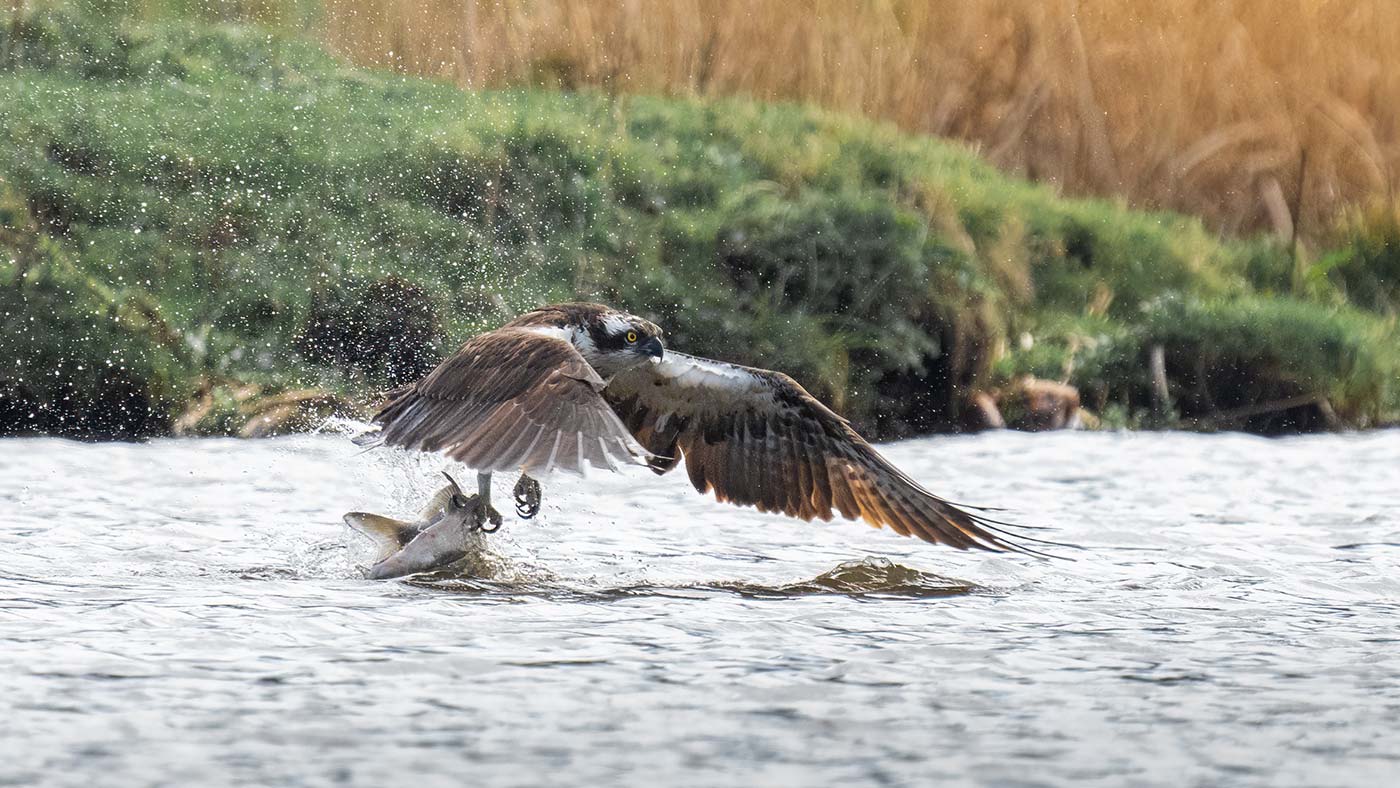
In a dazzling display of agility and precision, a lone Osprey descended, its powerful wings slicing through the air as it honed in on its target below. With a graceful dive, it plunged into the water, emerging moments later with a silvery prize firmly clasped in its talons.


This was it! We captured the moment we had traveled hours for. Our cameras’ SD cards now contain the precious photographs we sought and hoped for. The images on this page are the selected few that I chose for editing and publication. I hope you enjoy them.


The majestic osprey, known as “Fiskeørn” in Danish, has returned to Denmark for the summer season, marking a significant event for wildlife enthusiasts across the country. As news of their arrival spread, my social media feeds overflowed with breathtaking images captured by fellow Danish photographers, showcasing the ospreys in their natural habitat at Strødam Engsø near Hillerød.
Filled with excitement and armed with my camera gear, I embarked on a journey to this serene haven of nature over the weekend, eager to capture my own glimpse of these magnificent creatures. What awaited me surpassed all expectations.
Here’s a glimpse into the moments I captured on that memorable day:
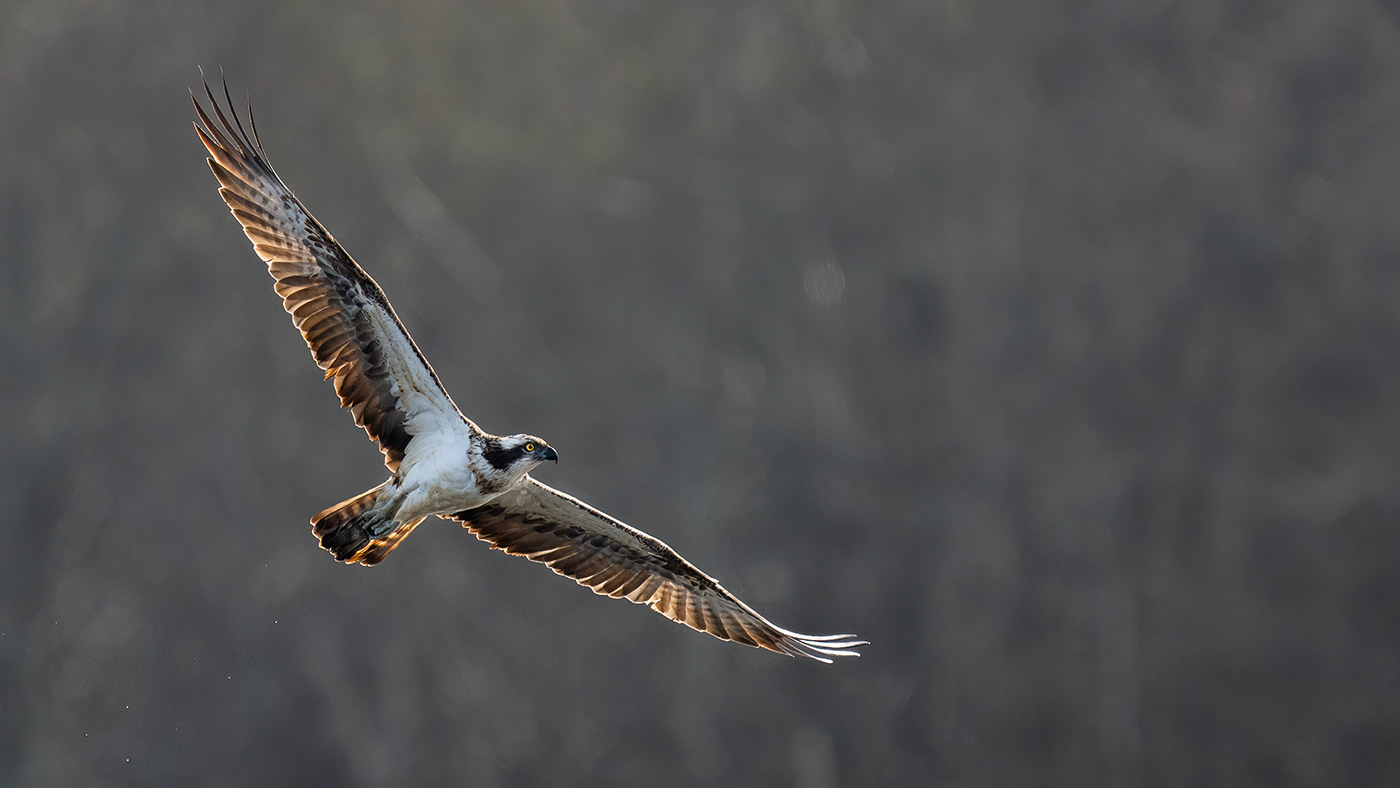

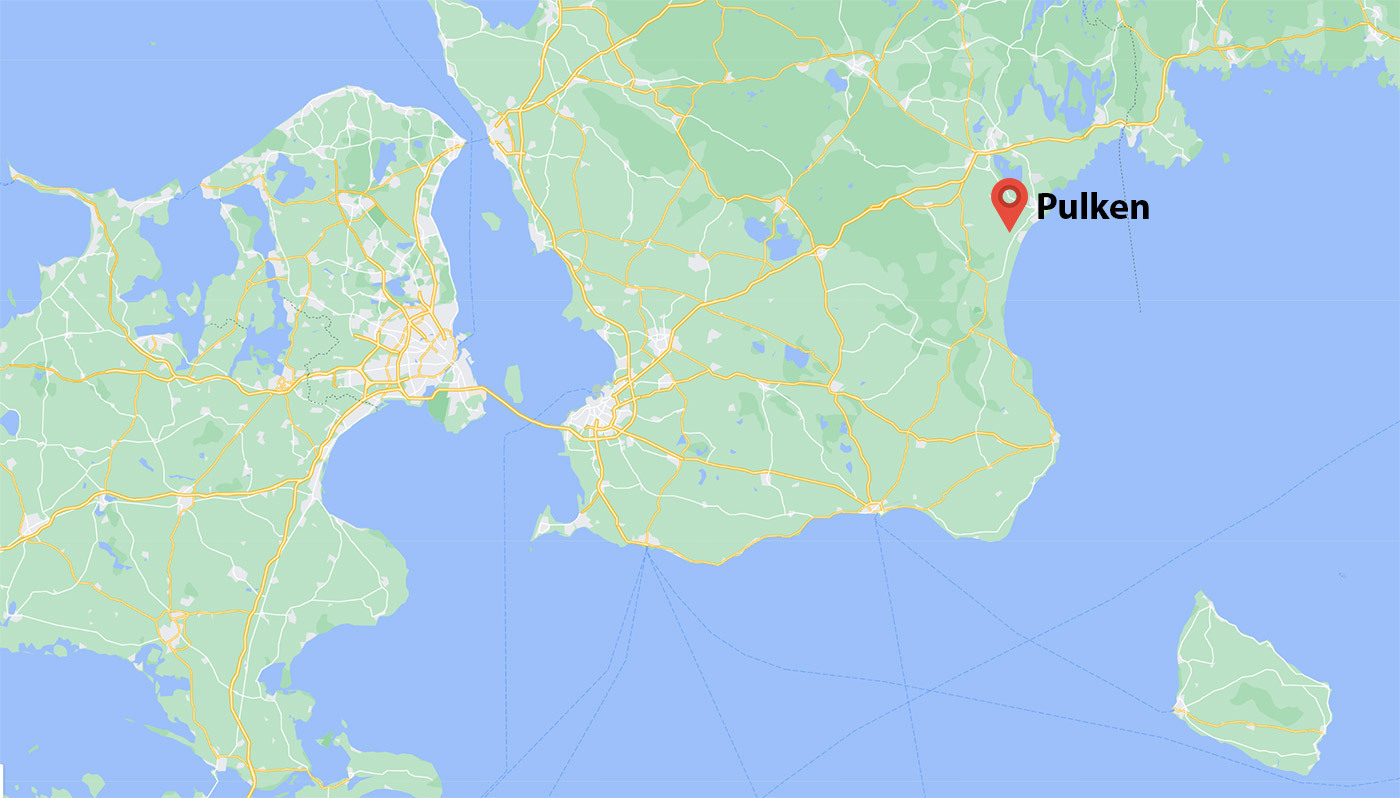
In mid-April, I found myself at Pulken, a nature reserve located in the enchanting Vattenriket in Skåne. It was somewhat serendipitous, as our trip to southern Sweden was initially planned to participate in the annual art tour (Kunstrunde). However, when the opportunity to see the cranes presented itself, I couldn’t resist, and I was eager to experience the annual migration, where migratory birds rest here before continuing their journey northward. Unfortunately, I had only brought along my Sony 70-200 mm GM2 lens, having left my 200-600 mm lens at home.
Already on the way to the area, we could spot many cranes in the fields and flying overhead. However, upon arrival at the bird tower, we were greeted by an impressive sight – around 6,500 cranes gathered in the fields in front of us.
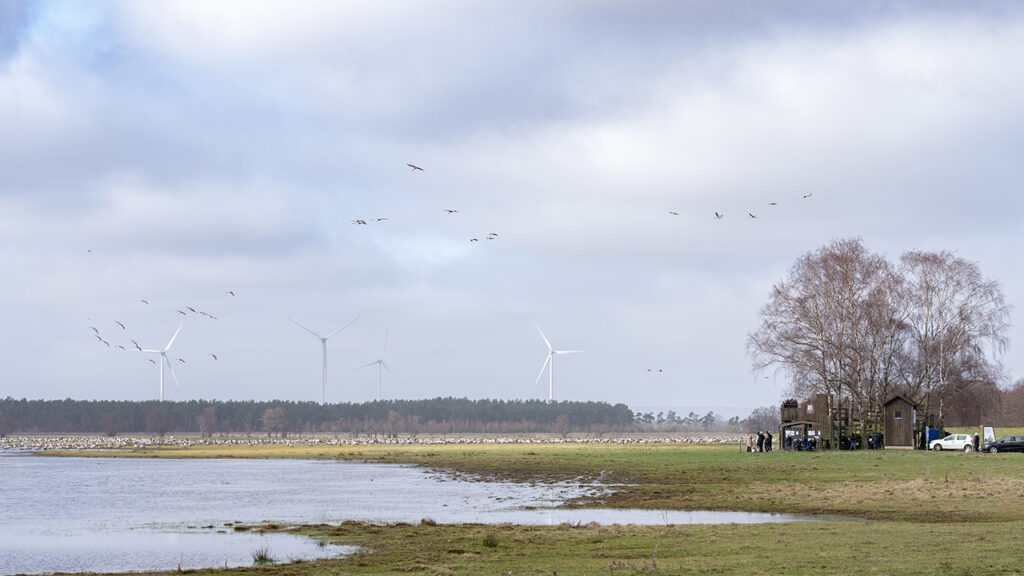
Pulken is situated 15-20 km south of Kristianstad and is part of the natural area known for its many lakes, rivers, and wetlands. Pulken is renowned for being one of the best places to observe cranes in Skåne in March-April, as it serves as a perfect resting place for the tired migratory birds, who seek refuge here in their thousands. Additionally, the cranes are fed here, which contributes to their return year after year.
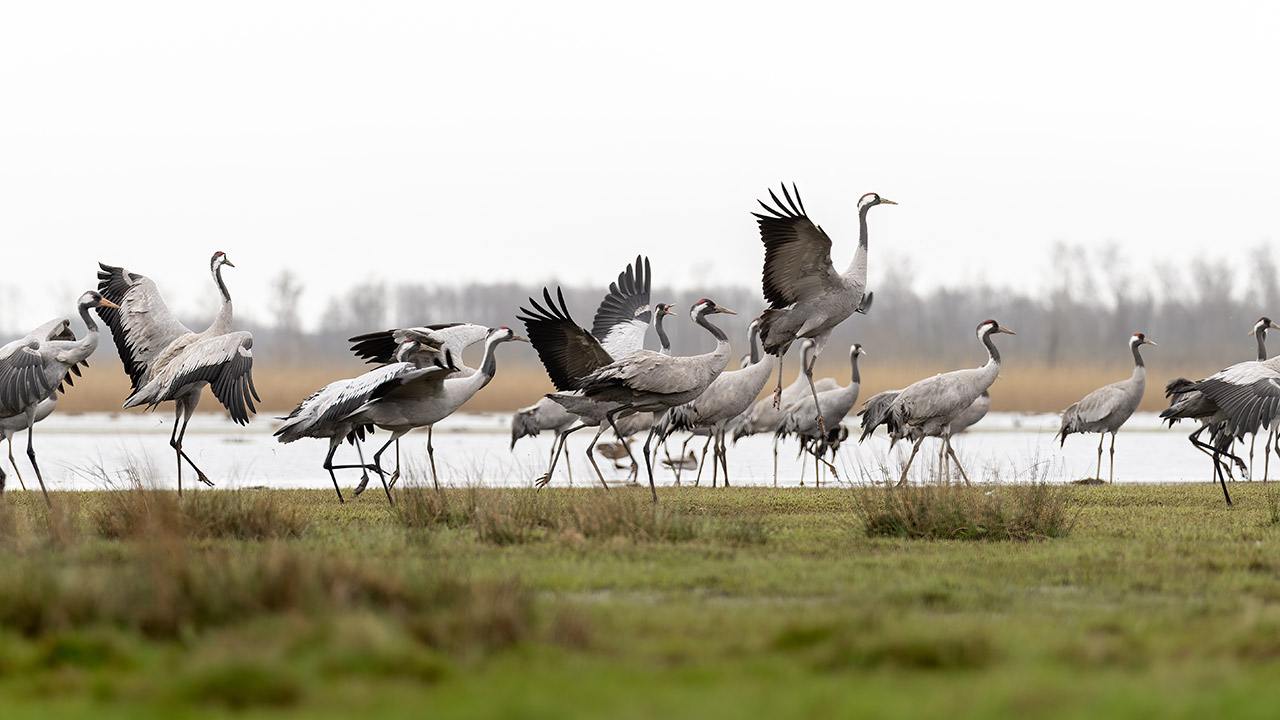
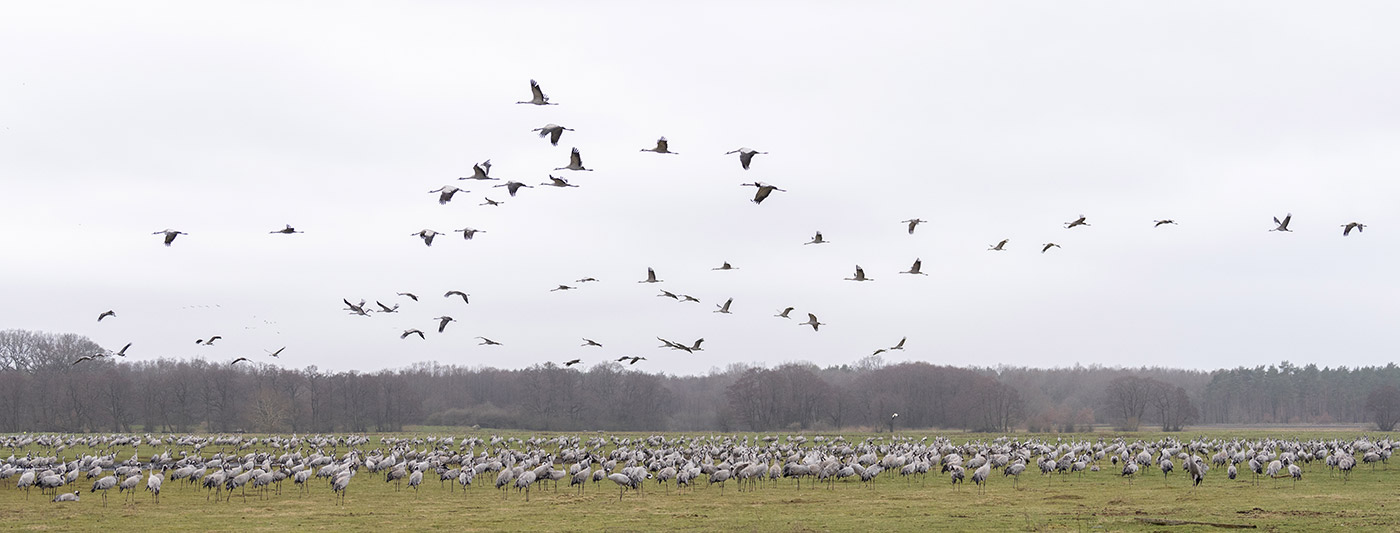
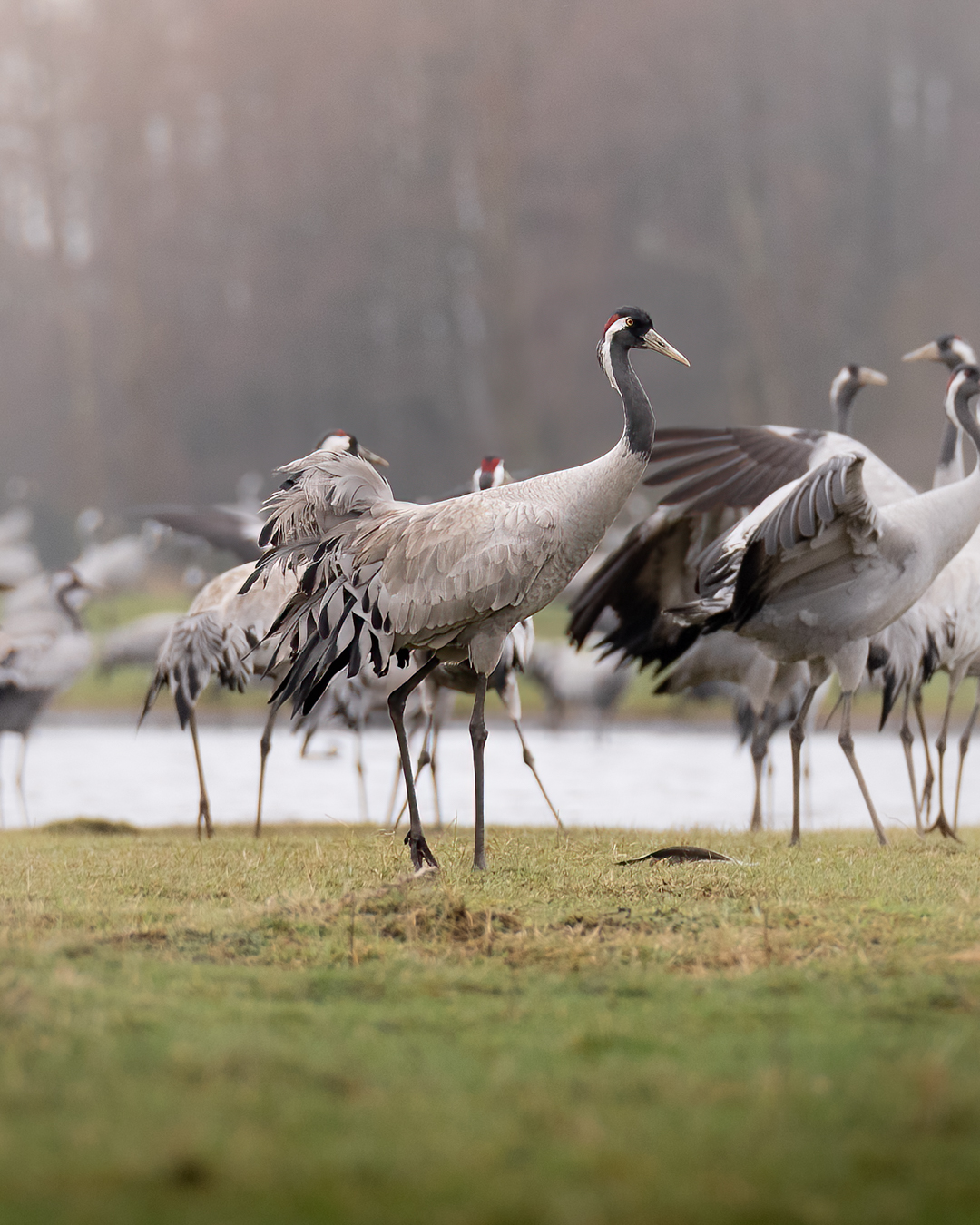
In Scandinavia, the Crane is a migratory bird, particularly notable for its seasonal presence during the spring and autumn. During the warmer months, it breeds in the northern parts of Scandinavia, often in wetland areas such as marshes, bogs, and meadows.
The Crane is a majestic bird characterized by its long neck, slender legs, and distinctive trumpeting calls. With a wingspan reaching up to 2.4 meters, the Crane is one of the largest bird species in Europe.
Read more about Pulken at Tripadvisor.com

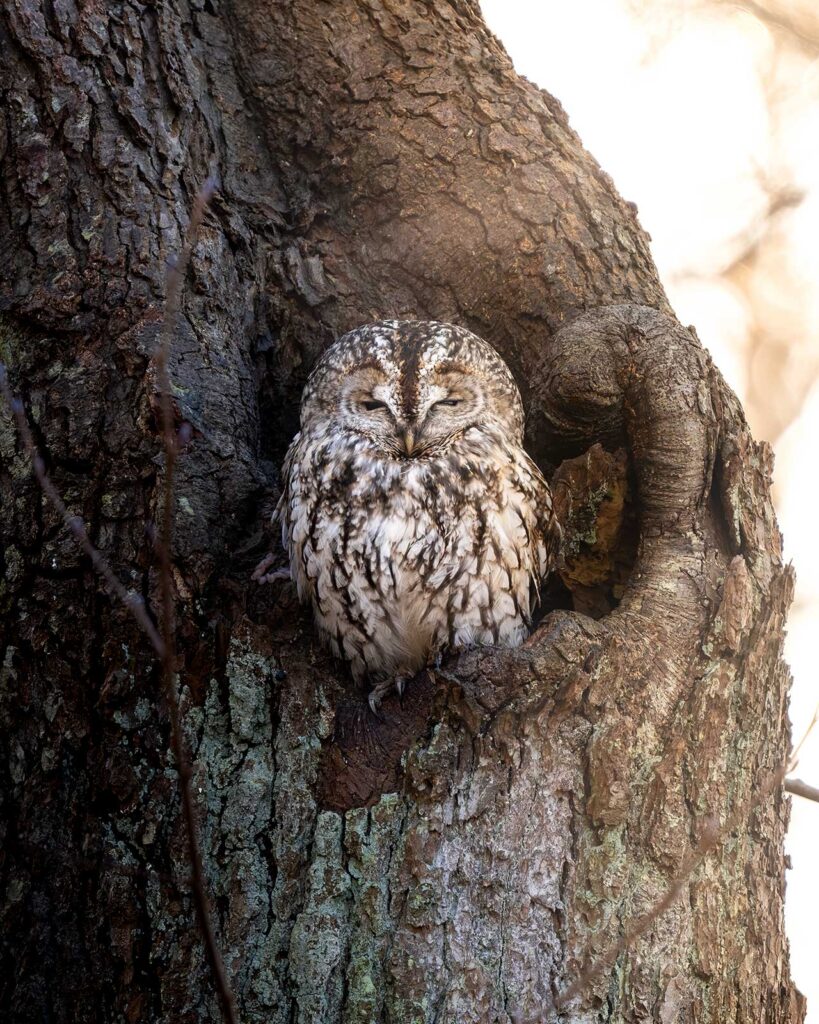
Yesterday, I had the wonderful opportunity to spot a Tawny Owl (Natugle or “Night Owl” in Danish) in the wild, all thanks to a helpful tip from a fellow wildlife photographer!
The Tawny Owl, with its soft, mottled brown feathers and large, round eyes, is a master of camouflage, blending seamlessly into its woodland habitat. Its nocturnal habits and stealthy nature make it a challenging bird to spot, let alone photograph.
After my second attempt at finding this elusive bird, I was thrilled to finally catch sight of it among the trees. It’s moments like these that remind me why I love photography – the thrill of the search and the beauty of nature.
Notice how the owl’s right eye is half-open. Owls have the ability to sleep with one eye open, a phenomenon known as unihemispheric slow-wave sleep (USWS). It is a remarkable adaptation essential for their survival, allowing them to maintain vigilance while resting, keeping one hemisphere of their brain active and alert to potential threats, even as the other hemisphere enters a state of deep sleep. This is also referred to as “peeking.”


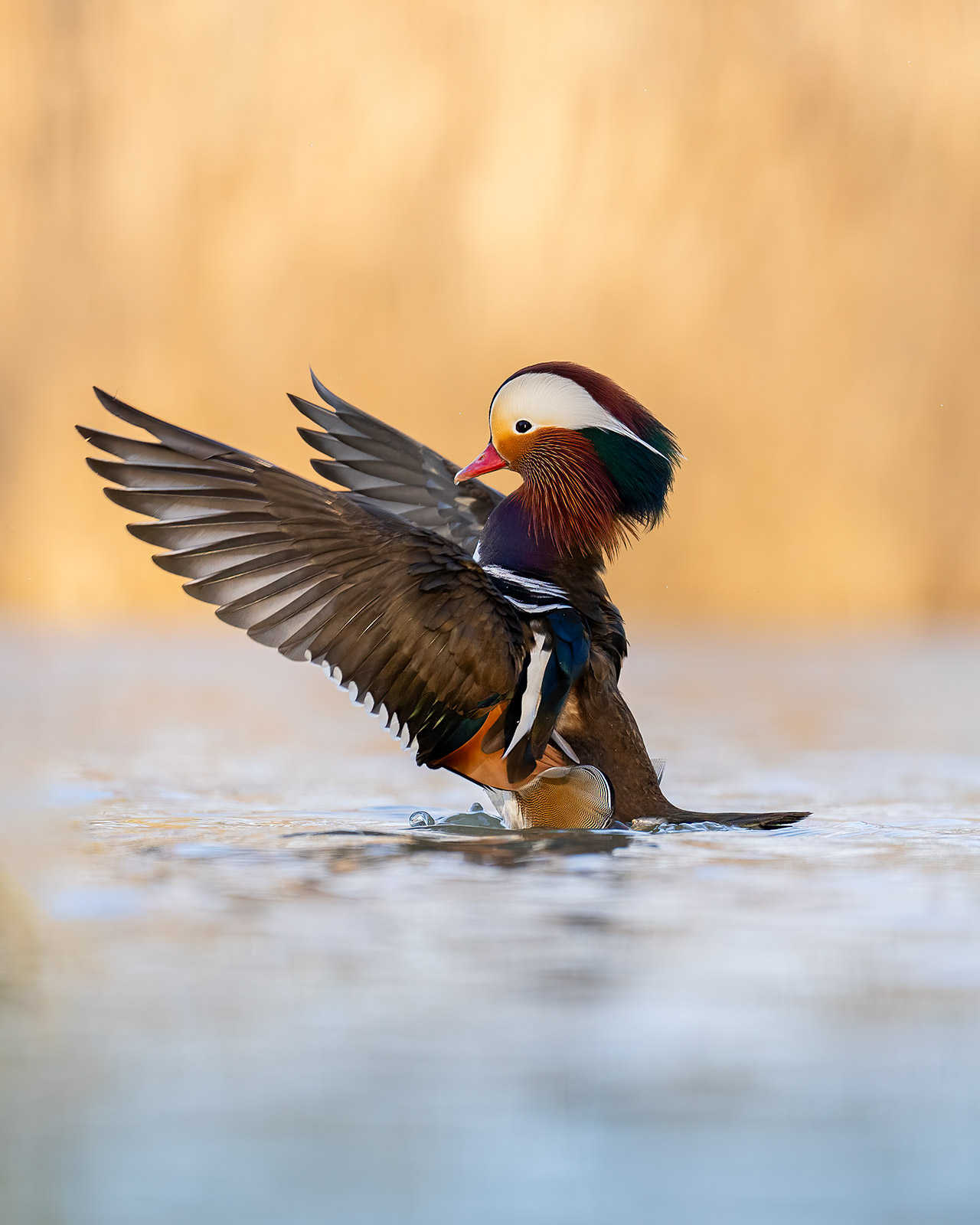
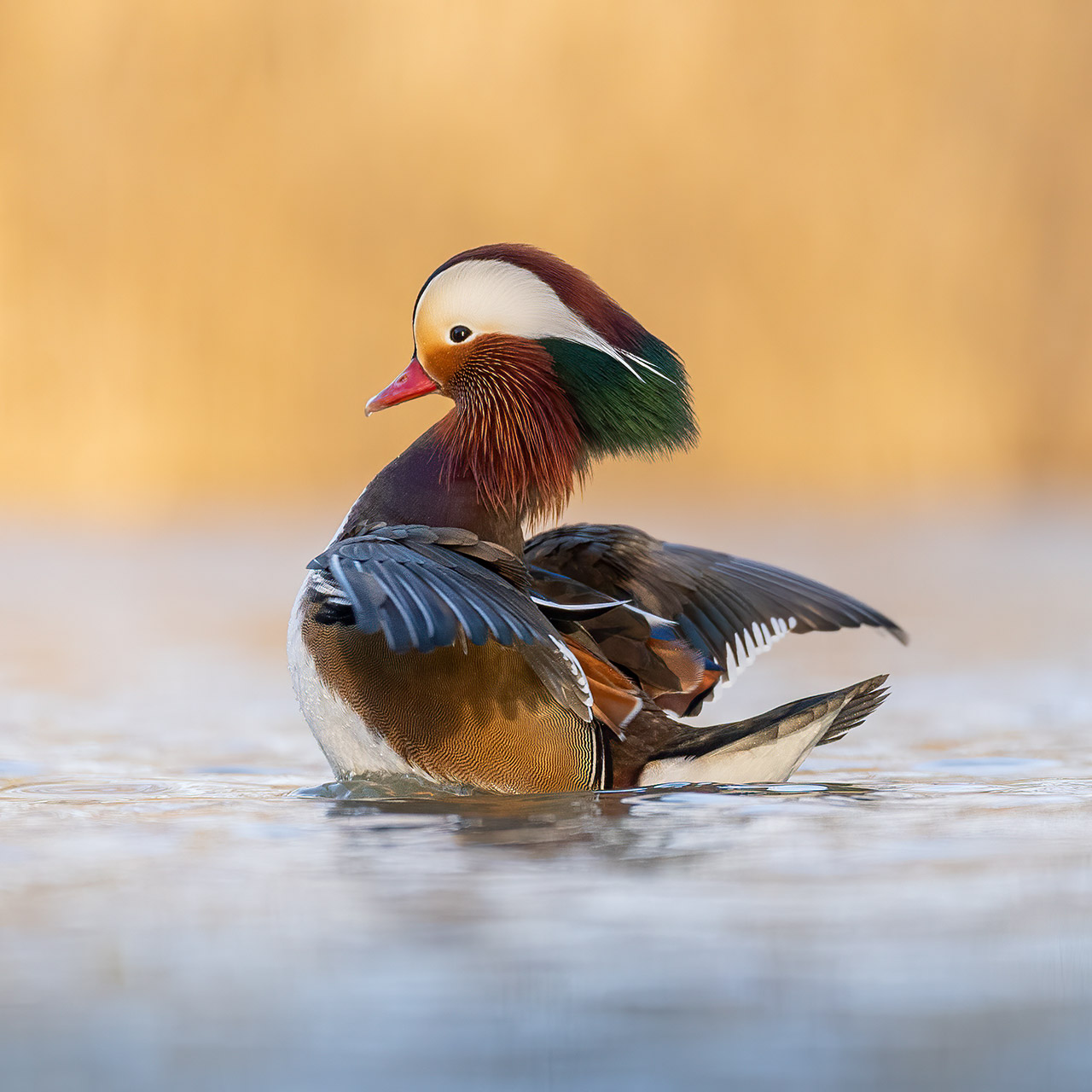
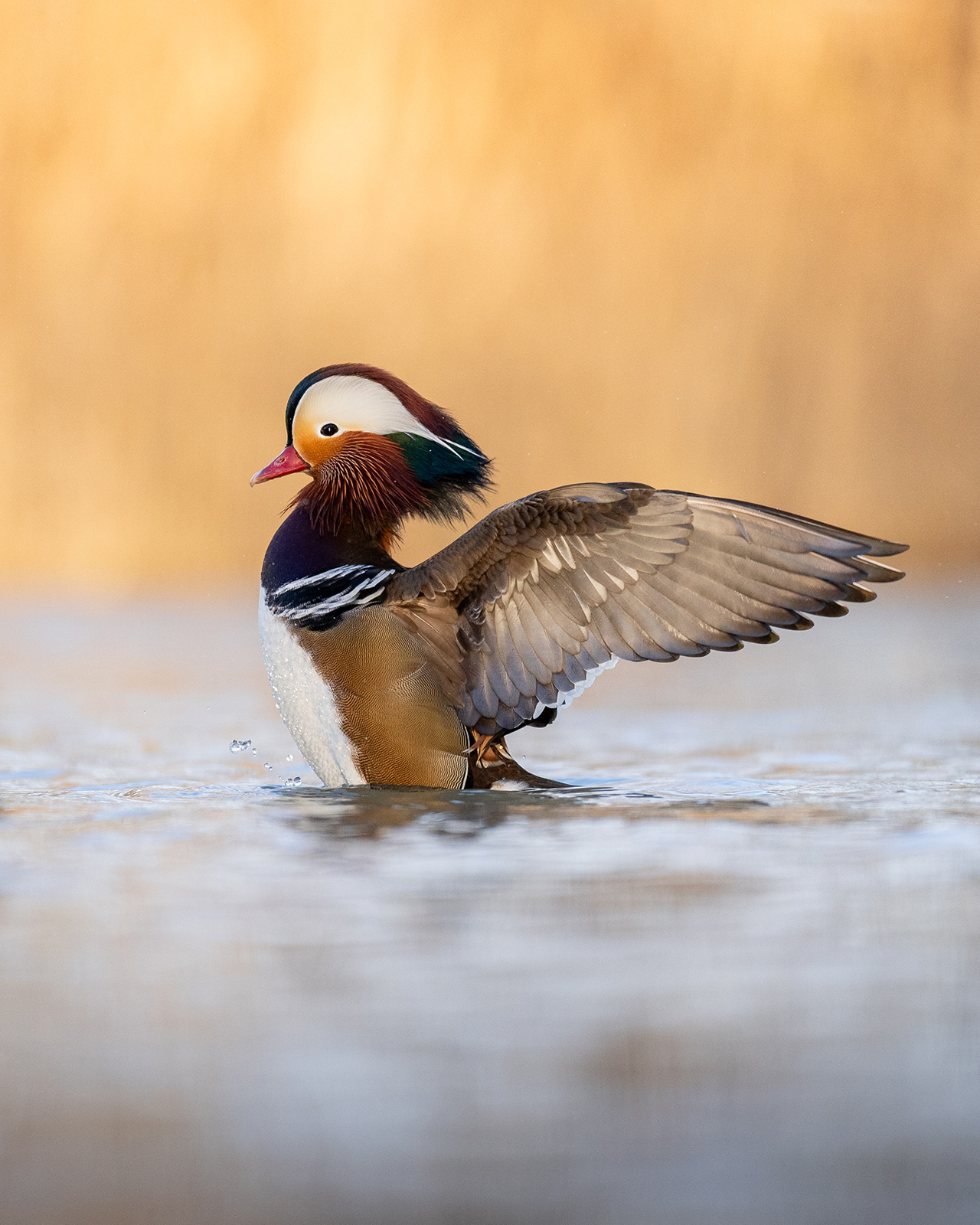
Today was another exciting adventure as I embarked on a car ride to Nexø, where I desired to capture a photo of a Mandarin Duck that had been spotted in a small local lake.
Upon reaching the lake, my patience was rewarded as I not only found the elusive Mandarin Duck but encountered both a male and a female gracefully gliding across the water. The male Mandarin Duck stole the spotlight with its vibrant and striking plumage, creating a visual spectacle that exceeded all expectations.

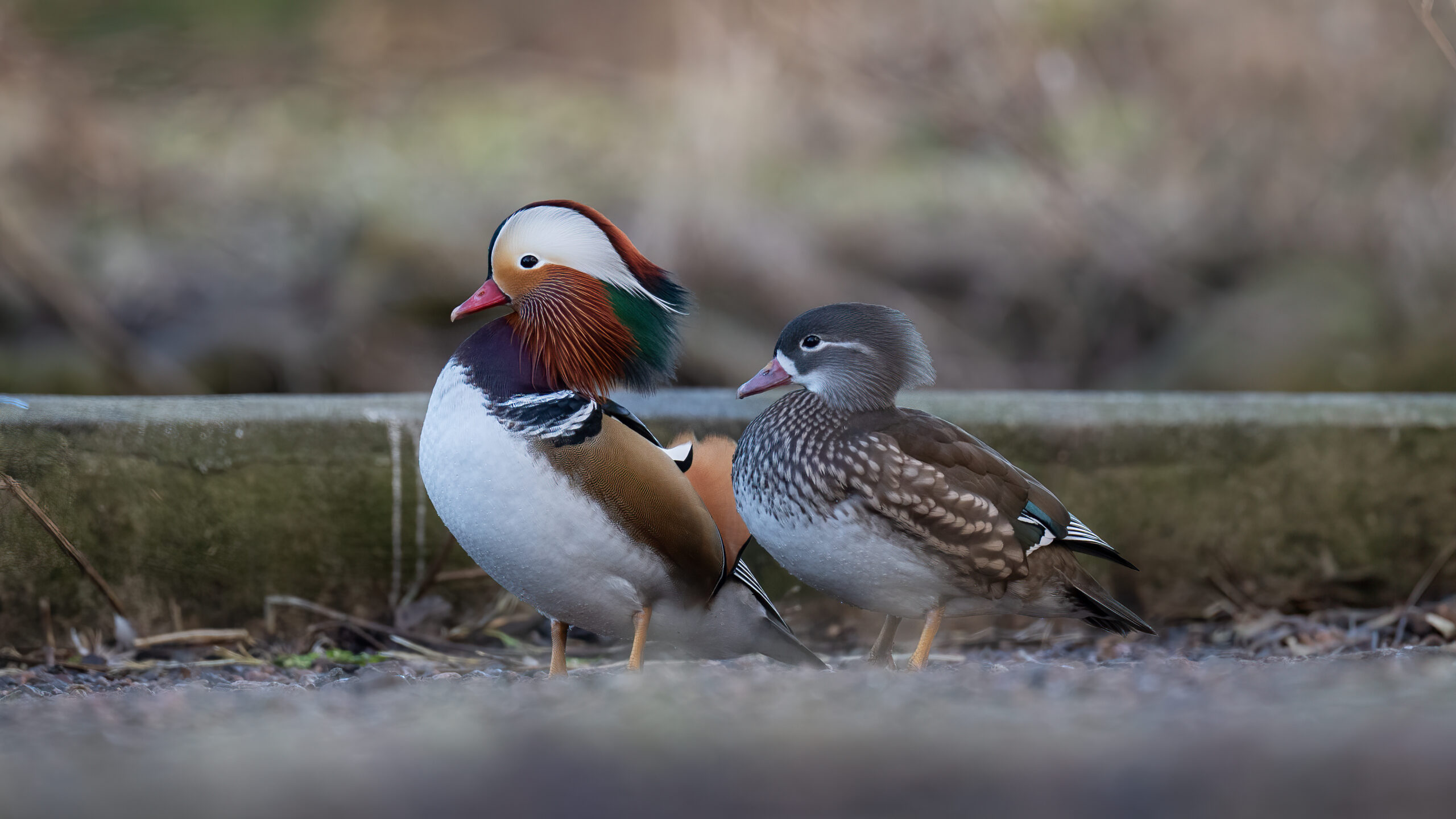
The male Mandarin Duck boasts an exquisite palette of colors that seems almost too surreal to be true. Its ornate and intricate feathers are a mesmerizing combination of deep purples, rich blues, and vibrant oranges. The distinctive “sail-like” crest on its head adds a touch of elegance to its appearance, while the intricate patterns on its wings create a harmonious symphony of colors.
Capturing the essence of this beautiful creature through the lens of my camera was a moment of pure joy and accomplishment. The sunlight played on its feathers, creating an array of reflections that enhanced the already breathtaking display of colors. It was a surreal experience, and the photos I managed to capture will forever serve as a cherished memory of my first encounter with a Mandarin Duck in real life.